We appear to be living in a moment of “medievalism.” From Netflix’s extremely loose adaptation of the Decameron, to Chapell Roan’s armor-clad stage craft, to Labubu’s folkloric inspiration, and the popularity of manuscripts in video games, imaginary medieval aesthetics seem to be everywhere at the moment. Medievalist Megan Cook explains that “medievalism refers to any kind of post-medieval recreation, [or] imaginative engagement with the Middle Ages.” Roan’s costumes and Labubus might be examples of what Cook even calls “dirtbag medievalism,” but it turns out that medievalism has enjoyed regular cycles of popularity since almost the Middle Ages itself and in culture from highest to low.
Physical evidence for medievalism turns up in several manuscripts currently in our collection.
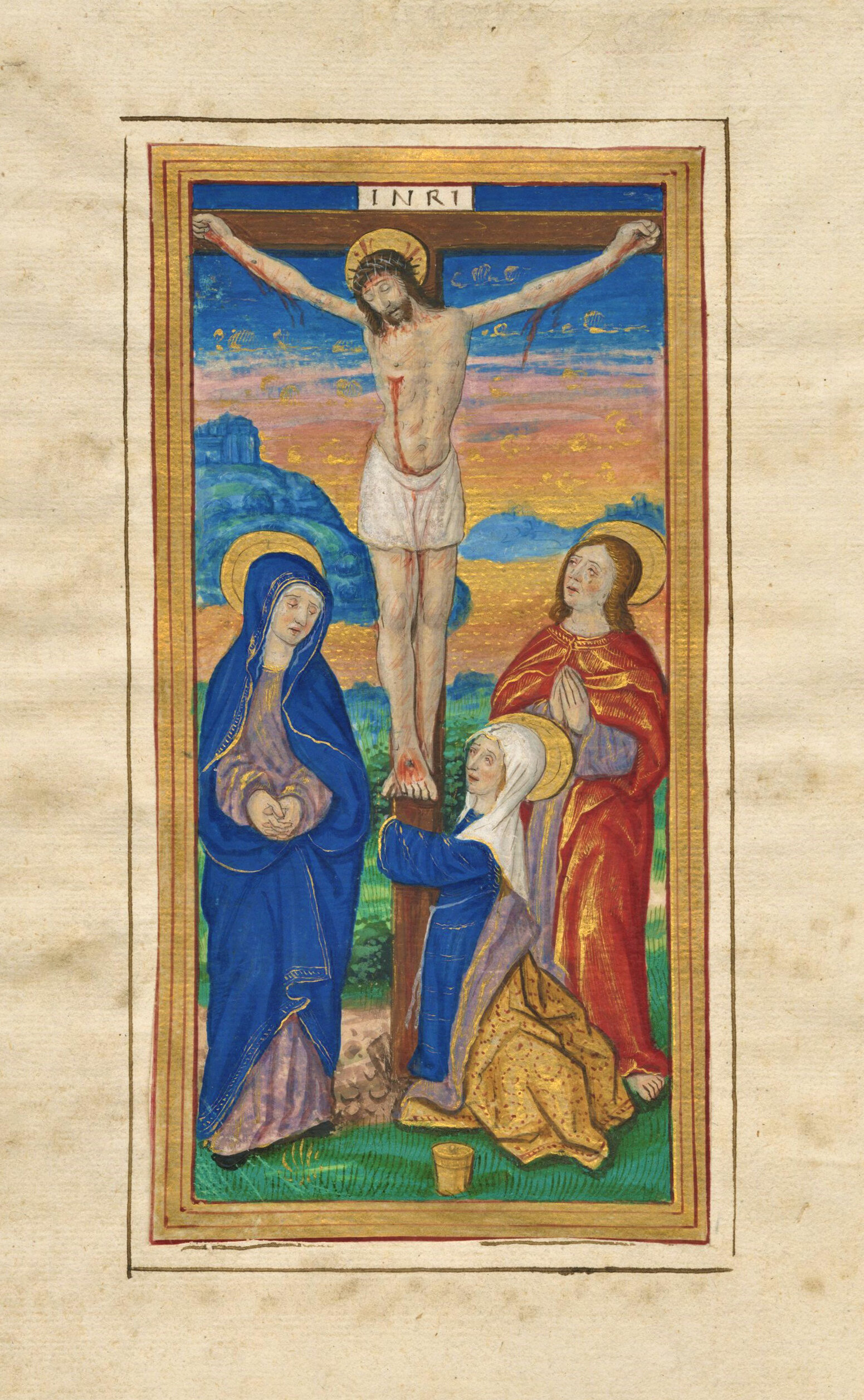
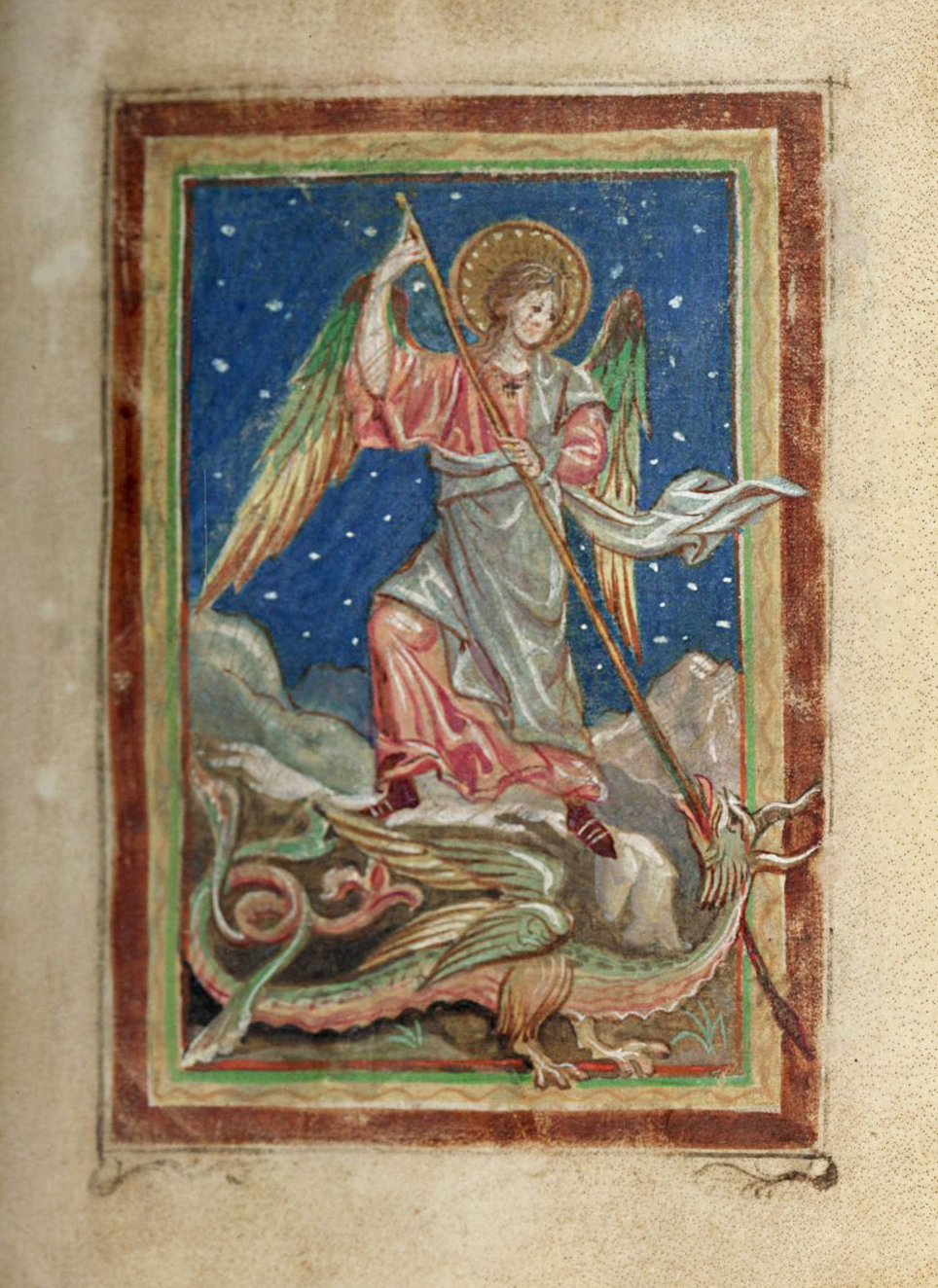
TM 1356, f. iv verso
TM 1356 offers a superb illustration of the appreciation of late medieval illumination persisting into the late sixteenth century. This antiphonal dates to just after the Tridentine reforms revised the entire Catholic liturgy in the final quarter of the sixteenth century. At a stroke, most medieval liturgical books became outdated and had to be quickly replaced. While many were replaced with printed copies, music remained difficult to print, and so choirbooks continued to be hand-copied for centuries into the print period. This small antiphonal is an excellent example of such a late manuscript. Moreover, the stationer tasked with producing it excised miniatures from a prayerbook dating over fifty years earlier and pasted them into this antiphonal.
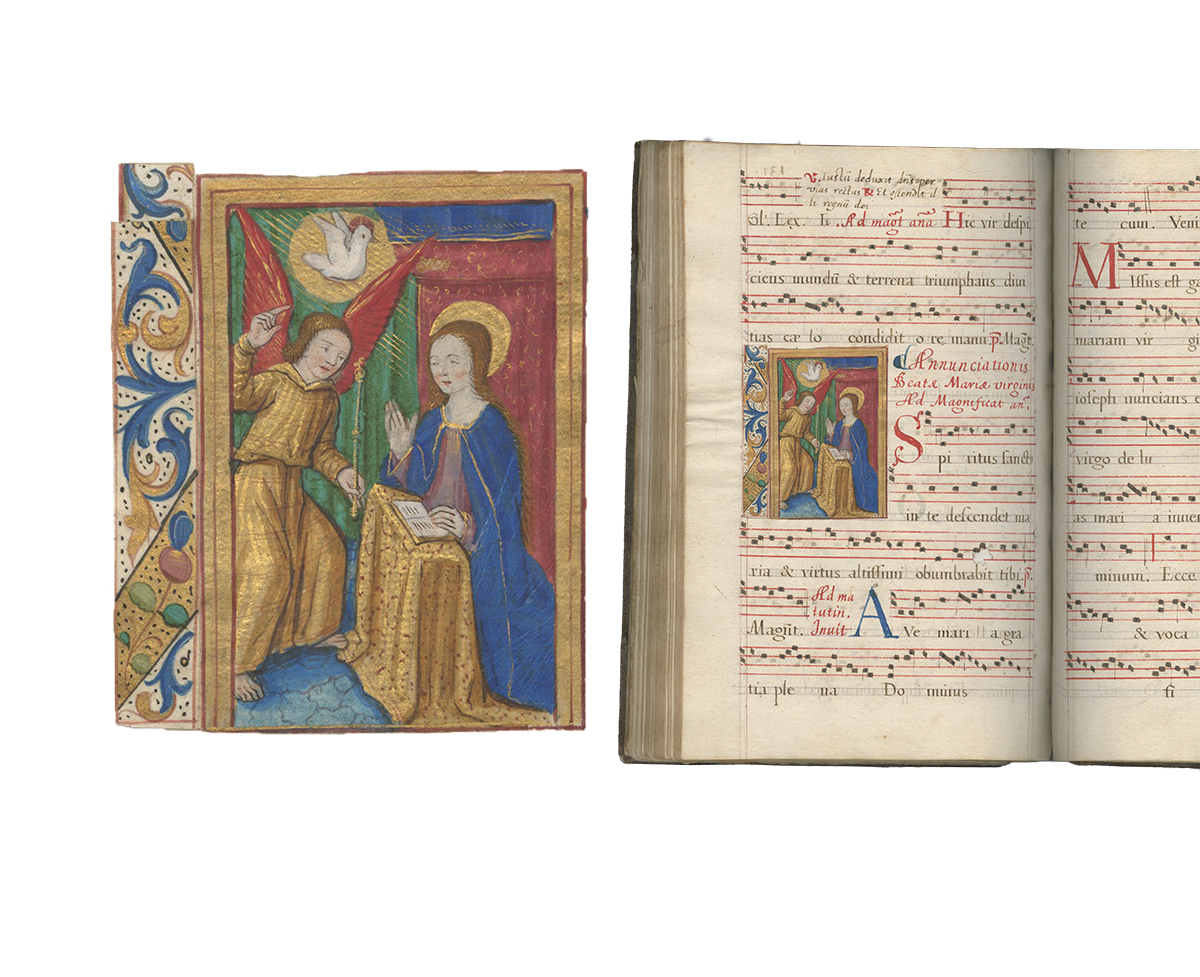
TM 1356, f. 131v
These miniatures are by the Master of Philippe of Guelders or his workshop, an artist who had ties with the House of Lorraine. A member of that noble house might have donated a family prayerbook to be dismembered for use in an antiphonal gifted to a religious institution connected to the family. In this case, medievalism was not simply appreciation for fifty-year-old fine art, but may also offer physical evidence for generations of support of a religious institution by a noble family.
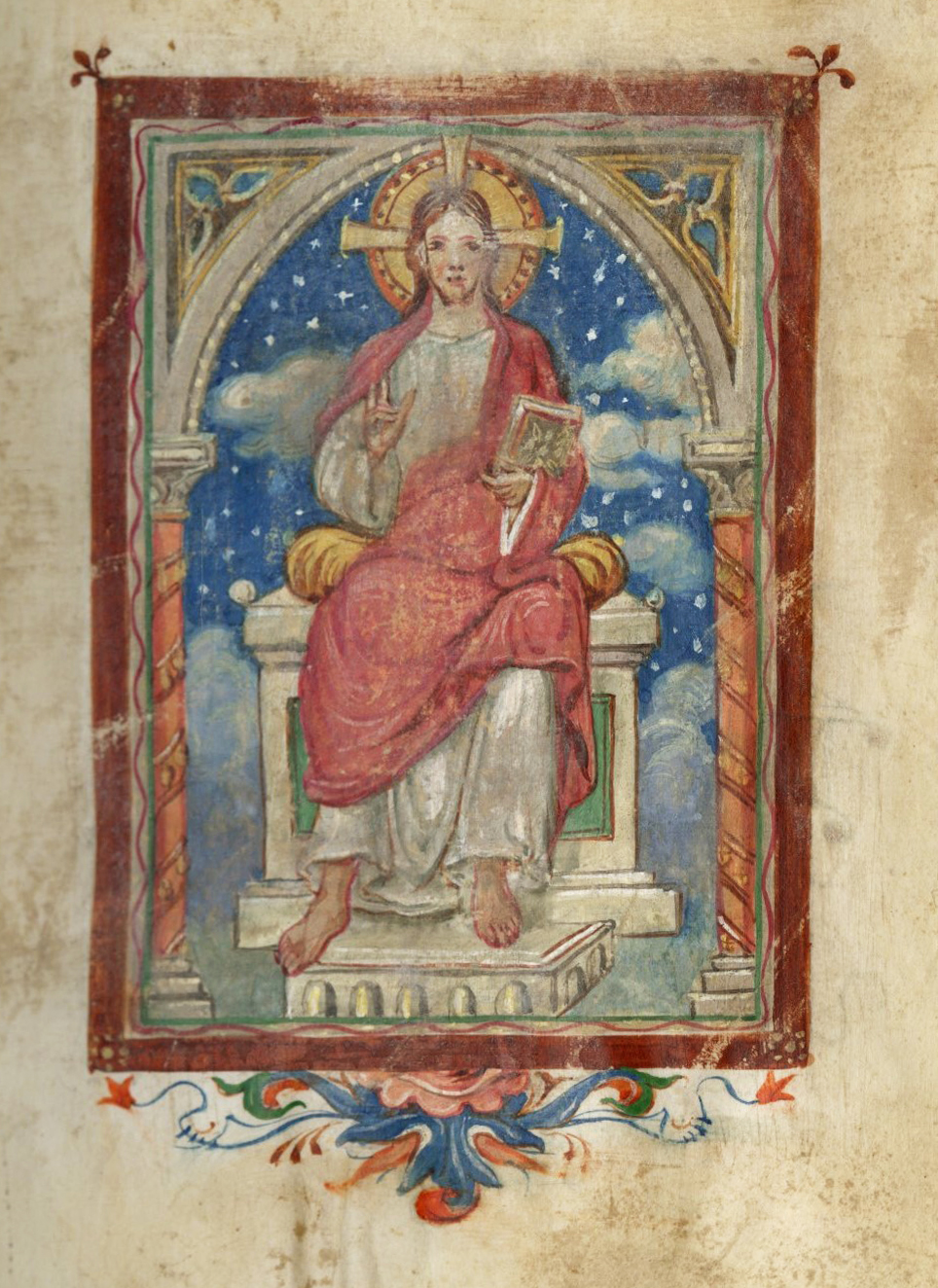
Indeed, medieval books and miniatures came to be highly valued again in the nineteenth century, as illustrated by TM 1288. This small, carefully produced anthology includes several really classic texts of medieval spiritual devotion. The medieval volume was never highly decorated, however: the commissioner valued the texts for their spirituality. For this person, those important spiritual works needed little additional decoration. Five hundred years later, however, another reader was so moved by these same texts that they added several brand-new miniatures. These were painted in watercolors, just like medieval miniatures, and they were painted in a medieval style, but they are, nevertheless, nineteenth-century paintings.
Painting, including illumination modeled on medieval illumination but not identical to any specific medieval style, was an extremely popular activity in the mid- and later nineteenth century across Europe, and it was widely taught as a potentially marketable skill for young ladies of the petite bourgeoisie. An enormous number of instruction books were printed to teach illumination, and gift books were full of engraved plates of facsimiles of medieval illumination. Increasingly such books employed chromolithography, an early color reproduction process, which often produced a rather dull color palette when not carefully printed: this may explain the subdued tones of these miniatures, if they were painted based on mass-market chromolithographed color, rather than modeled on actual jewel-bright medieval illumination. A pious young woman might well have painted these miniatures herself, or ordered them from a professional illuminator, to add to a medieval book of devotion no less devout in 1875 than it was in 1375.
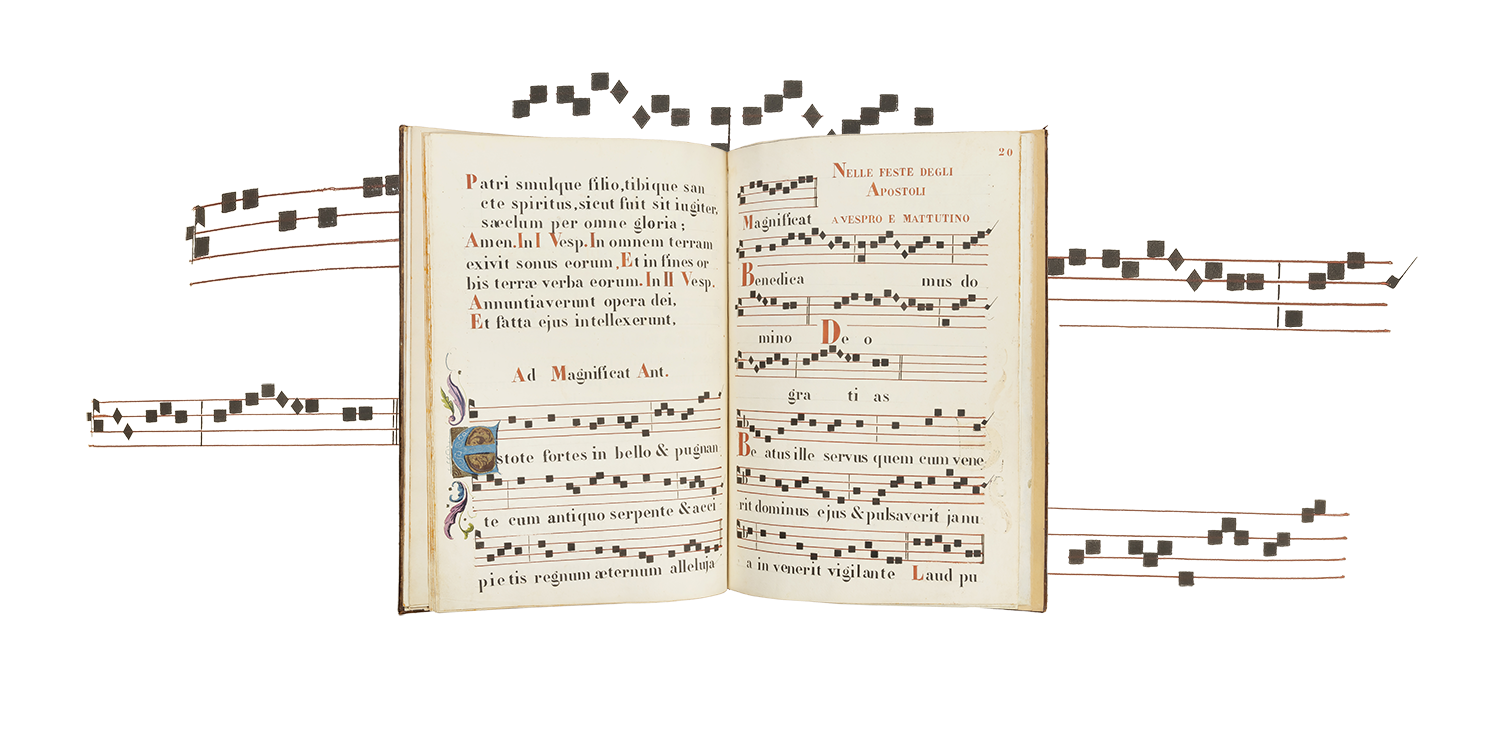
TM 994, f. 19v
A similar phenomenon but created using very different technology appears in TM 994, a stencilled choirbook. The words, stafs, and musical notation were all reproduced using stencils, rather than printed on a press. Although by the nineteenth century, sheet music could be printed on presses, stencils allowed for an inexpensive way to quickly reproduce small numbers of texts and did not require either trained press teams or specialist scribes. Unsurprisingly, choir books made for specific churches (including their specific feasts) using stencils were not uncommon in the seventeenth and eighteenth centuries.
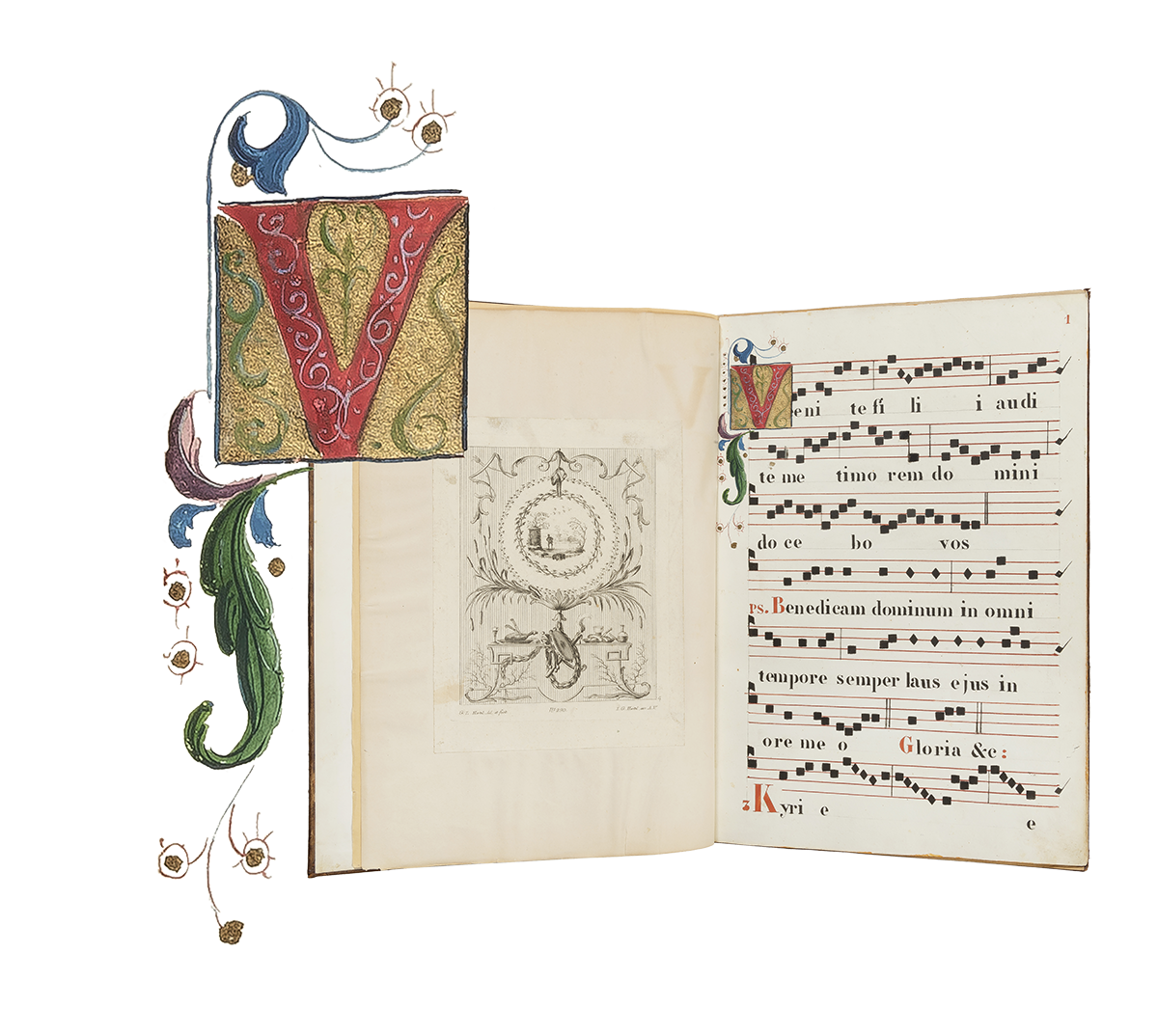
TM 994, f. 1
Moreover, just like the prayerbook, the resulting choir book received additional medievalized attention, and its initials were illuminated by hand in a generally medieval style throughout. As we learned above, nineteenth-century illuminators were urged to capture the feel of medieval illumination, rather than render specific regional styles.
Every era seems to develop its own medievalism. From the reuse of medieval miniatures in the sixteenth century to nineteenth-century illumination, people have found themselves drawn to medieval manuscripts and the art inside them for centuries. Today, our pop songs, video games, and movies and TV continue to demonstrate our passion for medieval fantasy, including medieval manuscripts!