TextmanuscriptTextmanuscripts - Les Enluminures

les Enluminures

medieval text manuscripts Blog

Welcome to the Medieval Text Manuscripts Blog!  This blog highlights what makes our text manuscripts particularly interesting and appealing to us – and (we hope) to you too!  Here we explore what these books can tell us about how they were made and used.  We also share what we know of their most fascinating and unusual contents, makers, and owners.  Some of our discoveries are quite significant, some merely amusing, and some bizarre.  All medieval manuscripts have much to reveal to their attentive modern audiences.  Follow our blog to learn more about them.


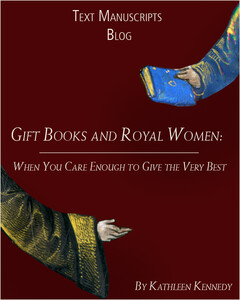
Gift Books and Royal Women

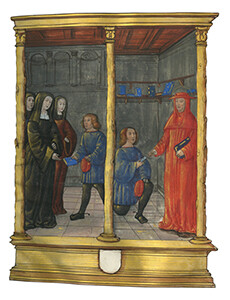
Despite living within deeply patriarchal cultures, medieval women at all levels of society took an active part in public life, in family trades and crafts, and often held positions of great respect and importance in their local communities, and sometimes even nationally. There are currently three different manuscripts on www.textmanuscripts.com that address very special women. They are books made for queens and queen-regents at important, transitional moments of their lives and while each book reflects the constraints that they faced as women, each also offers evidence of their power.
more »

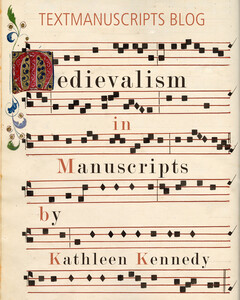
Medievalism in Manuscripts

We appear to be living in a moment of “medievalism.” From Netflix’s extremely loose adaptation of the Decameron, to Chapell Roan’s armor-clad stage craft, to Labubu’s folkloric inspiration, and the popularity of manuscripts in video games, imaginary medieval aesthetics seem to be everywhere at the moment. Medievalist Megan Cook explains that “medievalism refers to any kind of post-medieval recreation, [or] imaginative engagement with the Middle Ages.” Roan’s costumes and Labubus might be examples of what Cook even calls “dirtbag medievalism,” but it turns out that medievalism has enjoyed regular cycles of popularity since almost the Middle Ages itself and in culture from highest to low.

more »

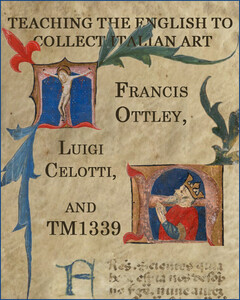
Teaching the English to Collect Italian Art

By 1908 when Forster published A Room with a View, an enjoyment of premodern Italian art formed a proverbial element of the British middle classes. Yet this passion reflected less than a century of consensus, and had not developed organically, but was deliberately conceived. Driven by some combination of inspiration and desperation, two men came together to teach the late Georgian English that premodern Italian art was desirable and that illumination could be thought of as miniature paintings, and that Italian miniatures could therefore be collected just like panel paintings.

more »

Reading The Rose

What does it mean to read an illuminated manuscript today? The Roman de la Rose reveals a language beyond text - the parchment, the gesture, and the gaze all speak eloquently.

more »

Reading The Rose

What does it mean to read an illuminated manuscript today? And more specifically, how do we—as modern readers and viewers—encounter a work like the Roman de la Rose, with all its visual and textual complexity, its resistance to singular interpretation? Two manuscripts from Les Enluminures open a path toward understanding how the Rose speaks to us.

more »

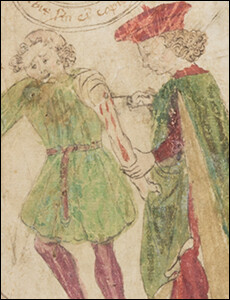
Before Dr. Tulp: a Medieval Surgeon's manual

Perhaps if you studied the history of art (from Pyramids to Picasso, we used to call it colloquially) in school, you are familiar with pictures representing surgical operations such as Rembrandt’s masterpiece, the Anatomy Lesson Dr. Tulp...

more »

Gospel Books: Changing Form and Many Functions

In case you haven’t noticed, we updated the Text Manuscripts site last month. Do take a look! This post, about Gospel Books, was prompted by one of my favorites from the update, a manuscript of the four Gospels made in Italy in the fifteenth century.

more »

DEAI and Medieval Manuscripts

The end of summer brings a return to school. With it, there is a renewed focus on DEI or DEAI, which has become over the last several years a central concern of institutions of higher education in the United States. Diversity, Equity, Accessibility, Inclusion...

more »

BIBLIOMORPHY: Books and Jewelry

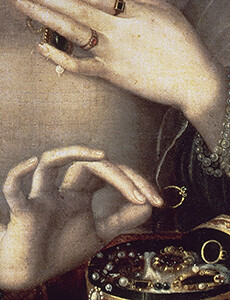
“Why do you sell jewelry?” “What does jewelry have to do with medieval manuscripts?” People often ask me these questions, especially at art fairs, puzzled I guess by how different the media are...

more »


headerDeco