

Carta ejecutoria de hidalguía
In Spanish, illuminated manuscript on parchment
Spain, Valladolid, 18 April 1551
TM 1506
- $6,500.00
 Textmanuscripts - Les Enluminures
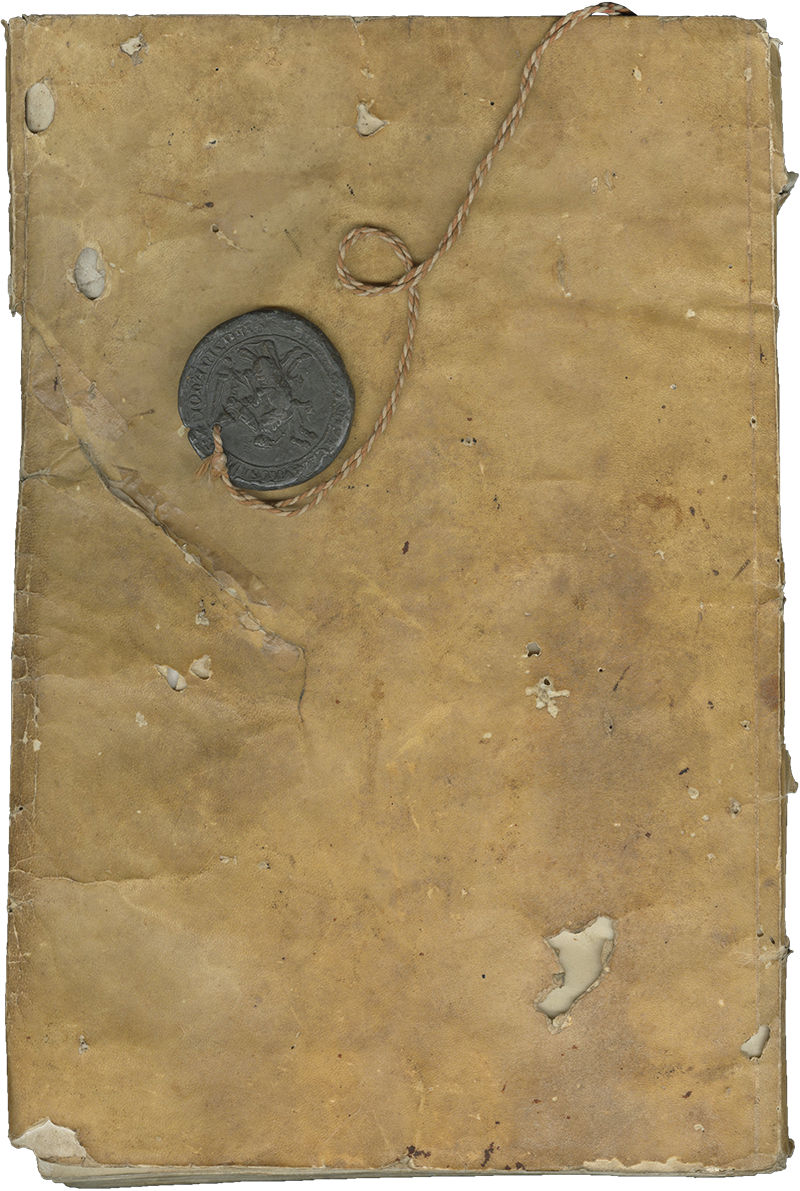
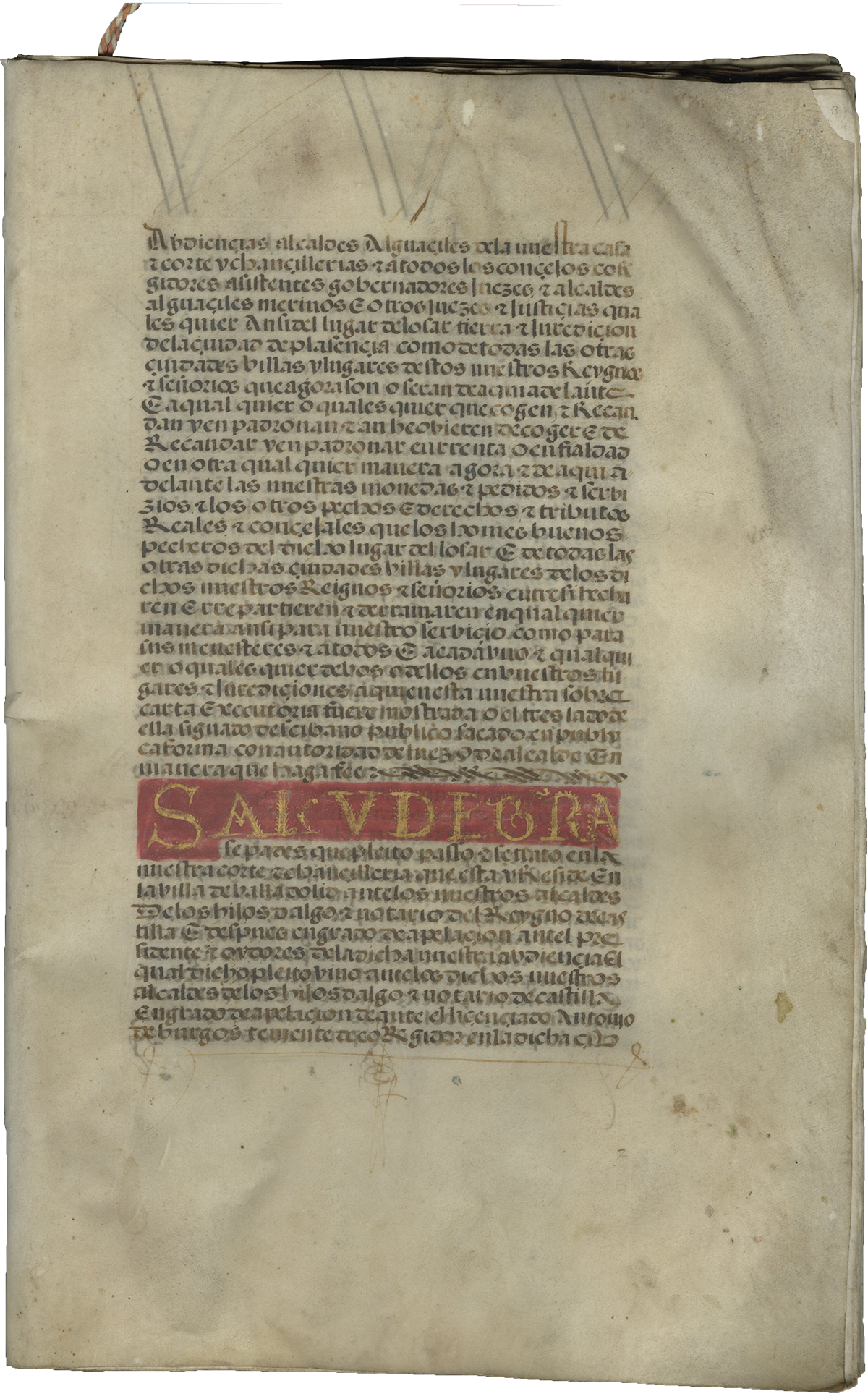
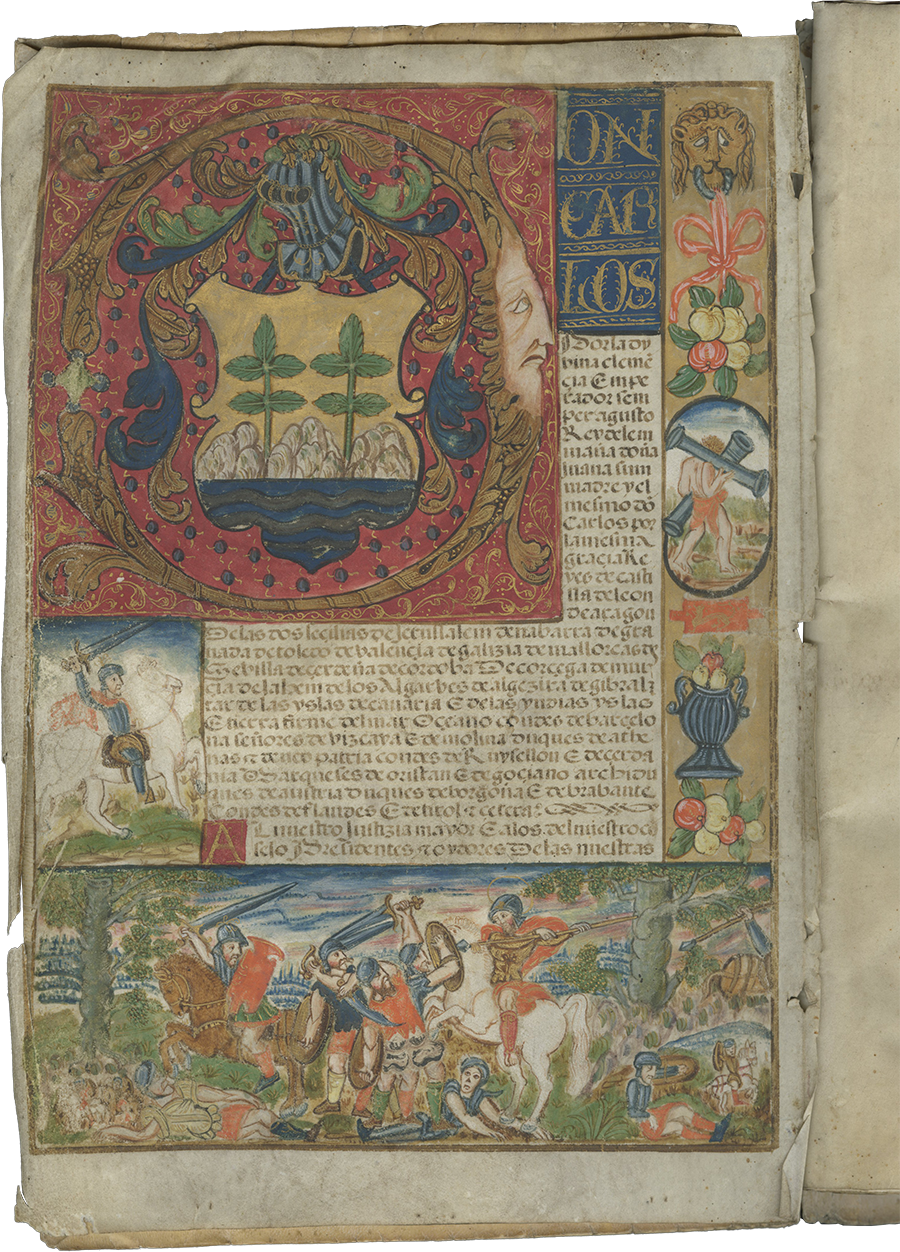
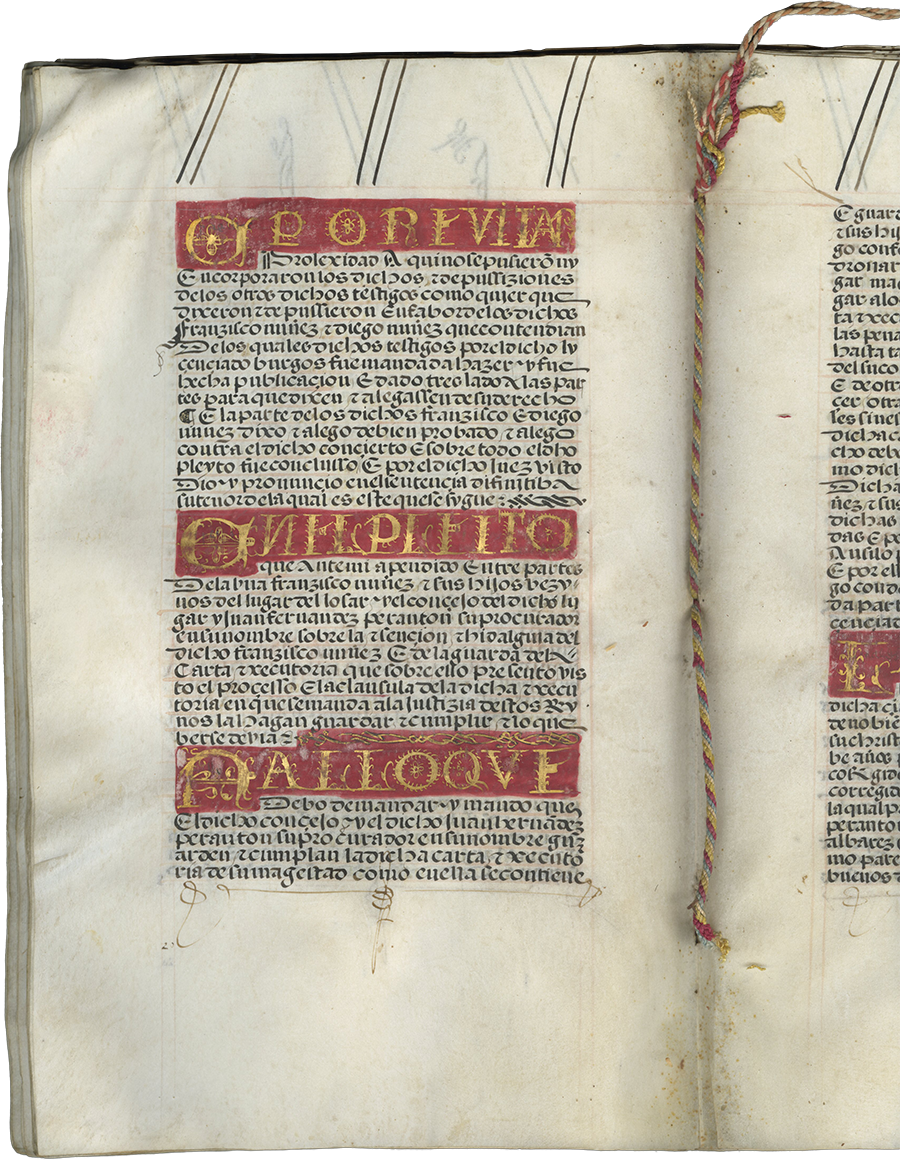
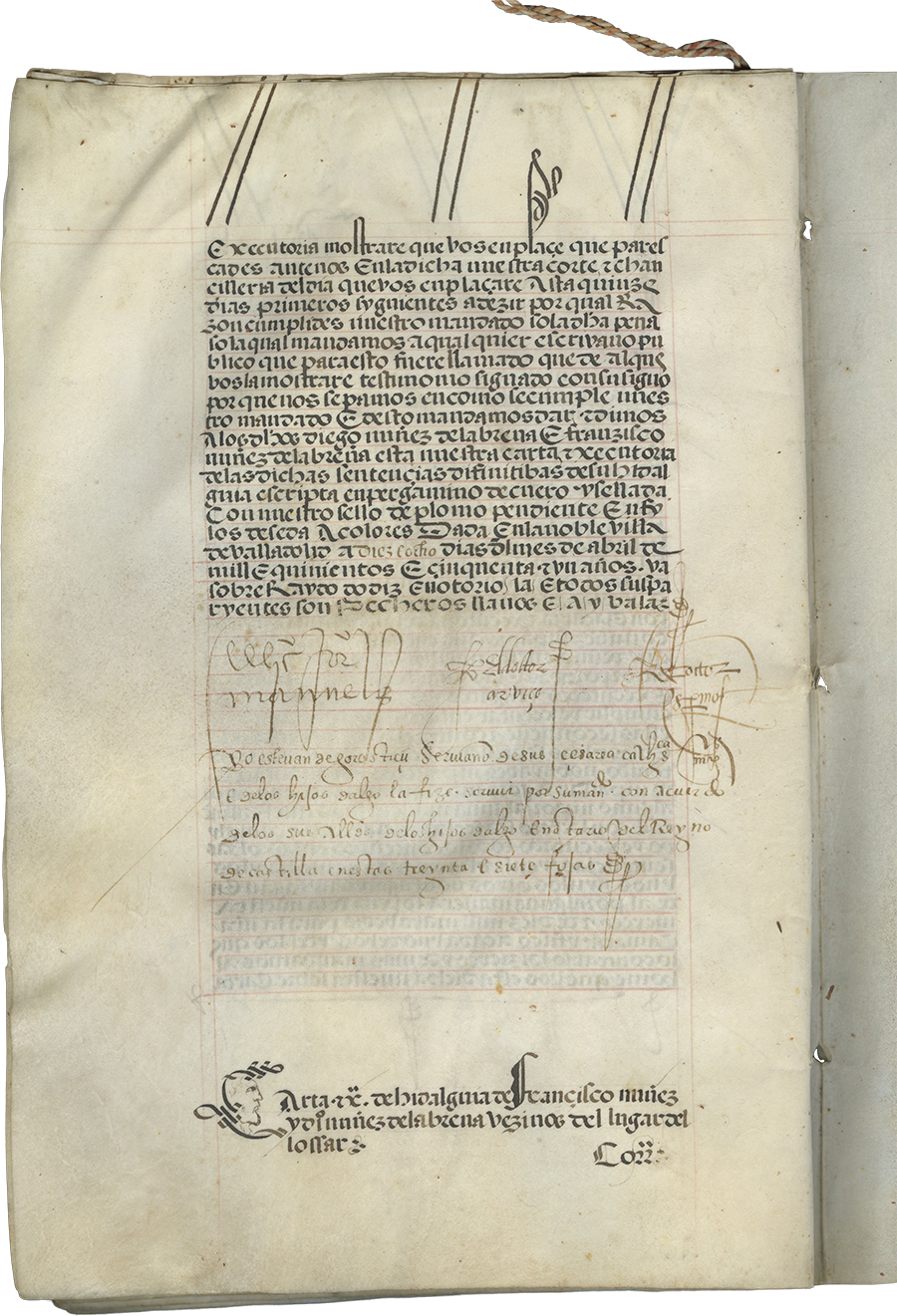
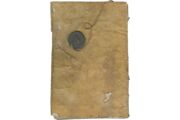
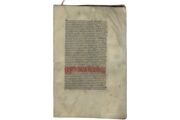
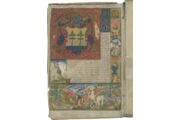
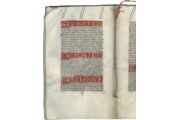
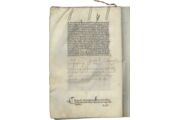
39 parchment folios, foliated in upper right, complete, no catchwords, (collation: i38+1), ruled in red in a single column of 40 lines, (justification 217 x 132mm), copied in an Iberian rotunda, some ascenders extended with strapwork, 3-line illuminated gold words on dark red ground throughout, one 27-line HISTORIATED initial with full illuminated border containing THREE MINIATURES, f. 1, a singleton, detached, otherwise good condition. Original parchment envelope wrapper, front and rear with a few holes, rear partly cut and taped together, remains of paper pastedowns, one leather lace remaining (possibly originally for the seal), bound with silk cord of red, blue, white, and yellow silk, lead seal pendant from a possible replacement in white and red cotton cord. Dimensions 350 x 235 mm.
Illuminated, dated, signed, in an elegant vernacular script, and containing an itemized costing, a carta ejecutoria hidalguía is an excellent addition to any teaching collection. Moreover, this carta can be compared with two digitized government documents that recorded the same decision, highlighting both the similarities and the striking differences between the certificates that the gentry collected and the government’s own records.
1. Copied and illuminated in Valladolid, 18 April 1551, for Francisco and Diego Núñez de la Breña (f. 37v). F. 1 bears an itemized cost, reading in part “dm mre [maravedis] s [pesos] xij seda” then, in a different ink and hand plomo lxij, [10,000 maravedis pesos 12 silk lead 42]” and f. 37v describes the document to be made, this very carta.
ff. 1v-37v, Carta ejecutoria hidalguía for Francisco and Diego Núñez de la Breña, incipit, “Don Carlos por la dyvina clemençia Emperador semper agusto Rey de lemania...Carta ejecutoria hildaguía de Françisco Nuñez y Diego Nuñez de la Brena vezinos del lugar del lossar,” and the witness signatures attesting to the accuracy of the copy;
f. 38, (added) additional notarial statement, ff. 38v-39v ruled but blank.
Cartas are a documentary class that are almost invariably illustrated, as the coat of arms of the family was closely linked to their gentry (lower nobility) status, which was officially confirmed and documented in the carta itself. As expected, the large initial beginning this carta is filled with the Núñez coat of arms. Also as commonly occurred, the border includes a likeness of the king, the Holy Roman Emperor Charles V (Carlos I in Spain) (1500-1558); in this case an equestrian vignette like that on the attached seal.
The decision to depict Charles mounted underscores the narrative scene stretching across the lower border, a depiction of the mounted St. James appearing to the Christian king Ramiro I (like Charles, mounted on a white horse) in order to assist in the defeat of the Muslim Abd ar-Rahman II, Emir of Córdoba in a legendary, rather than a historical, battle. James was venerated in late medieval Castille and Aragon, and in early modern Spain, for his labor in this battle as “Matamores,” the Moor-Slayer.
Along with a roundel of the Pillars of Hercules, the right border is filled with a range of motifs popular across Renaissance decorative art of this period, including apples, pears, and gourds, lions holding rings in their mouths, and ribbons. While the right border is anodyne, the lower border reminds us of the nationalist anxieties which led to the development of the carta process itself (see discussion below).
Toward the end of the fifteenth century “Spain” emerged as a single country and, nearly simultaneously, expanded into a global empire. These twin processes led to social mobility and racial mixing on a level the Spanish, and indeed, Europe, had not seen in over a millennium. Social and cultural anxiety led to a new legal process and document class, the cartas ejecutorias de hidalguía, that resulted from an onerous process that lower nobility, the hidalguía, (similar to English gentry, though in Spain always armigerous) underwent to prove their family's historic Christianity, racial purity, and social status, and have those formally recognized in law. In Spain, gentry status was not simply cultural but brought with it financial and other privileges. Gentry paid fewer and less taxes than non-nobles, for example (one of the pressures in ancien regime France that eventually led to the Revolution). The Spanish crown’s decision was duly recorded by the central government, and these decisions remain and have been digitized in Francisco Núñez’s case (see Online Resources). Certificates, letters patent called cartas, were then purchased by the families themselves as a permanent, ceremonial record of these decisions (not identical to, but not unlike, English patents of nobility). Cartas survive in great numbers, thanks in part to how vital they were to Spanish families throughout the imperial period, as subsequent generations underwent their own confirmation processes.
While the gentry and nobility are more heavily documented than other classes, Losar de la Vera was a small, rural place in the later Middle Ages and continues to be a small, rural place today. Franciso and Diego Núñez de la Breña were declared to have gentry status there and awarded all the rights and privileges that came with that, but their lives seem to have remained too local to have often had recourse to the royal courts in Valladolid. The plea (pleito) Francisco made in 1549 that began this process survives, and the two government decisions from 1551 that generated the present carta survive, and have even been digitized, but beyond that, little seems to remain (Literature and Online Resources). In this sense, the Núñez de la Breña family of (or near) Losar de la Vera offer an important reminder that in many countries, and in many eras, gentry status might reflect social standing in quite rural localities, rather than wealth or political power on even a regional basis. Records document the Núñez de la Breña family in the area of Losar de la Vera into the eighteenth century, however, and so we are also reminded that archival silences do not necessarily indicate a family’s failure. While it is possible that additional life records exist that have not been digitally catalogued, it is equally likely that Francisco and Diego lived quiet lives as local notables near Losar de la Vera, simply leaving behind few records that survived to the present day.
Matilla, J., ed. El documento pintado: Cinco siglos de arte en manuscritos, [Exhibition Catalogue], Museo del Prado, Febrero 2000, Madrid, 2000.
Thompson, Irving A. A. “Hidalgo and Pechero: the Language of ‘Estates’ and ‘Classes’ in Early-Modern Castile,” in Language, History and Class, ed. Penelope J. Corfield, Oxford, 1991, pp. 53-78.
Valladolid, Archivo de la Real Chancillería de Valladolid , Pleito de Francisco Núñez, vecino de Losar de la Vega, SALA DE HIJOSDALGO, CAJA 364,8. https://pares.mcu.es/ParesBusquedas20/catalogo/description/233701?nm
Hansen, Kelli, and Mariana Guzman. “Cartas Ejecutorias: Nobility and Power in Early Modern Spain,” https://library.missouri.edu/specialcollections/exhibits/show/cartas-ejecutorias/home
Mercado‑Oliveras, Verónica, and Jocelyn Alcántara‑García. “Cartas Ejecutorias de Hidalguía (executory certificates of nobility): a Survey in Materials Analysis, Legal, and Aesthetic Contexts—Two Case Studies,” Heritage Science 11 (2023). https://www.nature.com/articles/s40494-022-00850-y
Neary, Elizabeth A. “Spanish Golden Age Nobility Documents,” 2023. https://dcc.newberry.org/?p=21226
Valladolid, Archivo de la Real Chancillería de Valladolid, Ejecutoria del pleito litigado por Francisco Núñez de Labreña, vecino de Losar de la Vera, REGISTRO DE EJECUTORIAS, CAJA 730,14. Digitized. https://pares.mcu.es/ParesBusquedas20/catalogo/description/5711291?nm
Valladolid, Archivo de la Real Chancillería de Valladolid, Ejecutoria del pleito litigado por Francisco Núñez, vecino de Losar de la Vera, REGISTRO DE EJECUTORIAS, CAJA 729,2. Digitized. https://pares.mcu.es/ParesBusquedas20/catalogo/description/5709031?nm
TM 1506