

Ferial Psalter (use of Bologna)
In Latin, illuminated manuscript on parchment
Northern Italy, Bologna, c. 1270-1280
TM 1451
sold
 Textmanuscripts - Les Enluminures
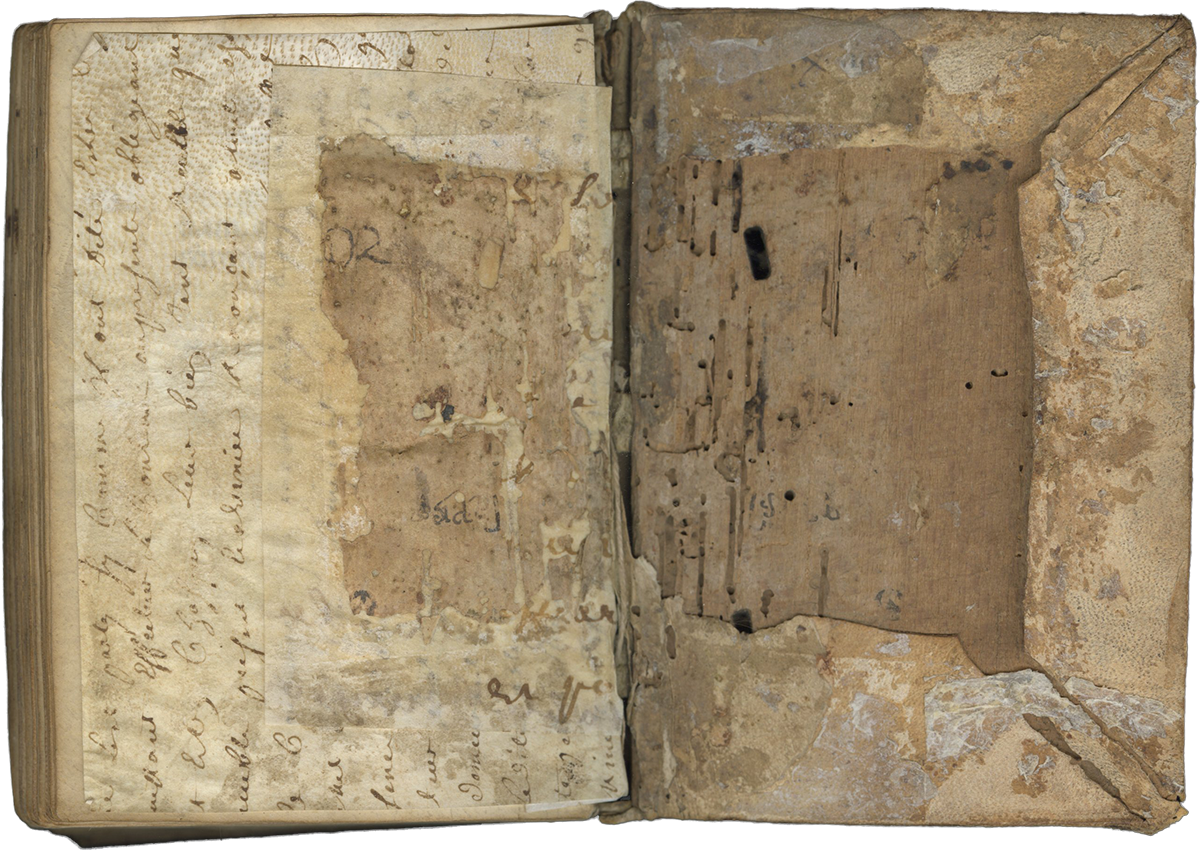
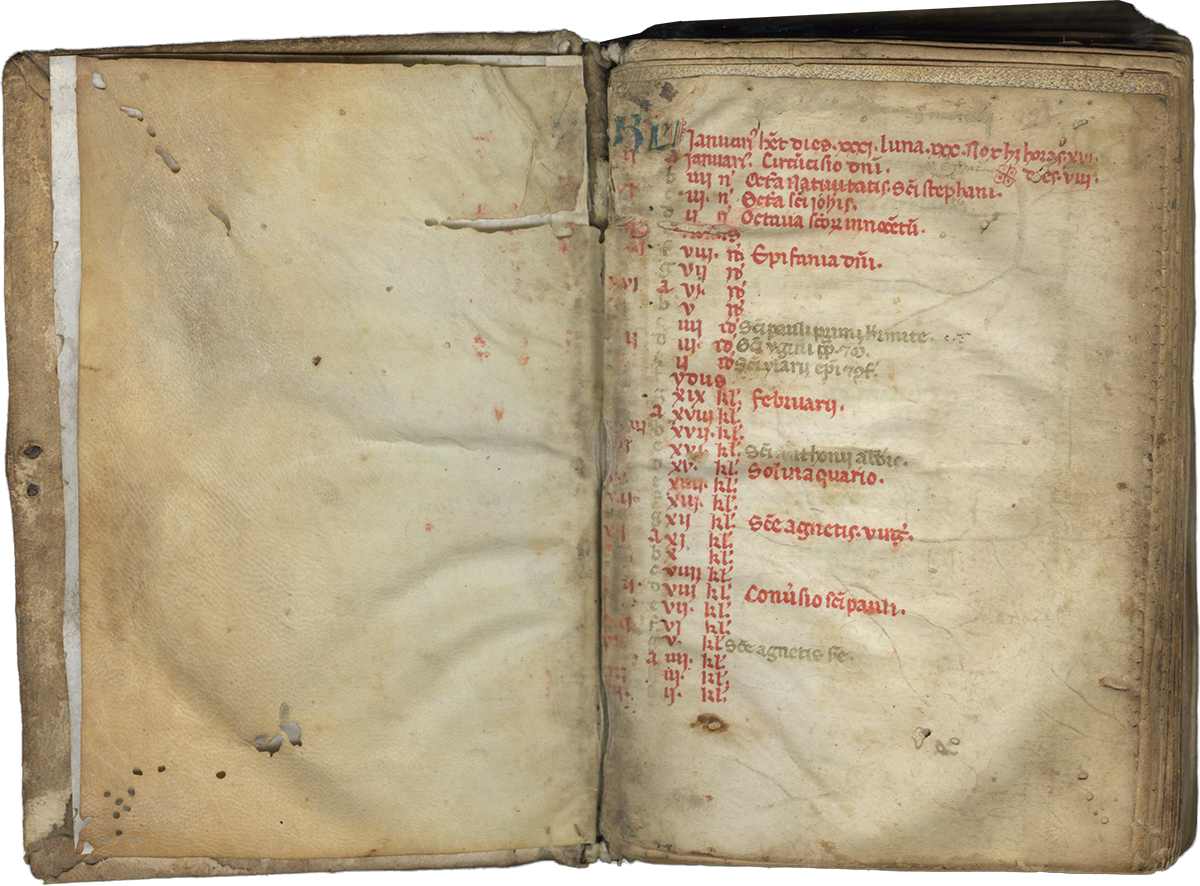
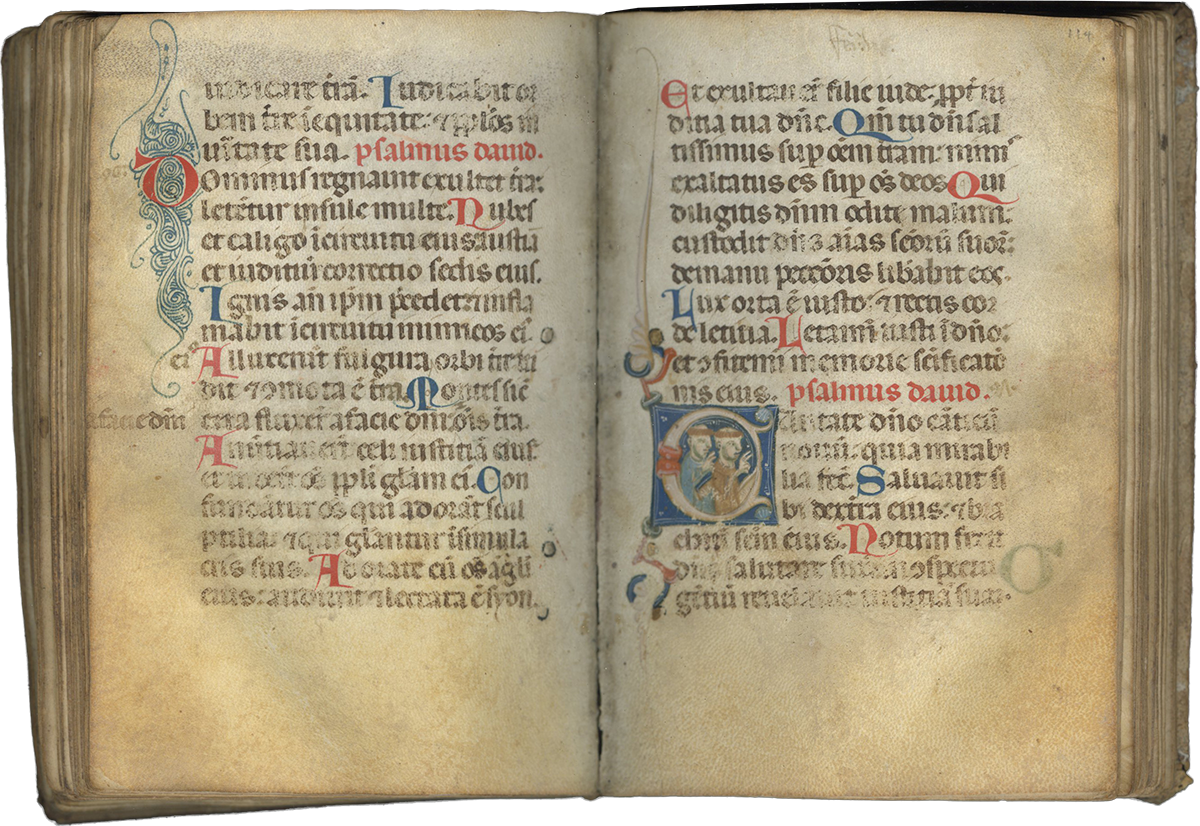
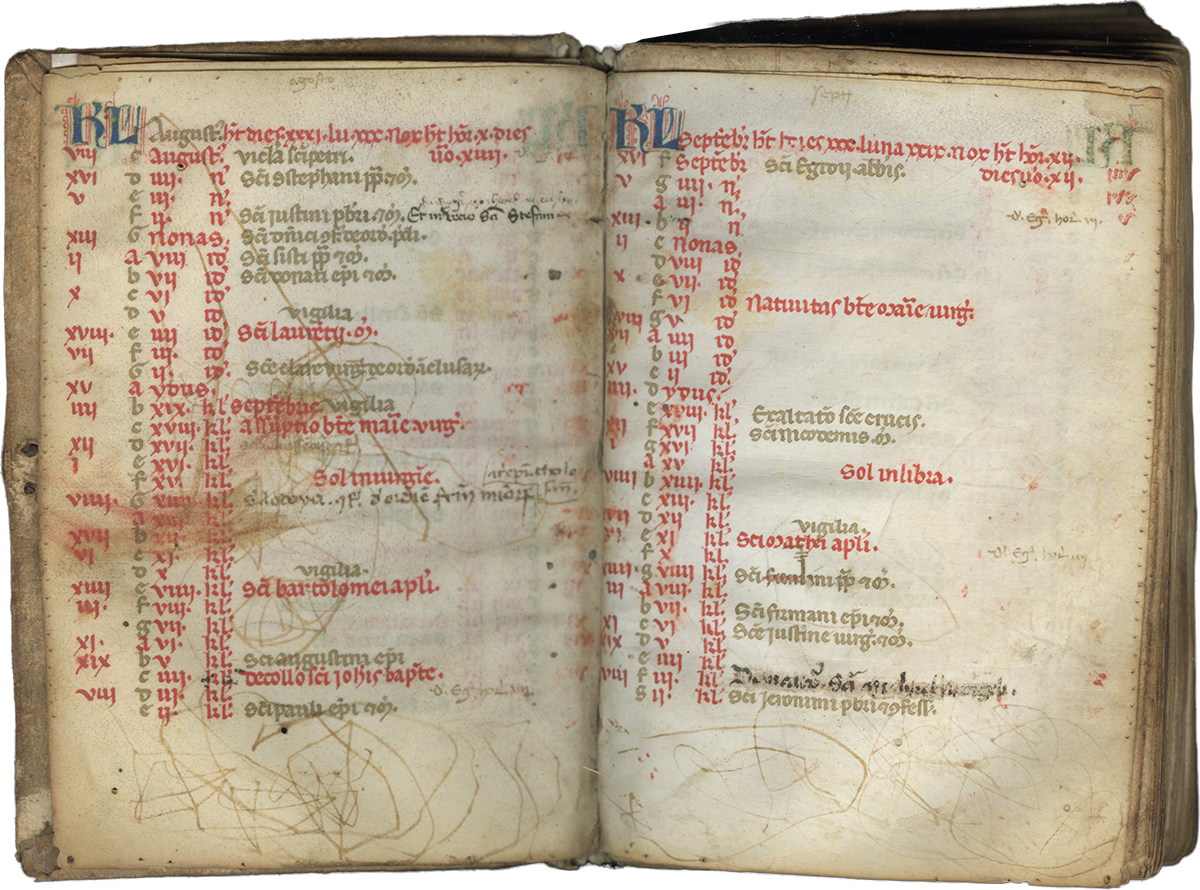
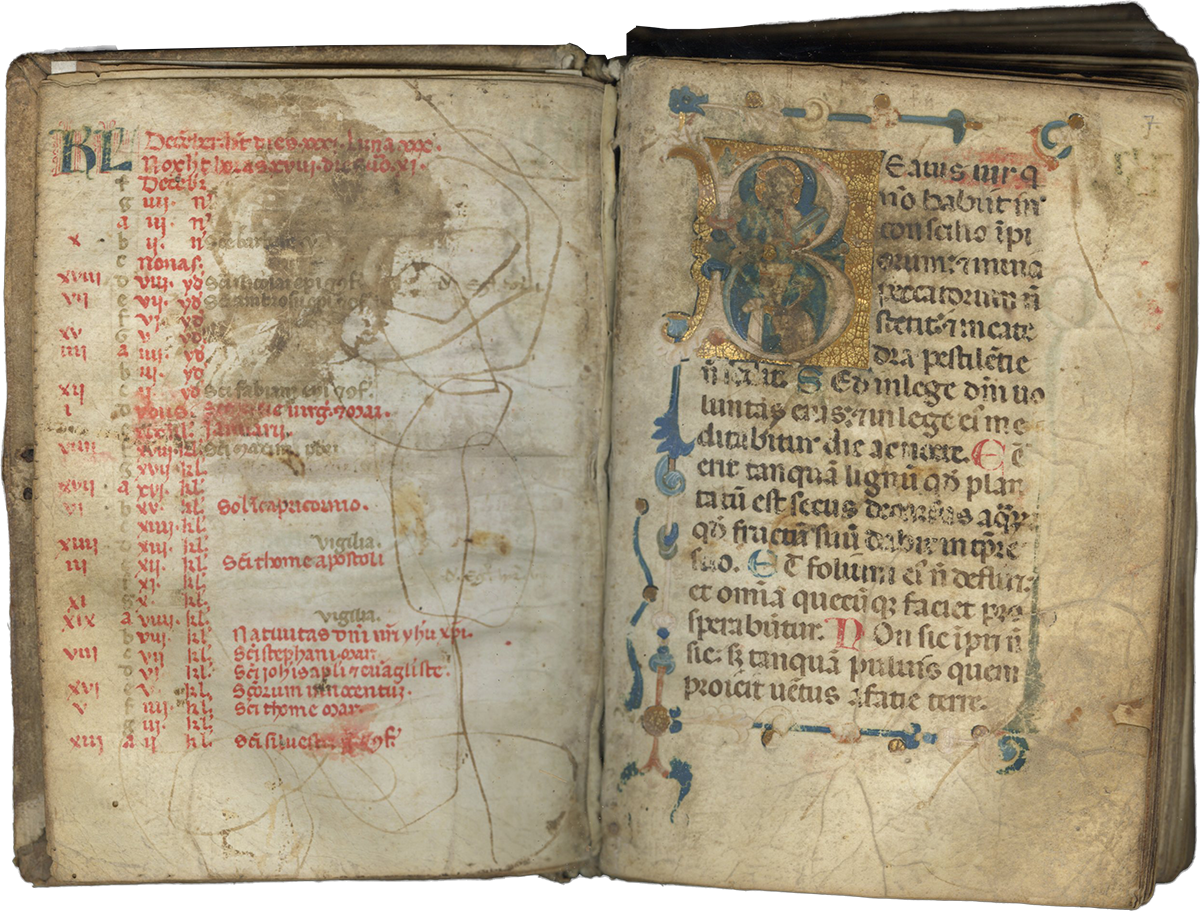
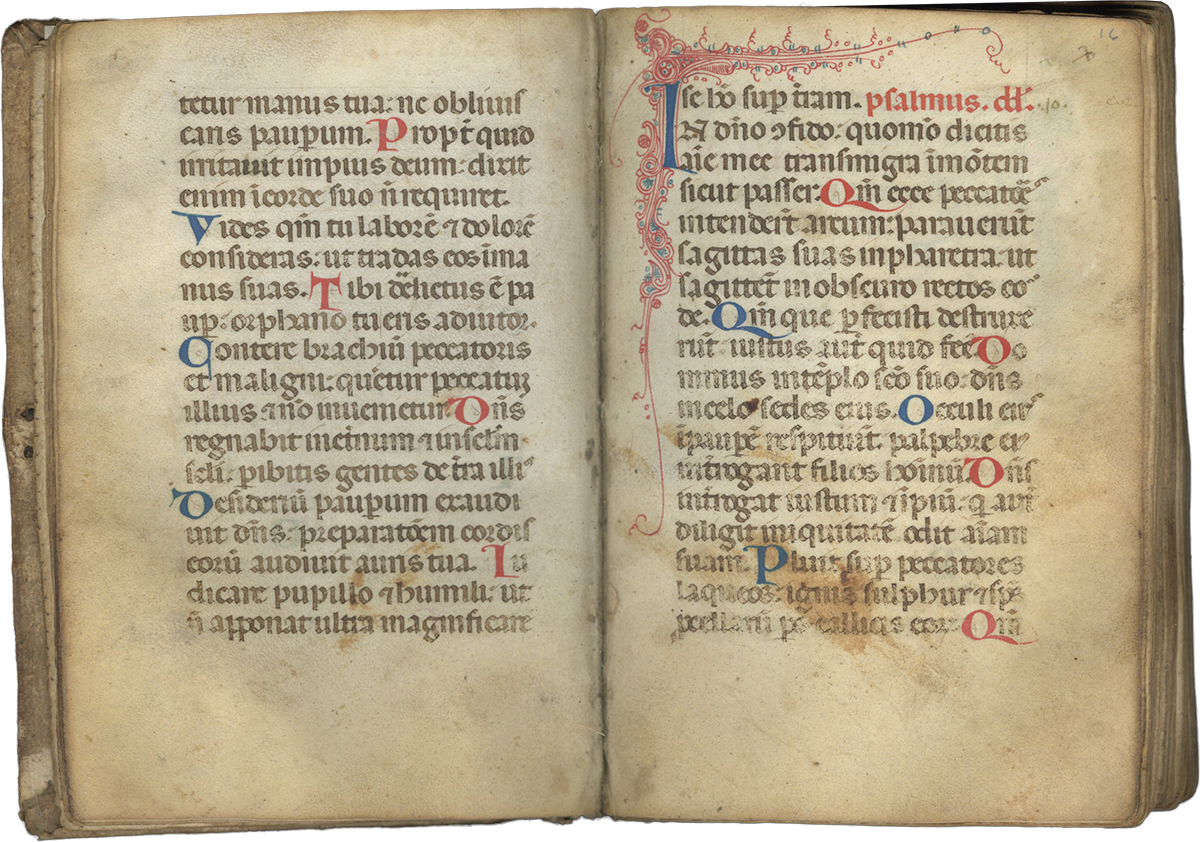
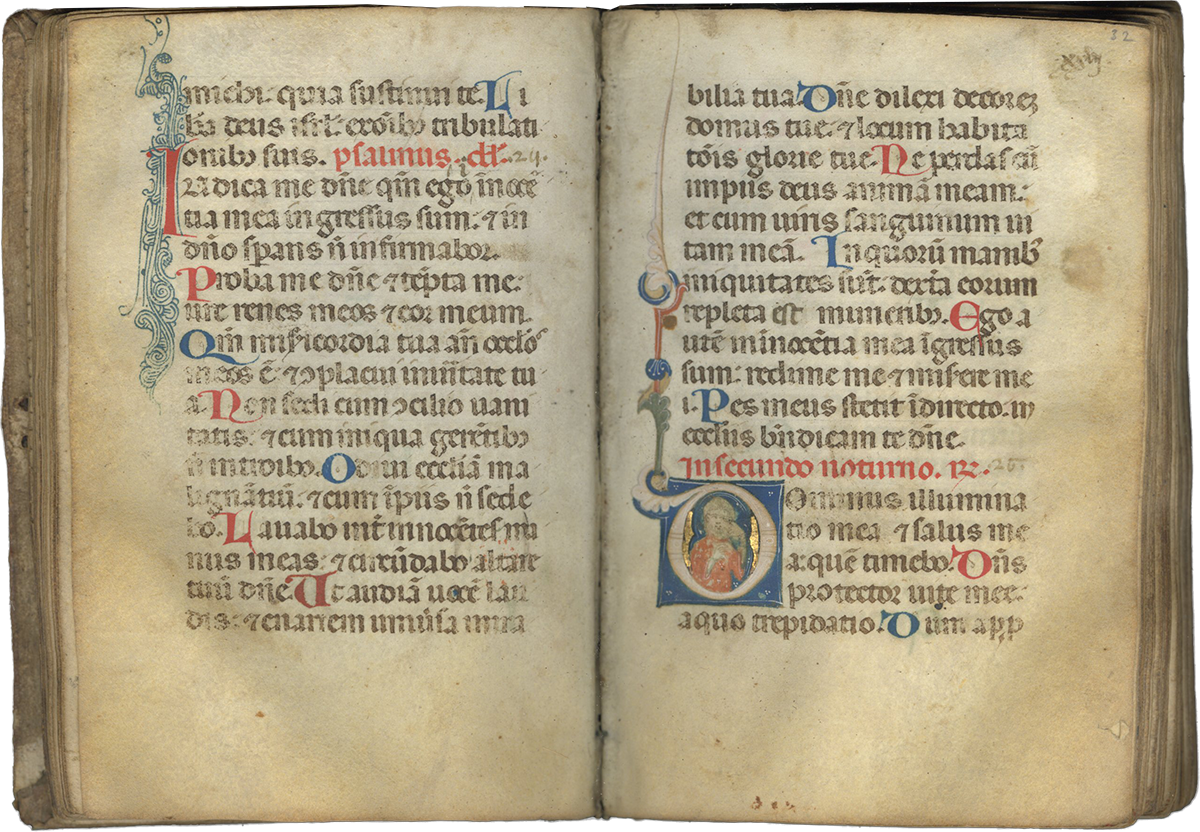
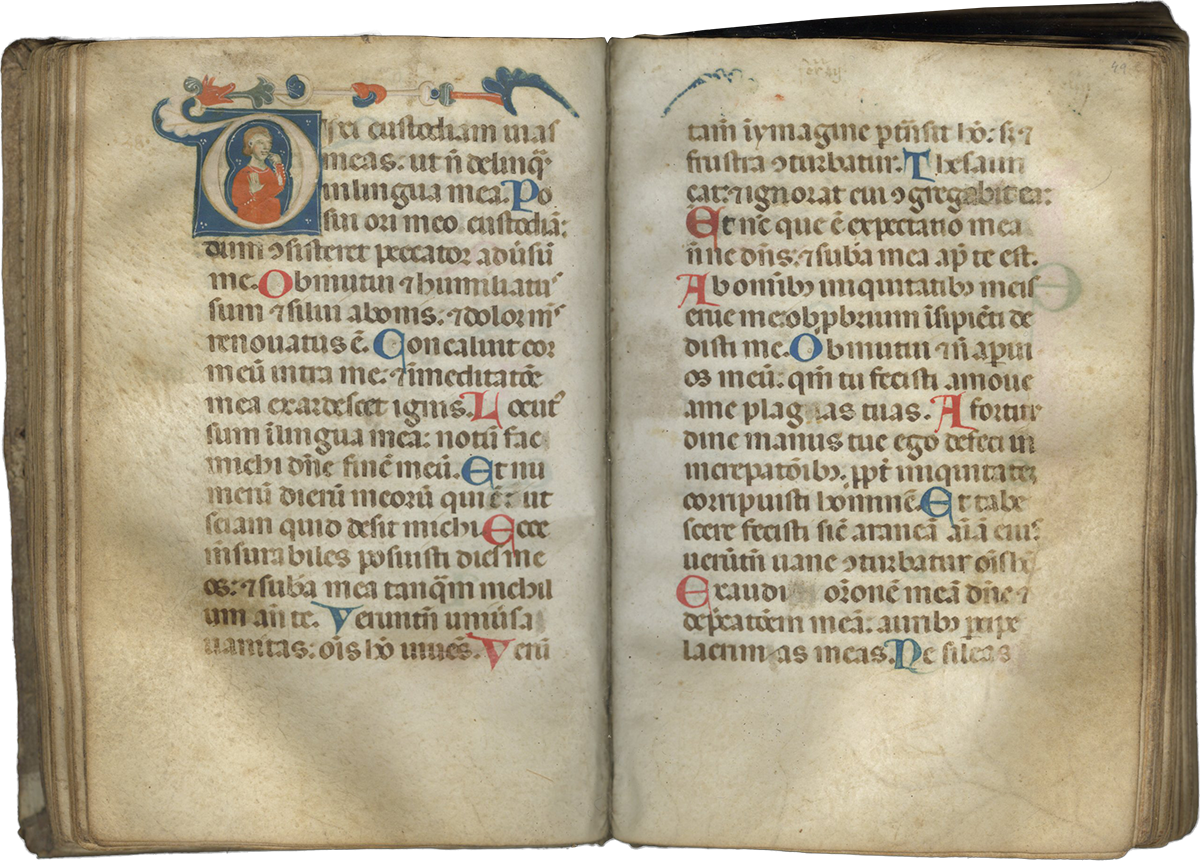
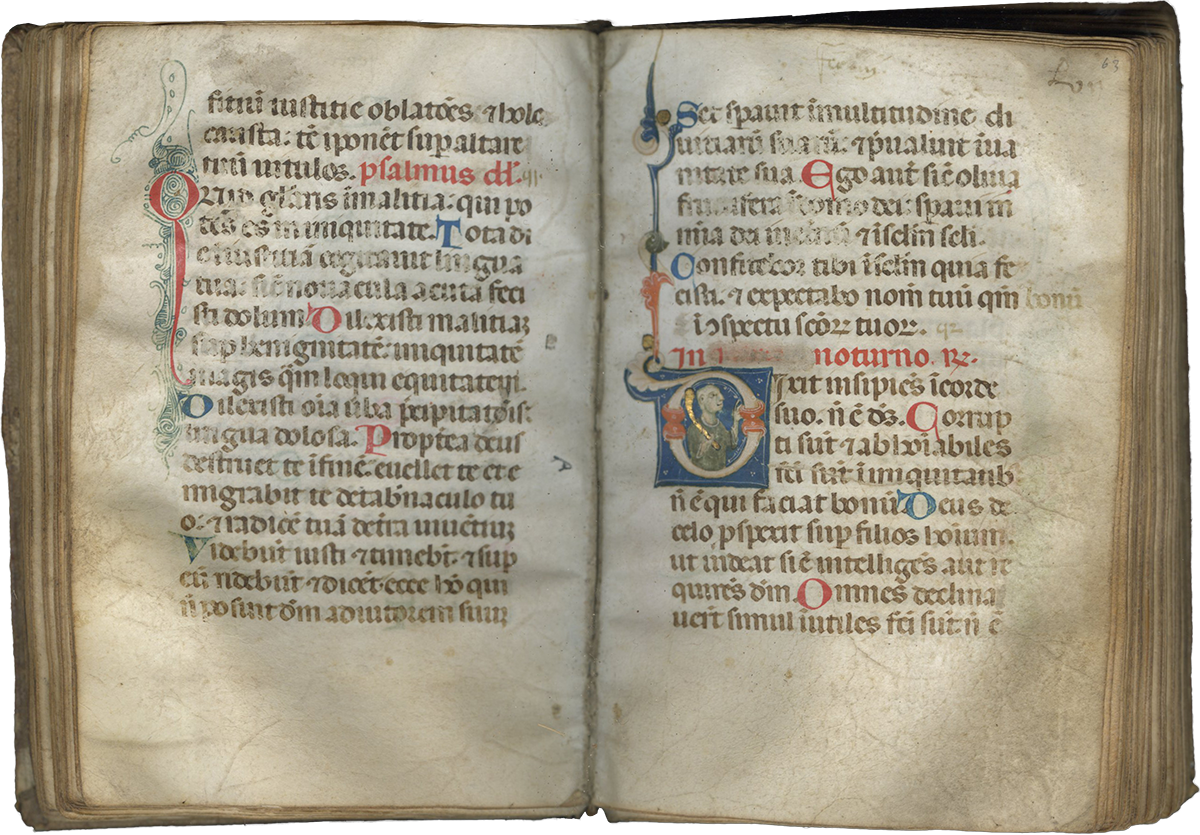
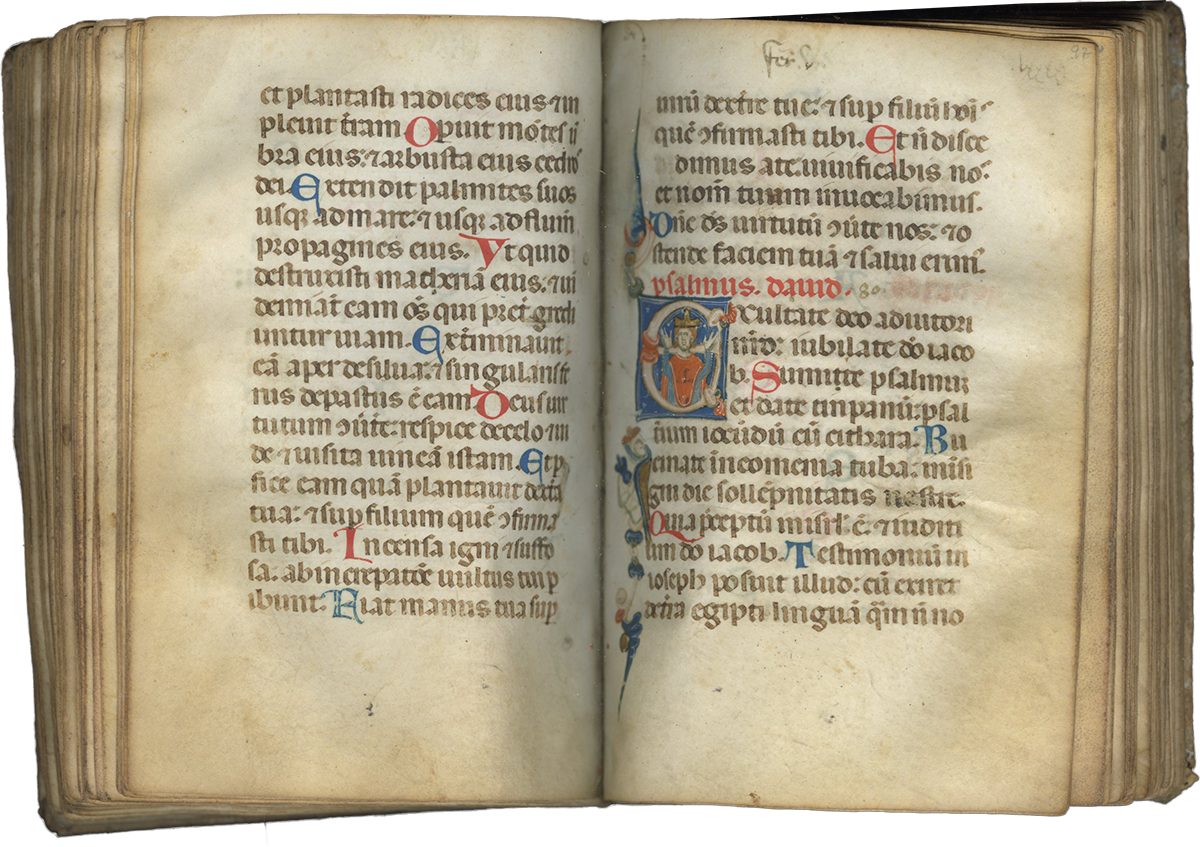
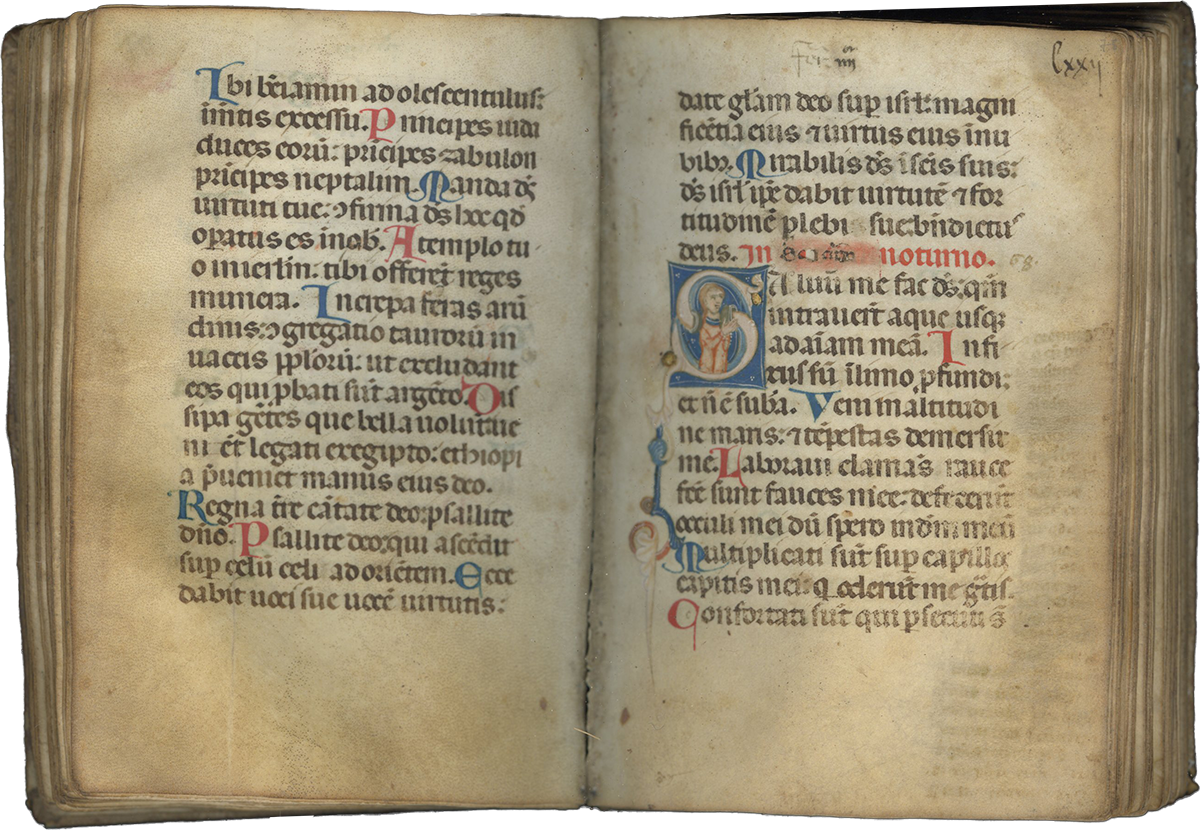
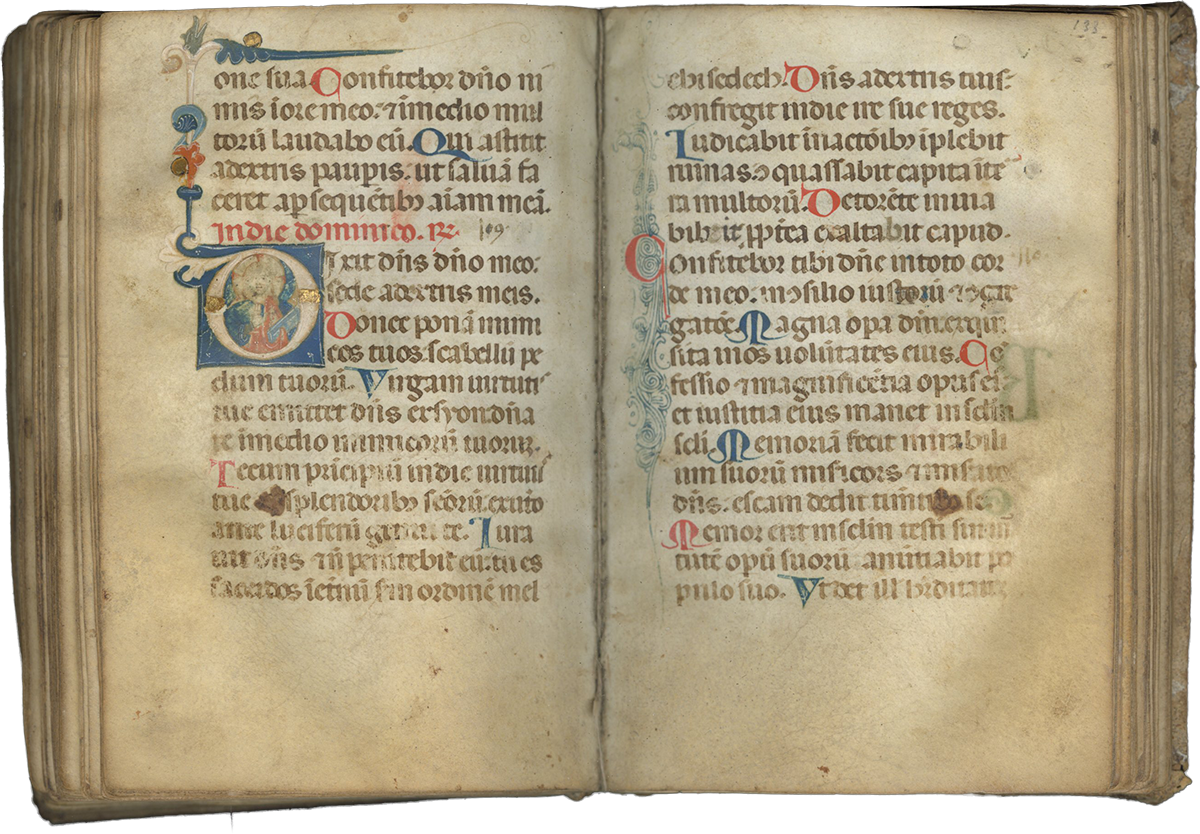
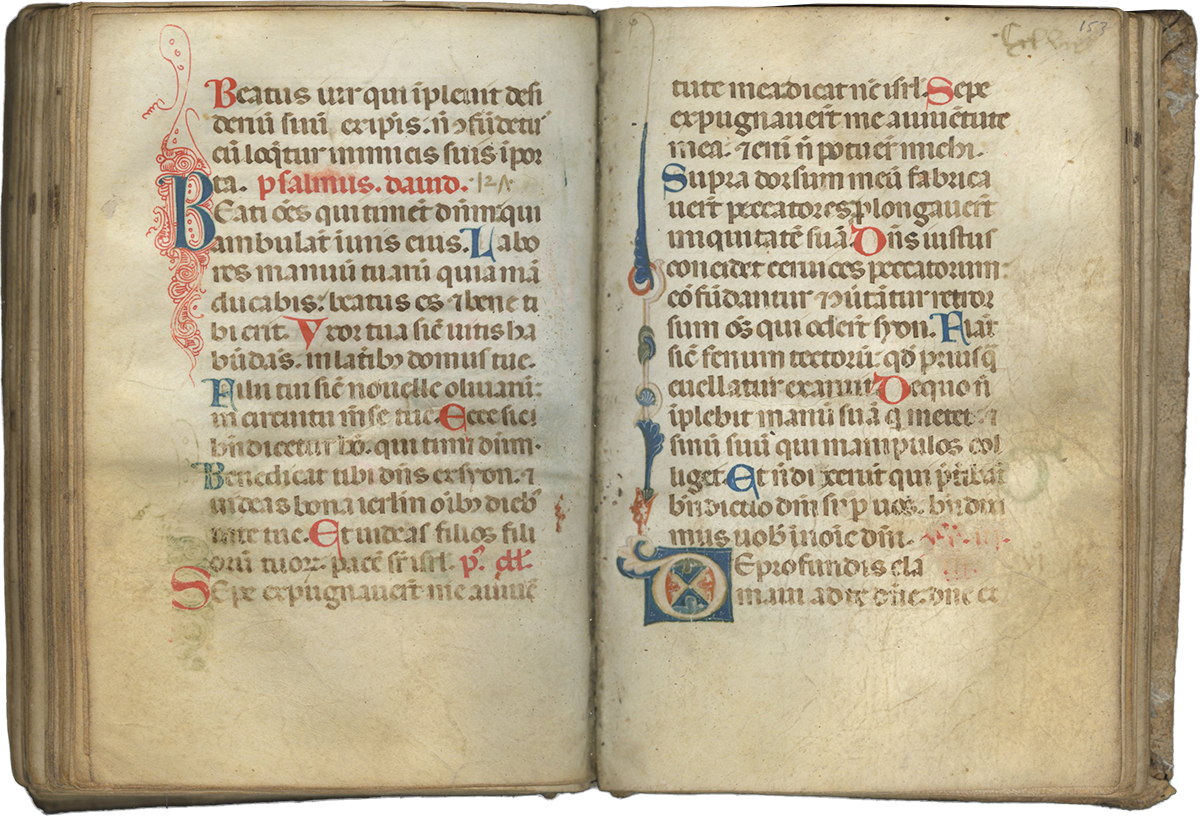
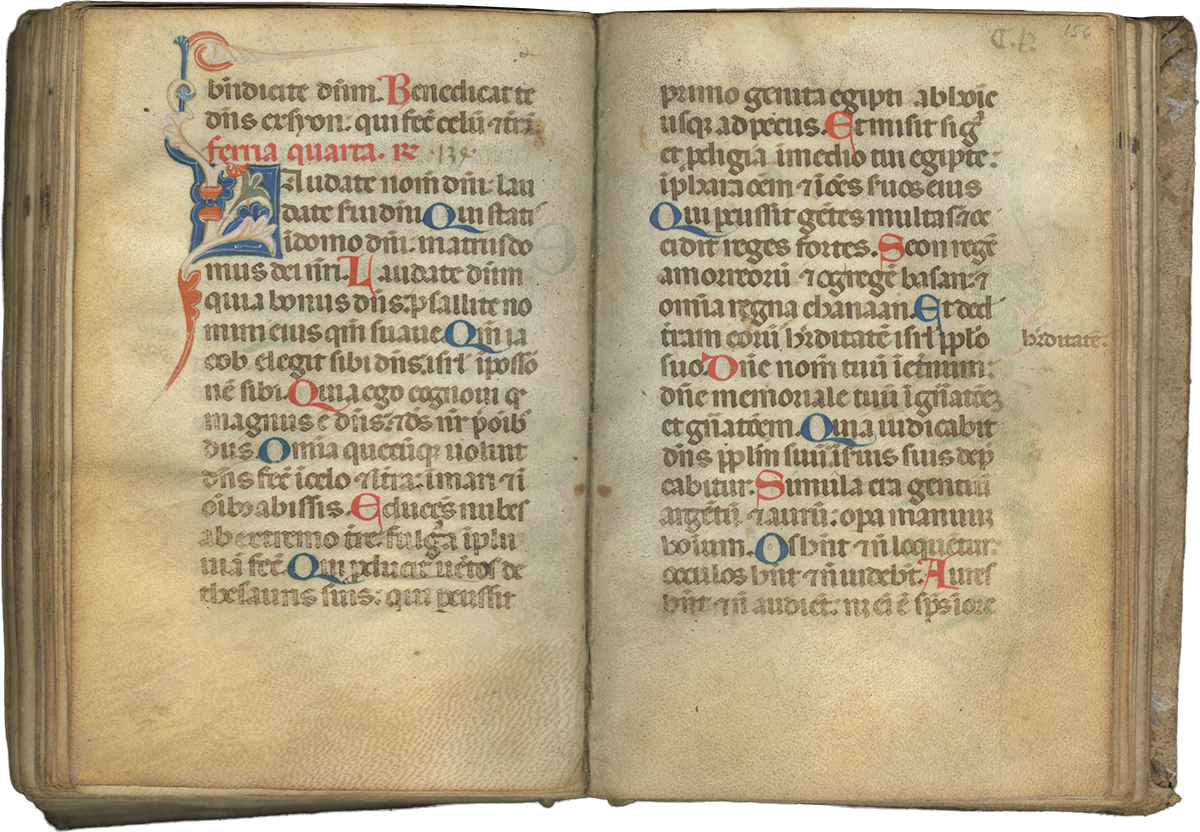
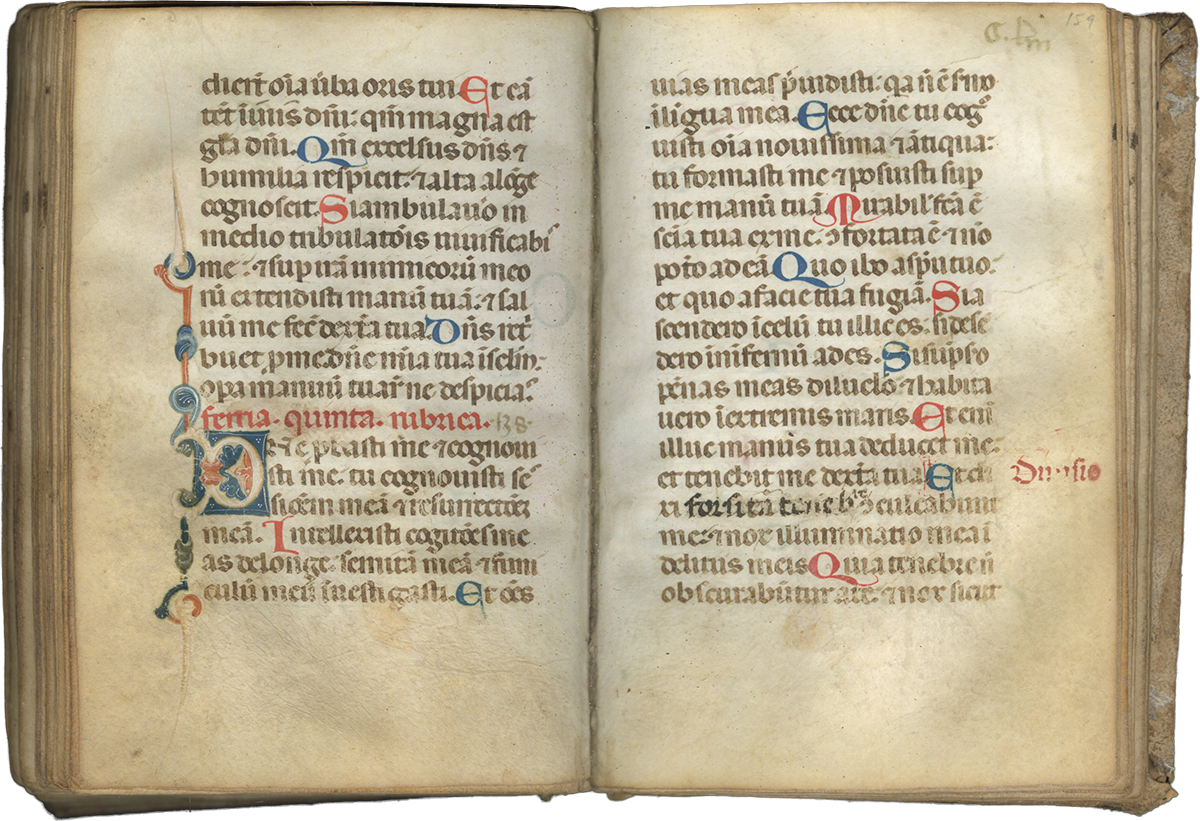
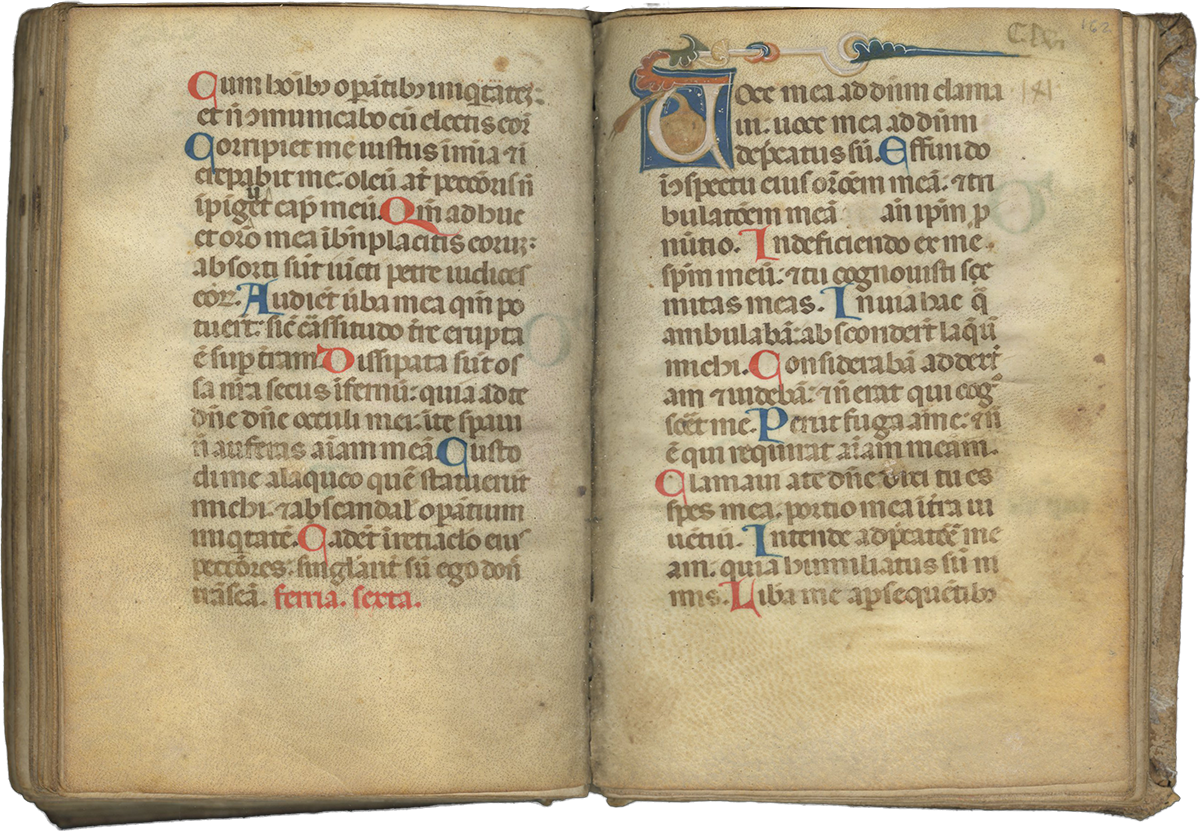
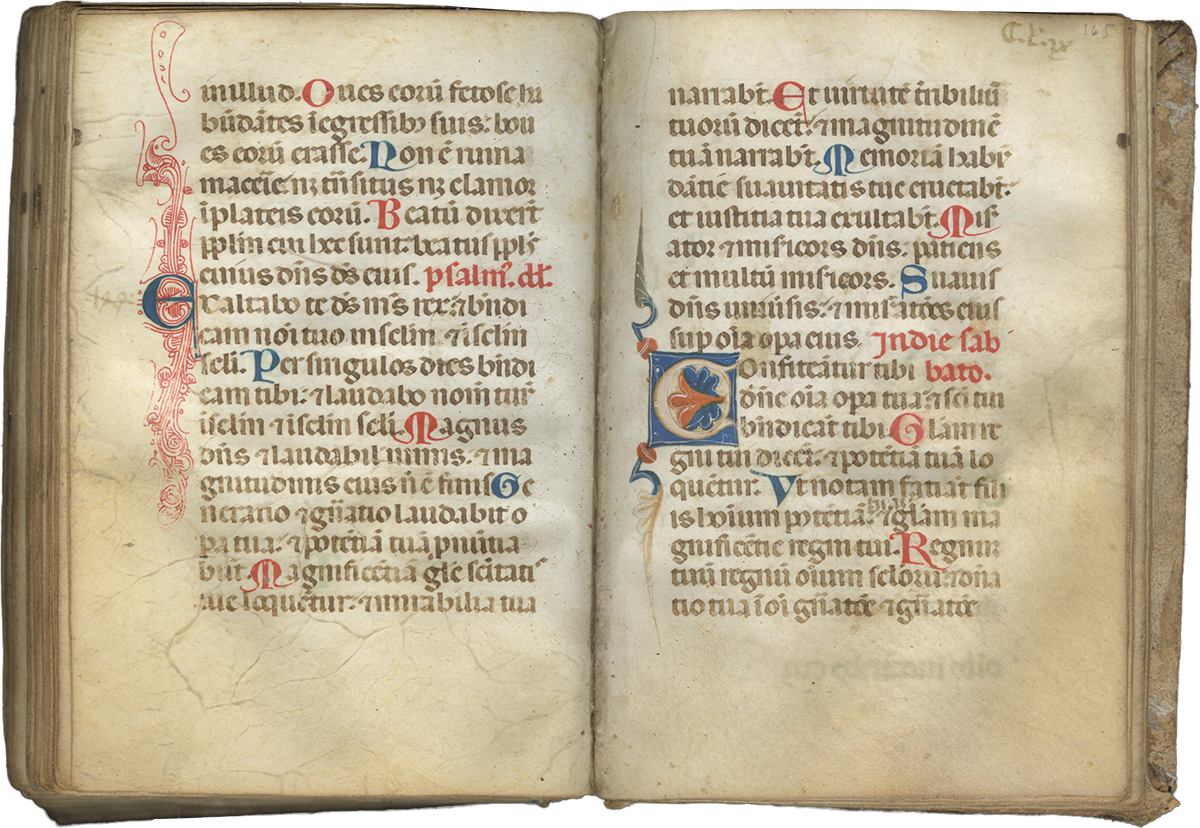
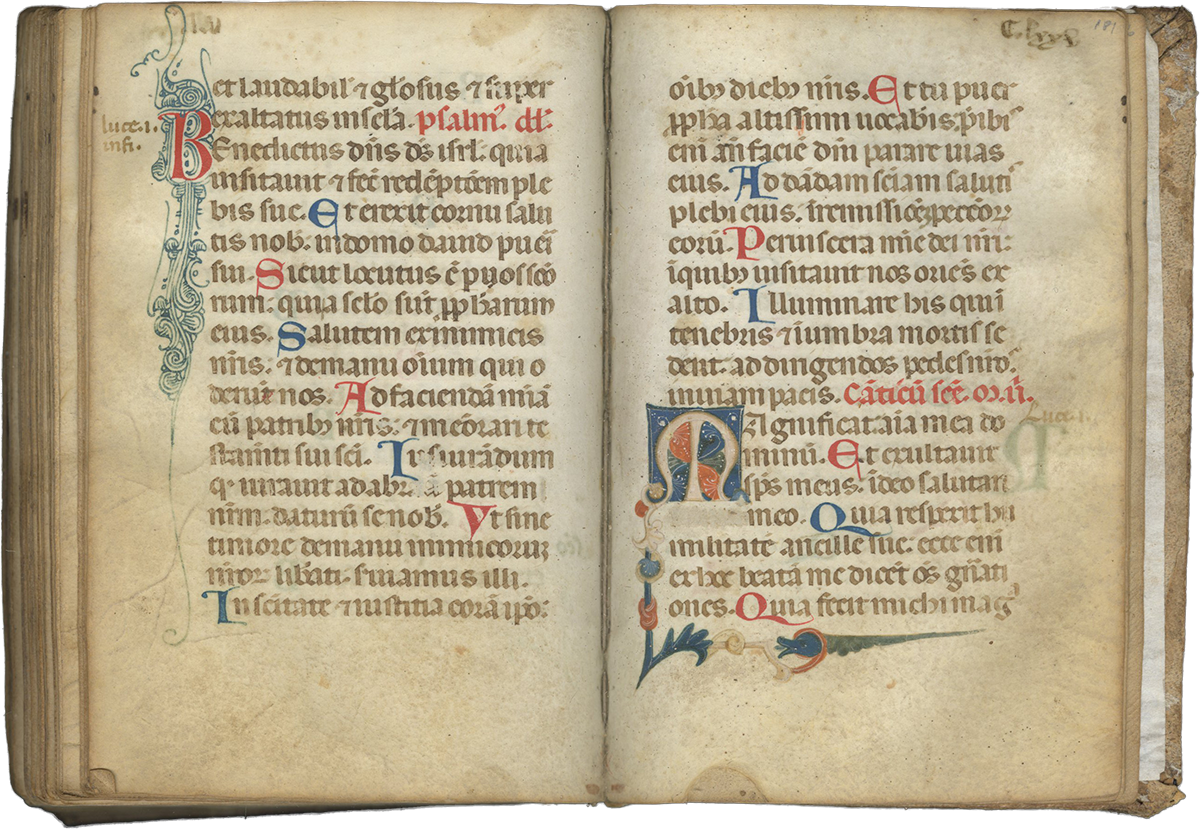
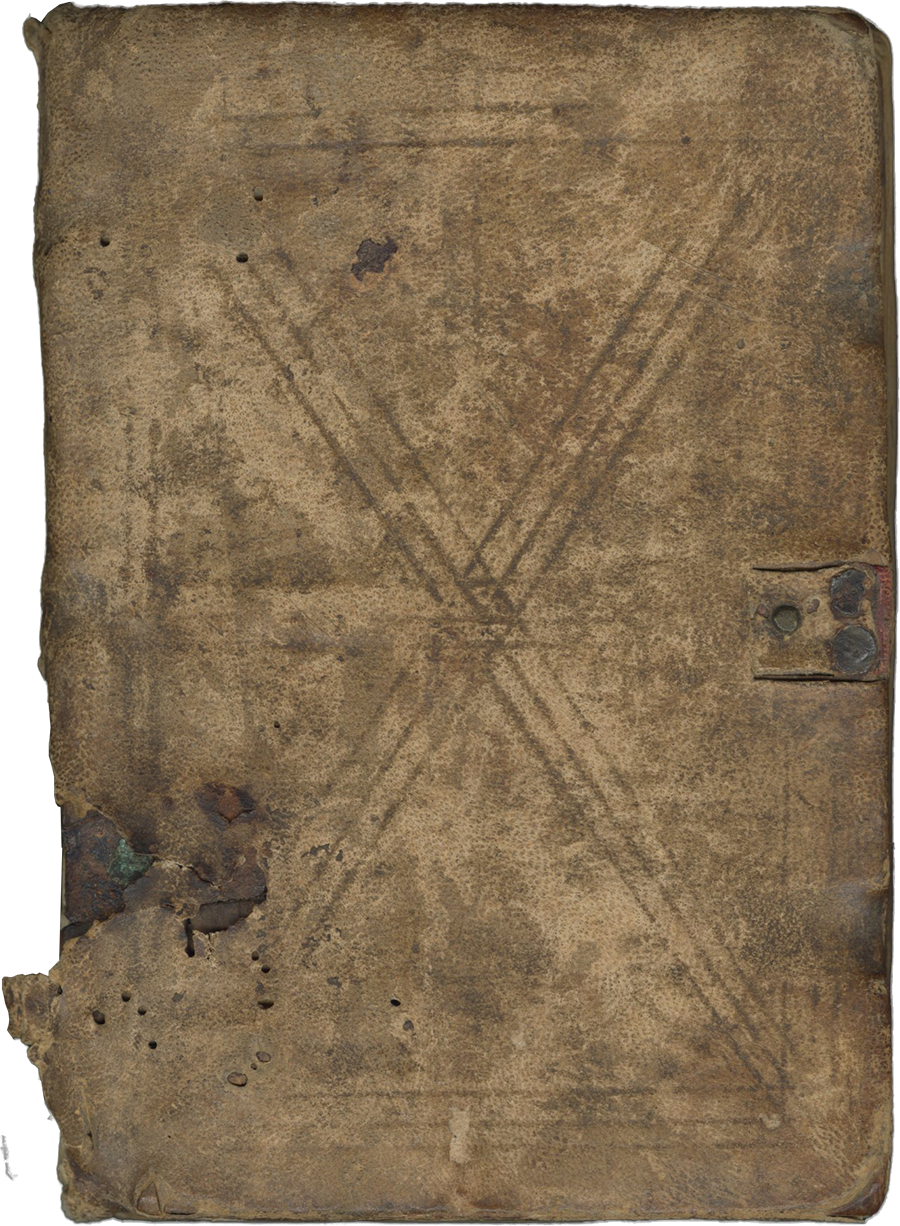
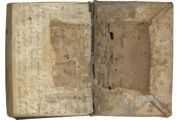
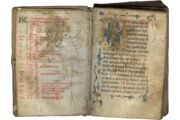
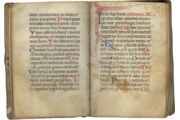
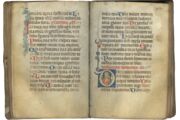
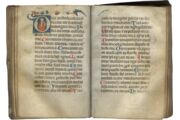
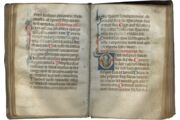
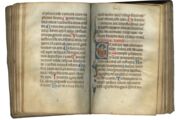
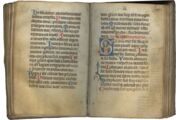
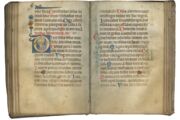
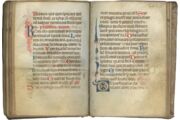
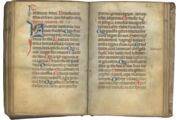
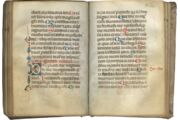
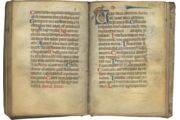
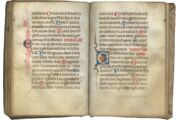
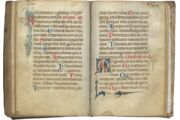
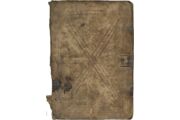
ii (seventeenth-century parchment) + 186 + i (seventeenth-century parchment) folios on parchment, old foliation in Roman numerals in brown ink, i-clxxx (beginning on f. 7), modern foliation in pencil, 1-186, complete (collation: i6 ii-xvi12), alphanumeric quire signatures in red ink (visible e.g. on f. 36), horizontal catchwords, weekdays identified by inscriptions in the upper margin (e.g. “fer(ia) ij” on f. 41), psalm numbers in Arabic numerals in brown ink next to the rubrics, ruled in lead point (justification 98 x 63 mm), written in a southern Gothic textualis script (littera bononiensis) in single column on 18 lines, rubrics in red, 1-line initials alternating in red and blue, 2-3-line initials in blue with red penwork flourishes extending to margins (some with touches of blue ink), six 3-line decorated initials in pale pink highlighted with liquid gold for details and painted on blue grounds, infilled with curving foliage motifs in red, green, blue, and white penwork, one initial infilled with a brown bird, foliage tendrils extend from the initials to the margins in pale pink, red, green and blue, one incorporating a dolphin’s head, EIGHT HISTORIATED INITIALS, one 7 lines high in pale pink on burnished gold ground (f. 7), the others 4 lines high in pale pink on blue grounds and with foliage tendrils in margins as above, incorporating animal and human heads, the pigments and gold badly rubbed on the historiated initial on f. 7 , some wormholes, stains and signs of use, in overall very good condition. Bound probably in the first half of the seventeenth century in France in light brown sheepskin (basane) over wooden boards, both covers blind-tooled in a simple geometric pattern of a cross and a diagonal cross (saltire) inside a frame made with triple lines, spine with three raised bands, remnants of a small, now-blank parchment label at the top of the spine, nail heads of clasp remnants on the edge of the front cover, parchment flyleaves with seventeenth-century cursive writing in French, several wormholes, significant loss of leather on the spine, decoration entirely worn on the back cover, otherwise in good condition. Dimensions 144 x 98 mm.
This rare, illuminated Psalter represents a key example of the artistic and devotional culture of Bologna when this university and legal center was transformed in the late Duecento into one of Europe’s most active hubs of manuscript production. The petite manuscript, designed to be easily held in one’s hands for private devotion, is decorated with refined filigree initials and charming scenes in the historiated initials painted with luminous colors, encapsulating the “primo stile” of Bolognese illumination.
1. The manuscript was made for use in the diocese of Bologna (Emilia-Romagna), as indicated by a number of locally celebrated saints in the calendar (see below). The style of illumination suggests that it was made locally in Bologna in the 1270s (see below). The division of the psalms in the liturgy of the hours follows the use of Rome (secular clergy, canons, mendicant orders) rather than the monastic use.
2. France, Private Collection.
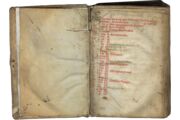
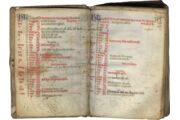
ff. 1-6v, Calendar, including the following saints honored in Bologna: St. Procolus (1 June), St. Vital and St. Agricole, Bologna’s first two martyrs (4 Nov), patron saint of Bologna St. Petronius (4 Oct), St. Stephen (2 Jan octave; 26 Dec), to whom is dedicated Basilica of Santo Stefano in Bologna, St. Stephen, pope (2 Aug);
ff. 7-169, Ferial Psalter, complete with psalms 1-150;
ff. 169-186v, Liturgical canticles, hymns, Pater noster and creeds: Confitebor (Isaiah 12), Ego dixi (Isaiah 38:10-21), Exultavit (1 Kings 2:1-11), Cantemus (Exodus 15:1-20), Domine audivi (Habakkuk 3), Audite celi (Deut. 32:1-44), Benedicite omnia (Dan. III:57-89), Benedictus dominus (Luke 1:68-80), Magnificat, Nunc dimittis, Te deum, Gloria in excelsis, Pater noster, Apostle’s Creed, and Athanasian Creed;
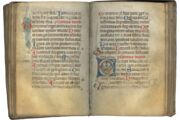
Eight historiated initials marking the eightfold division of the Psalter (the first initial is 7 lines high; the rest are 4 lines high):
f. 7, Psalm 1 (“Beatus vir”), Christ in the upper register, King David in the lower register;
f. 32, Psalm 26 (“Dominus illuminatio mea”), David pointing at his eye, illustrating the metaphor of divine light as spiritual illumination;
f. 48v, Psalm 38 (“Dixi custodiam”), David making a gesture of restraint by pointing with one hand at his closed mouth and placing the other hand in front of him (the psalm begins with the resolve to guard one’s speech: “I said, I will take heed to my ways, that I sin not with my tongue: I set a guard to my mouth, when the sinner stood against me”);
f. 63, Psalm 52 (“Dixit insipiens”), The Fool with club (“The fool said in his heart...”);
f. 71, Psalm 68 (“Salvum me fac, Deus”), David praying in distress;
f. 97, Psalm 80 (“Exultate Deo”), David raising his arms in praise of God;
f. 114, Psalm 97 (“Cantate Domino”), two monks singing and praising God;
f. 132v, Psalm 109 (“Dixit Dominus”), Christ blessing;
In addition, there are six decorated initials with leafy stems extending to the margins:
f. 153, Psalm 129 (“De profundis”), curving leaves;
f. 155v, Psalm 134 (“Laudate nomen”), curving leaves;
f. 158v, Psalm 138 (“Domine probasti me”), curving leaves;
f. 162, Psalm 141 (“Voce mea”), a bird and curving leaves;
f. 165, Psalm 144 (“Confiteantur”), curving leaves;
f. 181, Magnificat hymn for Vespers, dolphin’s head and curving leaves;
This is a charming Ferial Psalter—a psalter arranged for weekday recitation in the Divine Office. As the calendar indicates, it was made for use in Bologna or the surrounding countryside within the diocese. The making of the manuscript can be dated to the 1270s by the style of its illumination; we are grateful for the help of Joanna Fronska. The manuscript still belongs to the chromatic range of the primo stile, with figures that are not yet highly refined. The antenna-like vines with rounded “balls” that extend from the historiated initials begin to appear in Italy during the third quarter of the thirteenth century, probably around the 1260s; see the manuscript dated 1267 in Paris, Bibliothèque nationale de France, MS lat. 22 (see Online Resources). In-depth research on the chronological classification of Bolognese penwork initials remains to be done, but the type of filigree found in this manuscript – already well developed and featuring the characteristic “hatching” motif – should probably be placed in the 1270s, or perhaps even around 1280. For comparison, see especially Paris, Bibliothèque nationale de France, MSS lat. 3253, made in Bologna c. 1270-1280 (cf. Avril, Gousset and Rabel 1984, p. 96-97, no. 119 and Medica 2000, no. 91; Online Resources). By the 1290s, a new penwork style had emerged, characterized by rows of tiny “frog eggs” motifs and symmetrical spirals above and below the letter, as in manuscripts associated with Jacopino da Reggio. It remains uncertain, however, to what extent these styles may have coexisted during the later thirteenth century.
In the late twelfth century Bologna became one of the most dynamic centers in Europe for book production. Between 1265 and 1270, around the time our manuscript was made, as many as 278 scribes worked in Bologna; in comparison, during the fourteenth century their number was only about 52 (cf. Smurra 2017, p. 84; Filippini and Zucchini 1947). A similar peak of activity for illuminators around the time our manuscript was made can be observed among the illuminators. In the last half of the thirteenth century at least 79 illuminators worked in Bologna; in the fourteenth century there were still as many as 59 until 1348 (plague year), but between 1348 and 1430 their number had dropped to 25 (Norris 1993 and 2021; Filippini and Zucchini 1947; Pini 2018). Manuscripts for private devotion were made in medieval Bologna for both the laity and clergy, among which was one of the earliest known Italian Books of Hours, illuminated in Bologna in the late 1280s or early 1290s by the Master of Saint Margaret Legend (Florence, Biblioteca Riccardiana, MS 453). Our manuscript, made a decade or two earlier in the 1270s, embodies the shift from austere monastic book production toward a more refined, urban illumination associated with the mendicant orders and with the new class of educated clergy and laity.
Avril, F., M.-T. Gousset, C. Rabel. Manuscrits enluminés d’origine italienne, vol. 2: XIIIe siècle, Paris, 1984. Available online: https://gallica.bnf.fr/ark:/12148/bd6t5371114q/f1.item
Boris, F., M. Giansante and D. Tura. Le memoria ornata: Miniature nei documenti bolognesi dal XIV al XVIII secolo, Bologna, 2004.
Filippini, F. and G. Zucchini. Miniatori e pittori a Bologna: Documenti dei secoli XIII e XIV, Florence, 1947.
Kennedy, T. (ed.) Medieval Bologna: Art for a University City, London, 2021.
L’Engle, Susan. The Illumination of Legal Manuscripts in Bologna, 1250-1350: Production and Iconography, Ph.D. thesis, New York University, 2000.
Medica, M. “Per una storia della miniatura a Bologna tra Tre e Quattrocento: Appunti e considerazioni,” Il tramonto del Medioevo a Bologna: Il cantiere di San Petronio, ed. by R. D’Amico and R. Grandi, Bologna, 1987, pp. 160-229.
Medica, M. (ed.) Haec sunt statuta: Le corporazioni medievali nelle miniature bolognesi, Modena, 1999.
Medica, M. (ed.) Duecento: forme e colori del medioevo a Bologna, Venice, 2000.
Medica, M. “Les arts à Bologne dans la première moitié du Trecento: peinture, sculpture et miniature,” Bologne et le pontifical d’Autun: un chef-d’oeuvre inconnu du premier Trecento (1330-1340), exhibition catalogue (Autun, Musée Rolin, 12 September-9 December 2012), Langres, 2012, pp. 28-67.
Monaco, del G. L’Illustratore et la miniatura nei manoscritti universitari bolognesi del Trecento, Bologna, 2018.
Norris, M. Early Gothic Illuminated Bibles in Bologna: The “prima maniera” Phase, 1250-1274, Ph.D. thesis, University of California, 1993.
Norris, M. “Medieval Bologna through its Books,” Medieval Bologna: Art for a University City, ed. by T. Kennedy, London, 2021, pp. 1-13.
Pfändtner, K.-G. Die Psalterillustration des 13. und beginnenden 14. Jahrhunderts in Bologna: Herkinft, Entwicklung, Auswirkung, Munich, 1996.
Smurra, R. “Manuscript Book Production and Urban Landscape: Bologna during the Thirteenth and Fourteenth Centuries,” Text and Image in the City: Manuscript, Print and Visual Culture in Urban Space, ed. by J. Hinks and C. Armstrong, Newcastle, 2017, pp. 81-104.
Paris, Bibliothèque nationale de France, MS lat. 22:
https://gallica.bnf.fr/ark:/12148/btv1b10034310h
Paris, Bibliothèque nationale de France, MS lat. 3253: