


Psalter
In Latin, illuminated manuscript on parchment
Italy, Florence, 25 October 1536
TM 1525
- $35,000.00
 Textmanuscripts - Les Enluminures
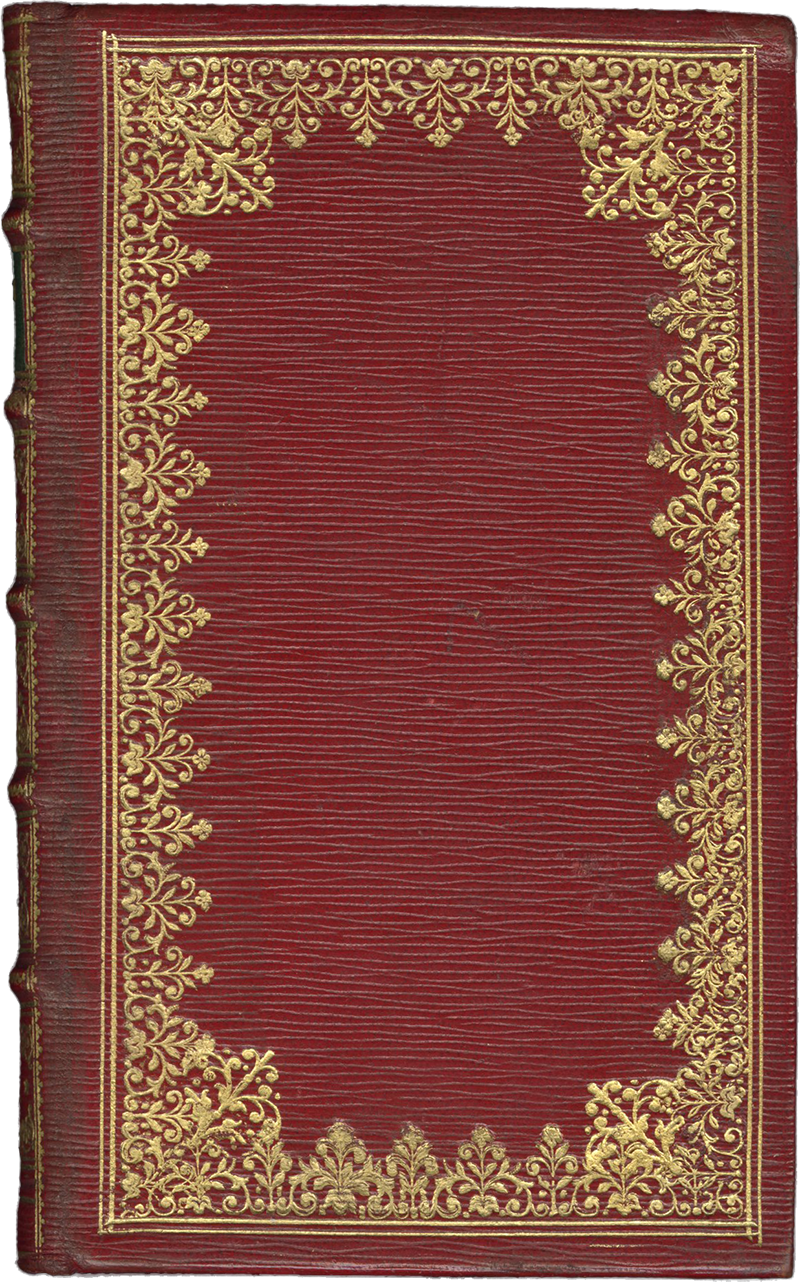
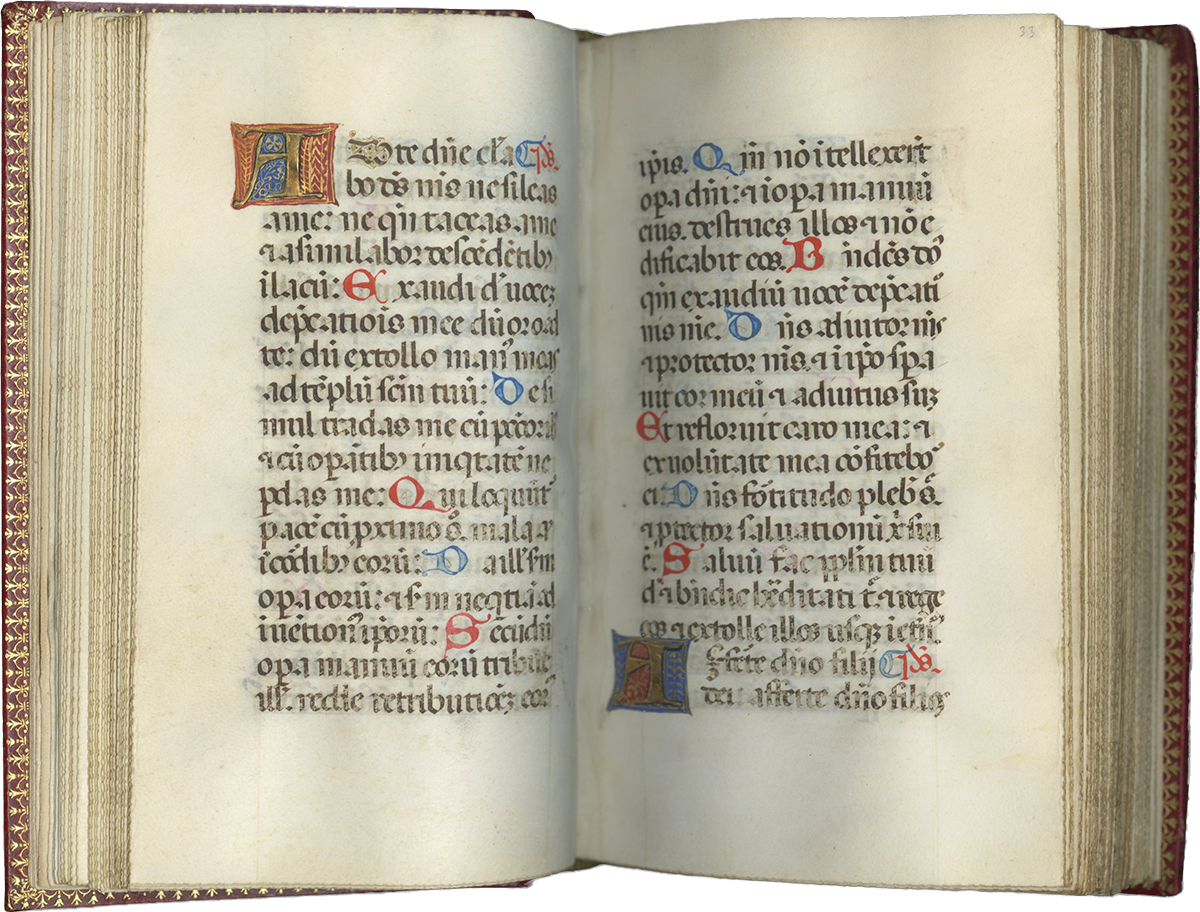
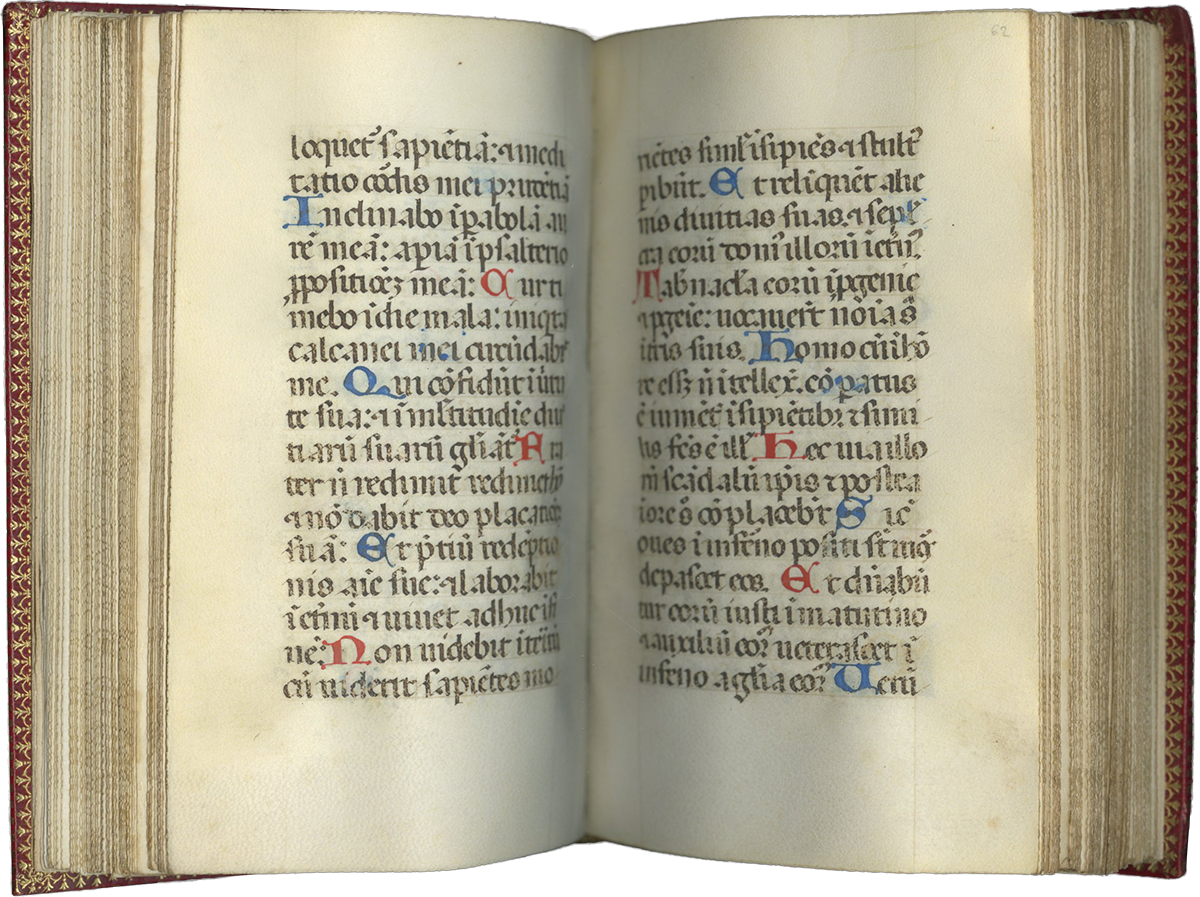
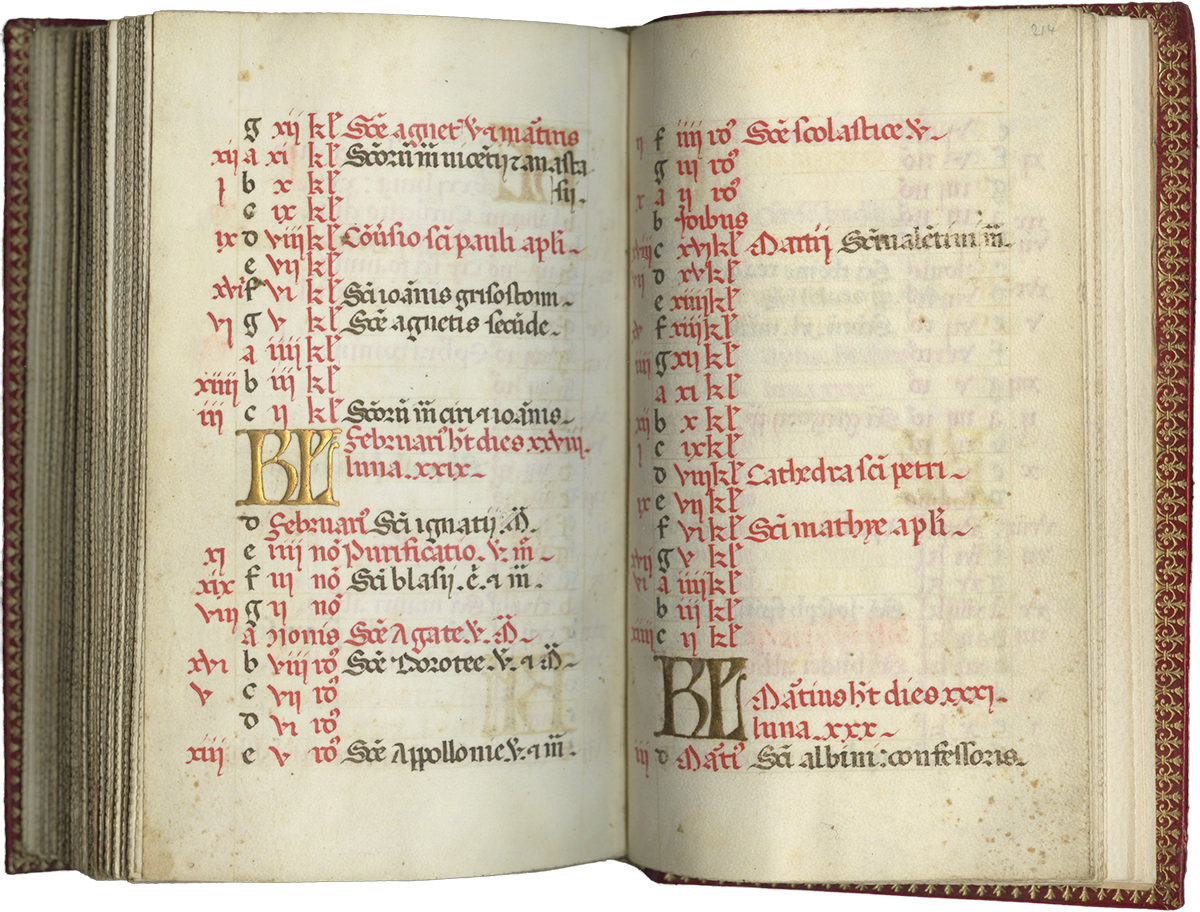
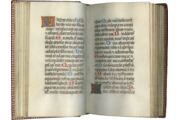
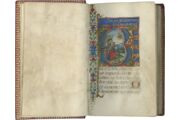
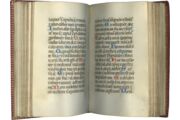
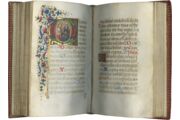
v (paper)+i+225+iv (paper) parchment folios, foliated in pencil in upper right corner, vertical catchwords, (collation: i-xxi10 xxii12), ruled in ink, single column in 17 lines, (justification 100 x 52 mm), in an Italian rotunda, decorated majuscules, single line initials in red alternating with blue, 2-line multi-colored champ initials, 6-line historiated initial with partial spray border (f. 150v), 11-line historiated initial with a partial spray border (f. 1), text faded in places (though legible), some rubbing, a few stains, but overall a fine volume. Fine red morocco binding with gilt decoration, all edges gilt and gauffered, all inside a matching box by Parisian fine binder Alain Lobstein. Dimensions 155 x 96 mm.
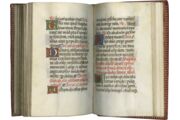
This devotional Psalter, in clean, fine condition, was clearly a treasured possession that the patron carried to church on Sundays. With bright illuminated initials beginning each psalm, and two historiated initials showing the influence of Renaissance master Boccardino il Vecchio; this Psalter was dated by its scribe and offers a charming example of early Renaissance piety.
1. Copied and illuminated in Italy, almost certainly in Florence, with copying completed on 25 October 1536 (f. 211v “Memento te quo die xxv october. M. d.xxxvi. Laber [sic] iste completum est.” Mind you on this date 25 October 1536 this labor was finished). The calendar makes clear that the volume was intended for use in Florence, as it includes Zenobius of Florence (relics at the cathedral, Santa Maria del Fiore, f. 217). Nevertheless, the calendar does not include Antoninus, who was Archbishop of Florence from 1446 until his death, and who was canonized in 1523. The illumination also makes a Florentine origin all but certain (see Illustration). It may also be worth noting the majuscules decorated in the shapes of flowers, a highly unusual design for such decoration.
2. Perhaps in France in the twentieth century, when the box by Parisian binder Alain Lobstein was made.
ff. 1-201, Psalter, incipit, “Incipit psalterium david psalmno primo...non poterit. Gloria.”
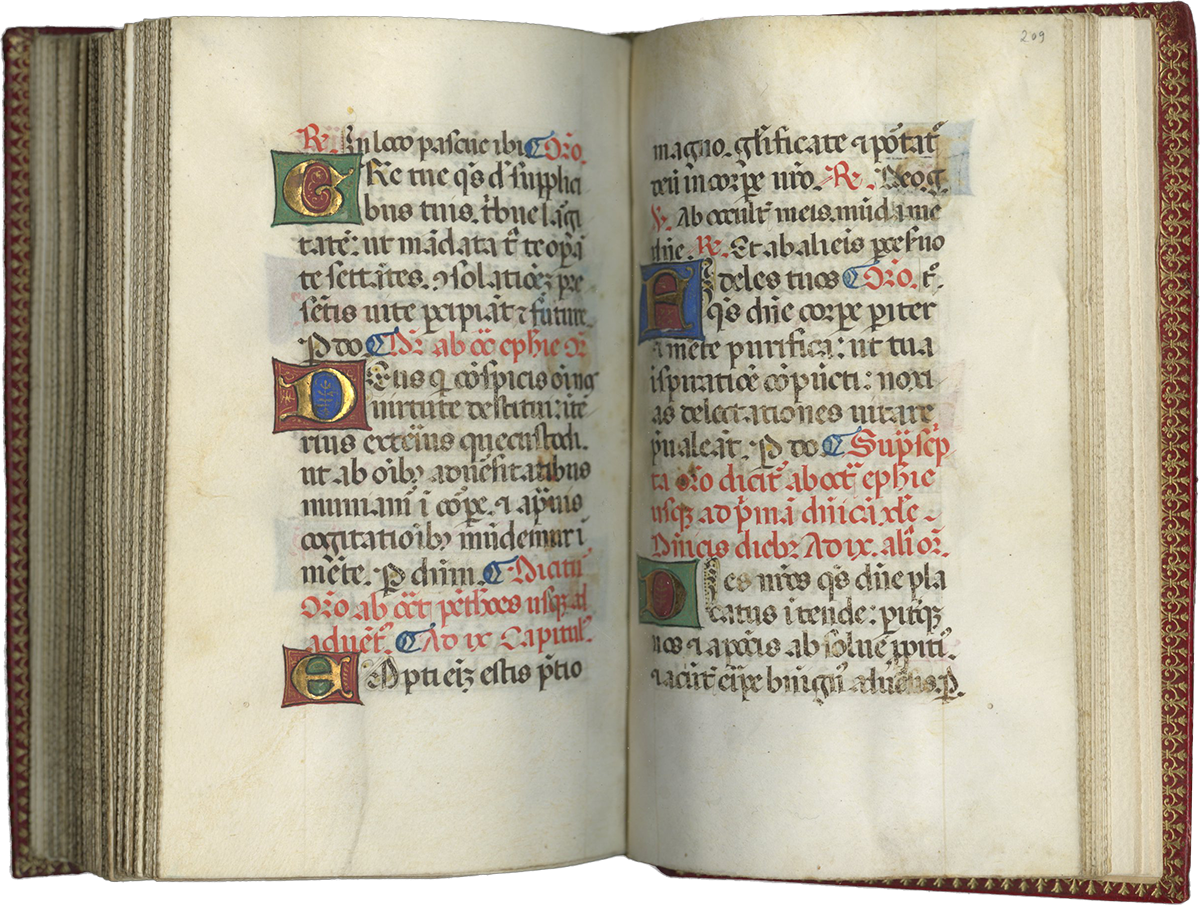
ff. 201-211v, Ordo for Sundays from Pentecost to Advent, incipit, “Incipit ordo dominicarum... Memento te quo die xxv october. M. d.xxxvi. Laber [sic] iste competum est,” f. 212r-v ruled but blank;
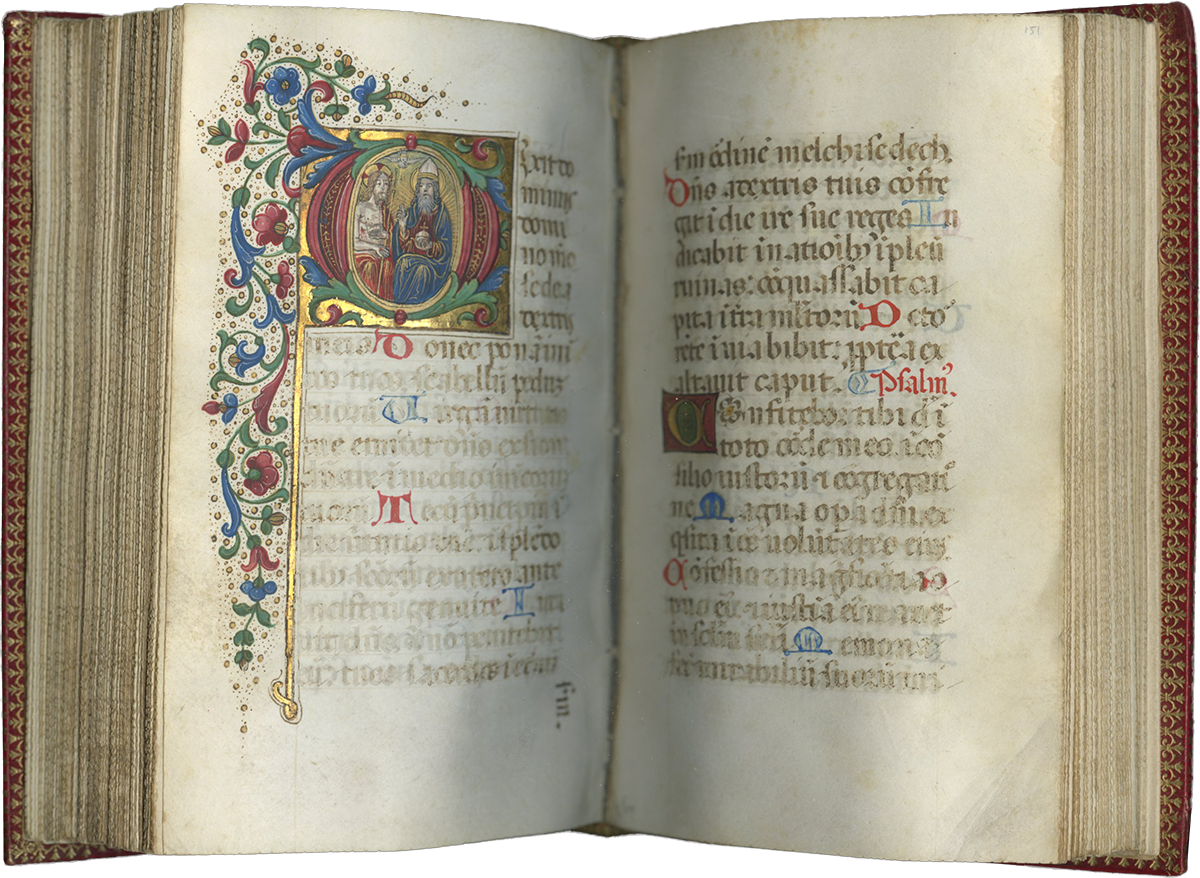
The inclusion of the ordo suits with the second historiated initial marking Psalm 109, sung at Sunday Vespers (f. 150v), and suggests that the patron wished to use this book on Sundays especially.
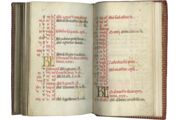
ff. 213-222v, Calendar; ff. 223-225 ruled but blank.
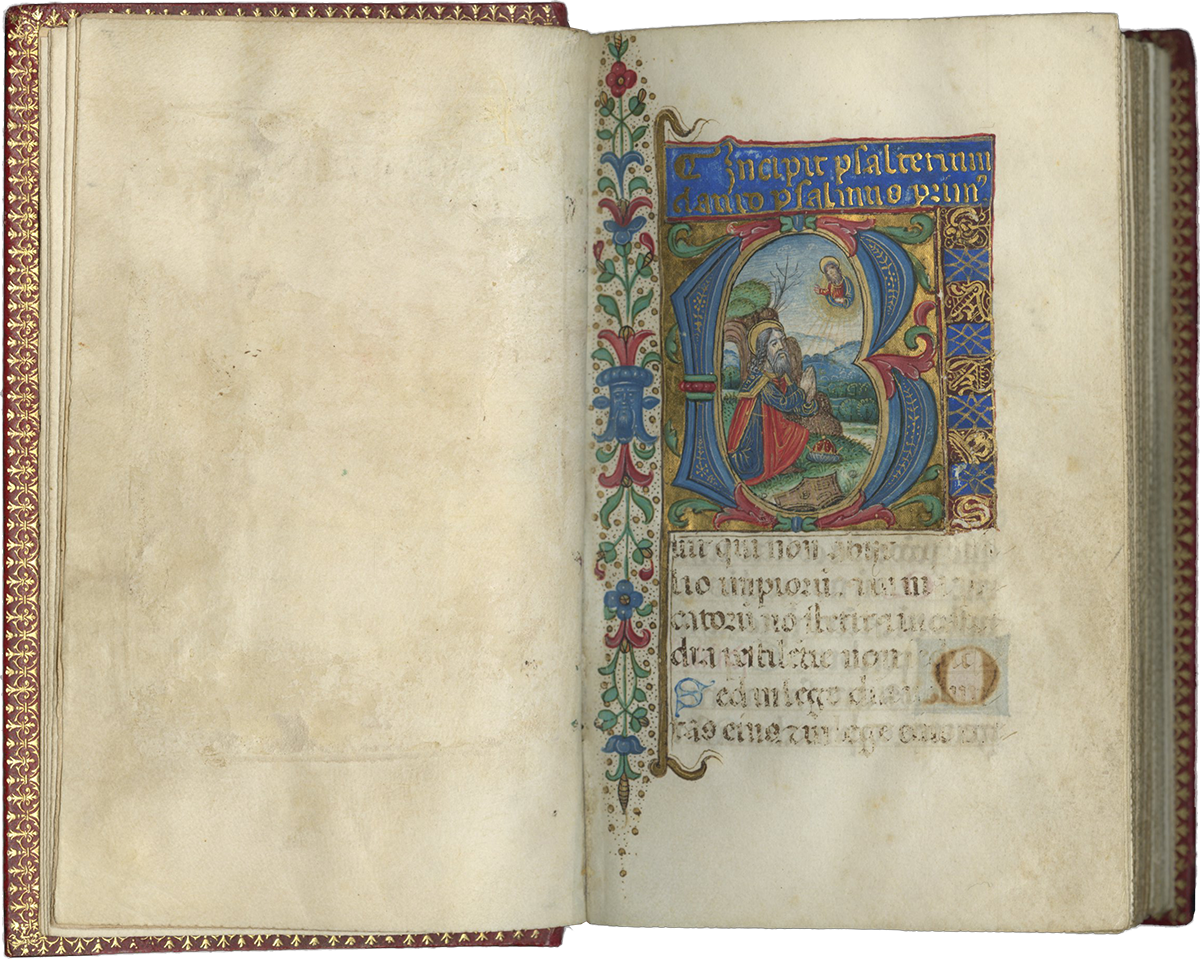
f. 1, historiated initial containing David outdoors with a psaltery on the ground, praying to God in the radiant sun.
f. 150v, historiated initial of the Trinity as the Father seated with an orb, the Son showing his wounds and holding the vexillum, and the Holy Spirit as a dove.
The decorative illumination featuring green and fuschia with many gold bezants in ink flourishing is characteristically Florentine and was almost undoubtedly by the same artist who painted another Florentine Psalter formerly sold by Text Manuscripts (see Online Resources). These borders may exhibit the influence of Boccardino il Vecchio; the Florentine artist himself died in 1529, however, so this is not to argue identity but simply the potential for influence. In any event the Florentine style of decorative illumination clearly persisted into the second quarter of the sixteenth century, as this manuscript attests. The two historiated initials also gesture towards Florentine schools of art. The unique trapezoidal shape of the psaltery stands out, as this is not a usual instrument for David, who is more usually depicted with a harp. However, sixteenth-century Davidic imagery from the Choir books of Santa Maria del Fiore, the cathedral church of Florence, show precisely such psalteries (Online Resources).
The Psalms have always played an important role in Christian liturgy. Throughout the Middle Ages, the weekly recitation of the one hundred and fifty Psalms was the heart of the Divine Office said by members of religious orders and by secular clerics. Yet, the Psalms were also the focus of private devotion among both the laity and the clergy. While devotion across Europe in the late Middle Ages is often said to be focused on the Book of Hours, and this was certainly true in parts of Europe, Psalters continued to be copied. Devotional psalters like the present manuscript were especially popular in German-speaking countries and in Italy well into the sixteenth-century.
All the features of this Renaissance Psalter suggest it was made for private, devotional use. It is a small volume, copied in a distinctive narrow format that would have made it easy to carry. Its contents are also unusual, since the Psalms lack the initials marking the liturgical divisions of the Divine Office found in most Psalters, with the single exception of Dixit dominus (Ps 109, f. 150v). The absence of the Office of the Dead or other additional hymns or canticles, and the inclusion of the Sunday ordos suggest that this devotee wished to carry this volume to church on Sundays, visually indicating their piety in a quietly luxurious manner.
Van Deusen, Nancy, ed. The Place of the Psalms in the Intellectual Culture in the Middle Ages, Albany, 1999.
Garzelli, Annarosa. Miniatura fiorentina del Rinascimento, 1440-1525: un Primo Censimento, Florence, 1985.
Wieck, Roger, ed. Sing a New Song: The Psalms in Medieval Art and Life, New York, 2025.
Codici Corali dell'Opera di Santa Maria del Fiore, showing Davidic iconography,
https://codicicorali.operaduomo.firenze.it/consulting/codes?query%5Biconographic_subject%5D=50
Florentine Psalter, TM 504 https://www.textmanuscripts.com/medieval/psalter-illuminated-60774
TM 1525