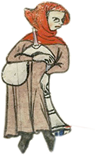
18 paper leaves, watermark similar to Briquet 8392 (Ferrara, 1580), unfoliated, disbound, copied in one column, no regular use of ruling, variable number of lines, Latin copied in italic and Italian in humanistica, EIGHTEEN MINIATURES, leaves show some normal border wear and staining from the ink. Disbound leaves. Dimensions 415 x 275 mm.
The substantial portion (18 out of 30 leaves) of a late-sixteenth-century copy of the inscrutable, illustrated medieval prophecies known as the Vaticinia de summis pontificibus. Extremely larte (the largest known to us), these leaves were copied from a bilingual edition prepared by Pasqualino Regiselmo, with the Italian translation squeezed in afterwards, demonstrating vernacular passion for prophecy. They seem to have been separated at an early date and it is even possible that they were never bound.
Provenance
1. Planned and produced in Latin in Italy, perhaps near Ferrara, around 1590. Although the spelling occasionally varies and the manuscript was likely not copied by a Venetian, the miniatures, text, translation, and annotation closely match those in the edition produced by Pasqualino Regiselmo (Venice, 1589) (see Online Resources and Discussion below). Nevertheless, as discussed further in the Illustration section, the miniatures frequently feature figures reversed from the edition, and it may have been copied from another edition of the 1590s or later, either on the Ferrarese paper (and perhaps based on Ferrarese printed editions from the 1590s) or on another paper stock using the same watermark known from Fabriano in 1596. Although evidently planned as a Latin copy, the Italian translation and annotations were added from the same source, though in a different script and ink, requiring page extensions to be pasted onto a range of pages to accommodate the additional text. Only in one case was the verso employed for this material (Prophecy 15).
2. Private European Collection.
Text
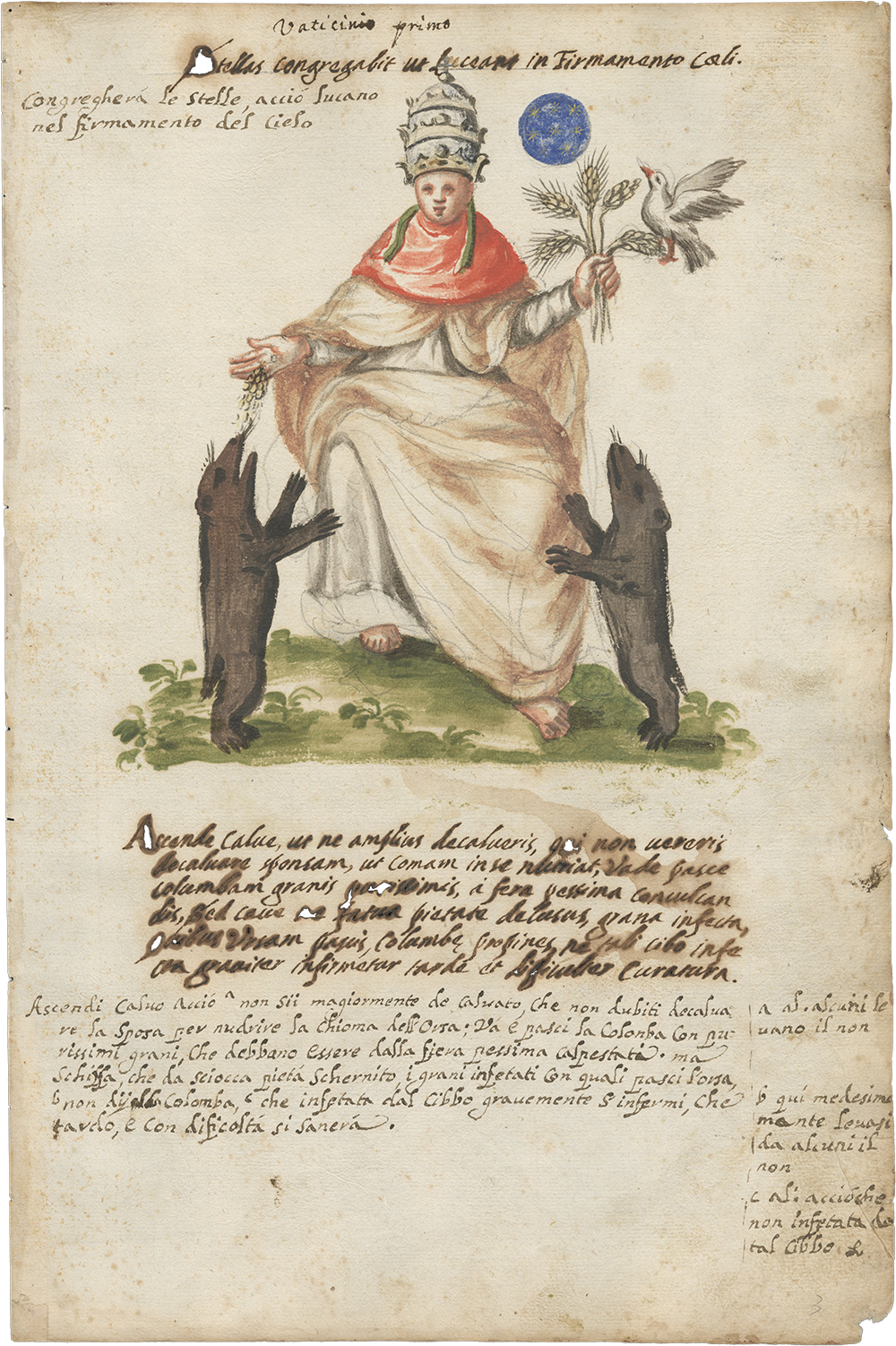
f. 1, Prophecy I, “Stellas congregabit ut luceant in firmamento caeli,” incipit, “Ascende calve calve, ut ne amplius decalveris…,” verso blank;
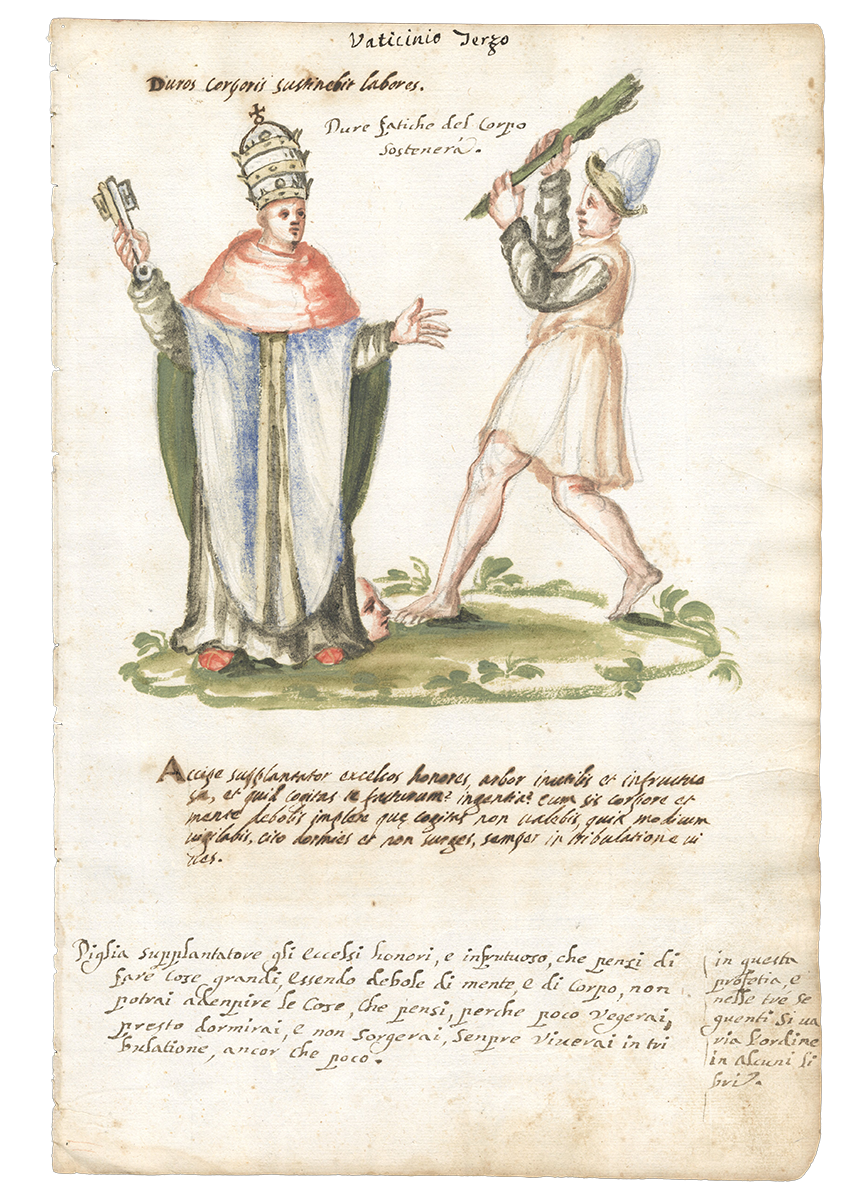
f. 2, Prophecy III, “Duros corporis sustinebit labores,” incipit, “Accipe supplantor excelsos honores...,” verso blank;
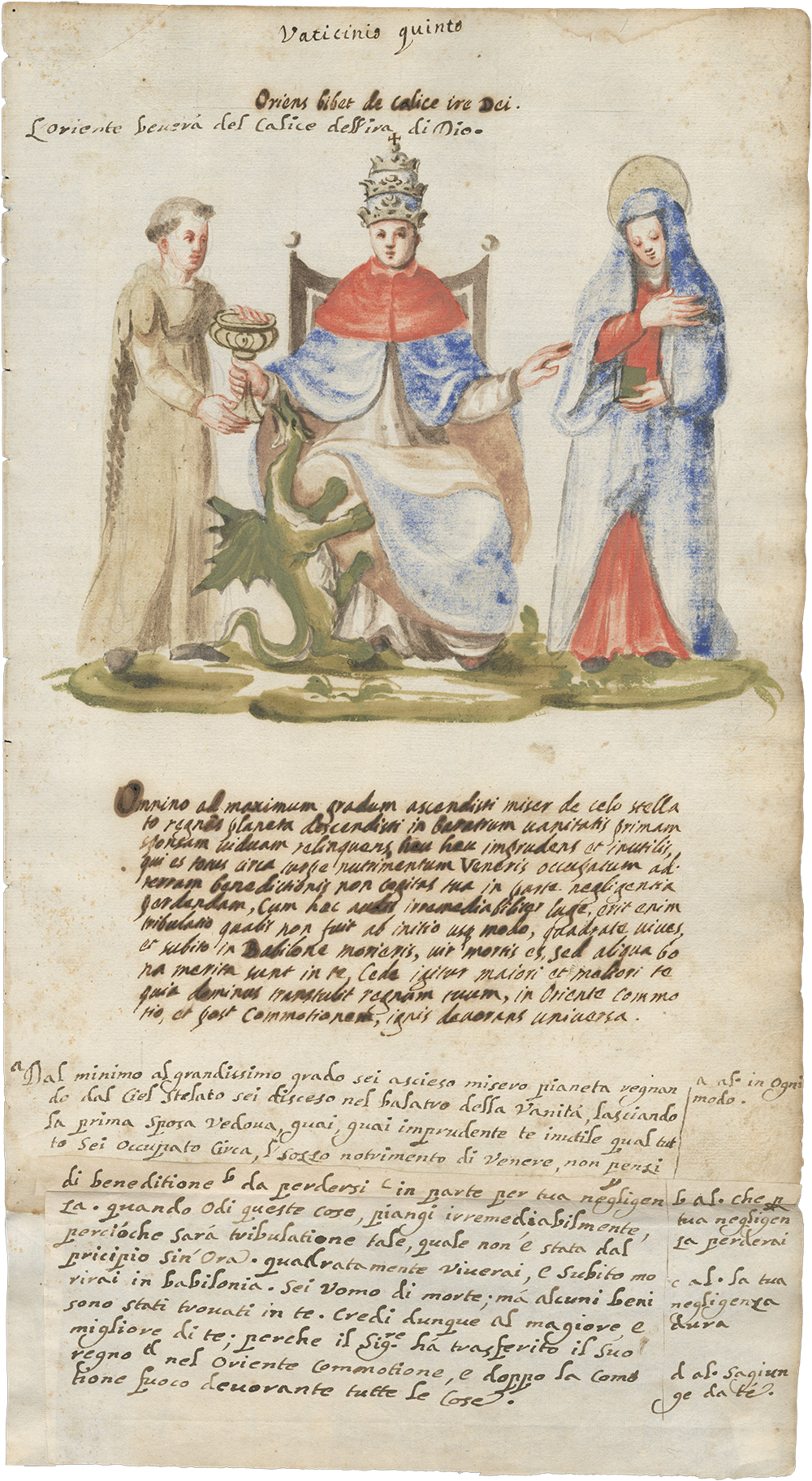
f. 3, Prophecy V, “Oriens bibet de calice ire Dei,” incipit, “Omnino ad maximum gradum ascendisti...,” verso blank;
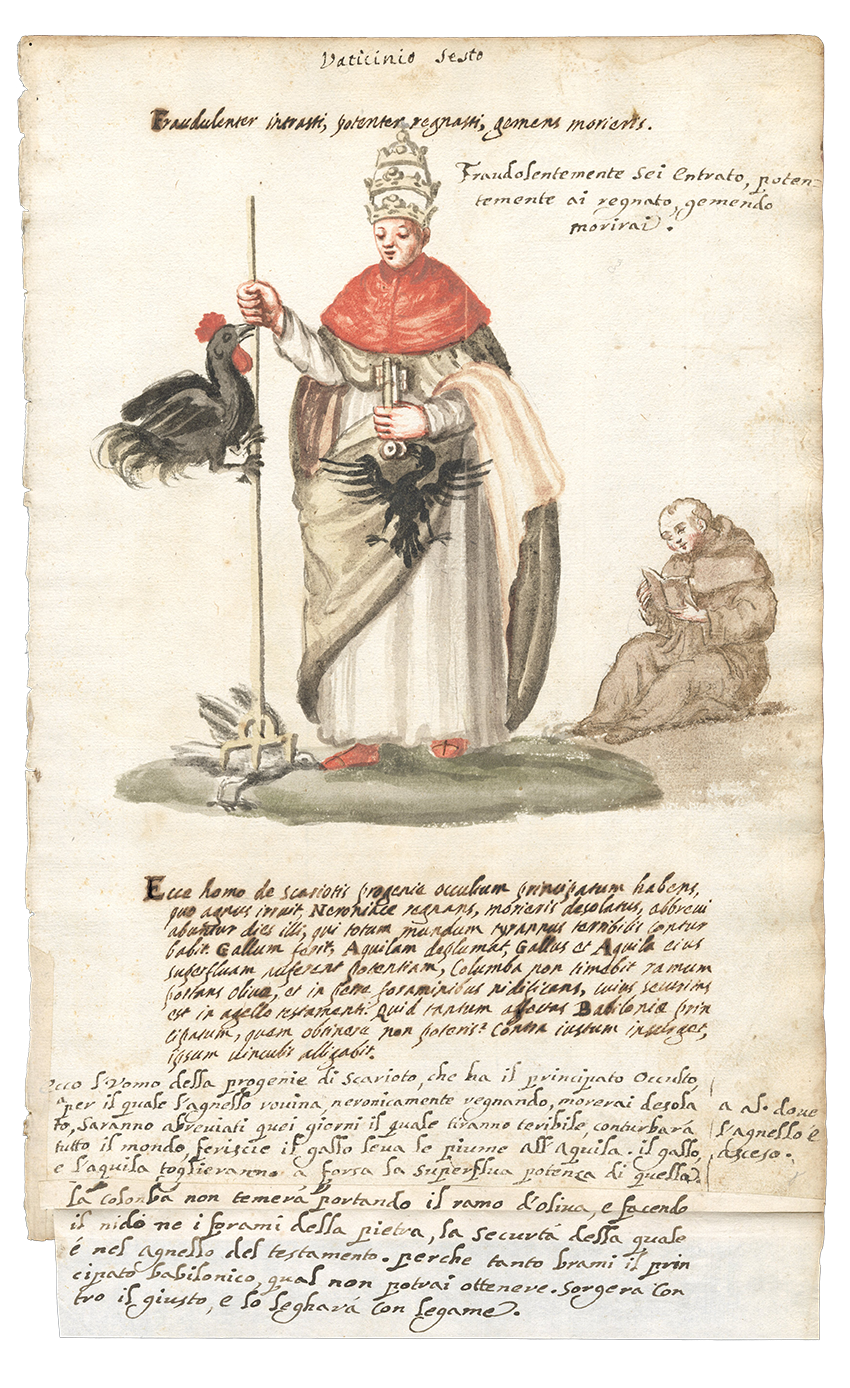
f. 4, Prophecy VI, “Fraudulenter intrasti, potenter regnasti, gemens morieris,” incipit, “Ecce homo de scariotis progenia occulium…,” verso blank;
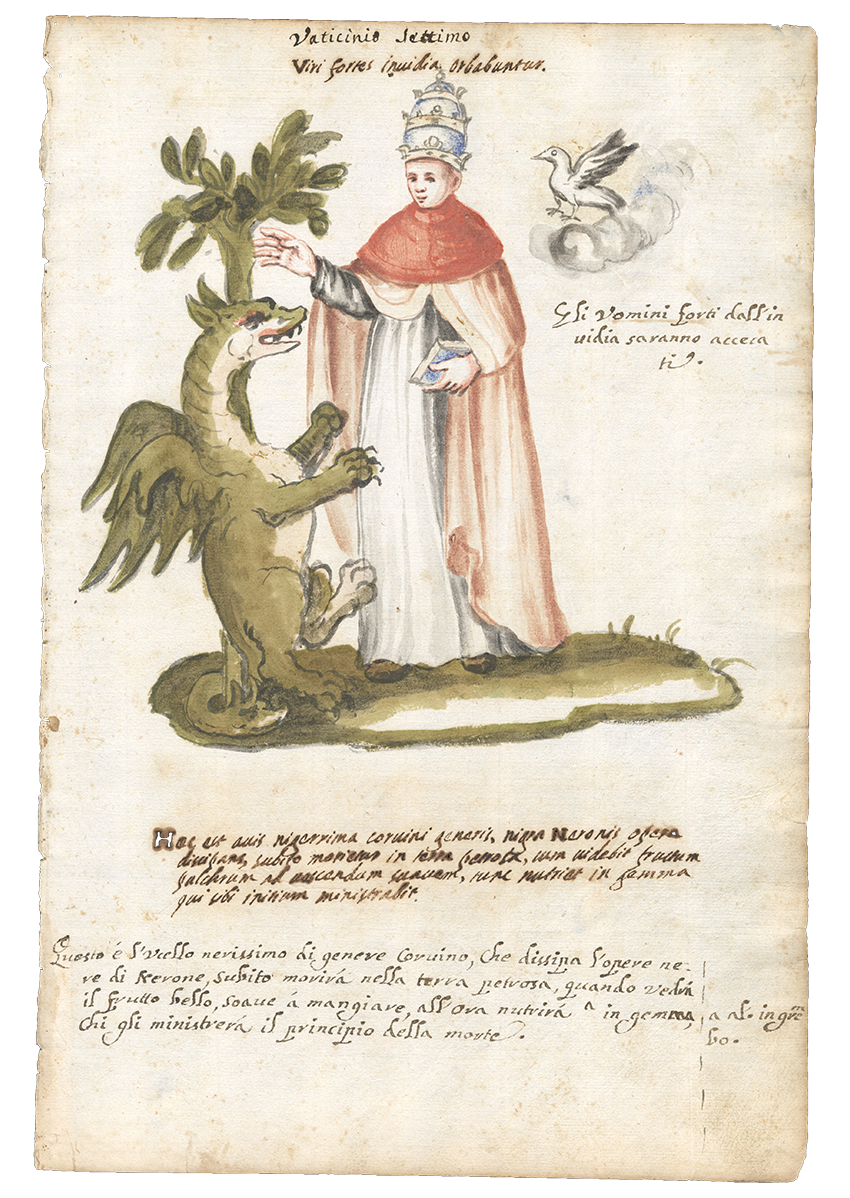
f. 5, Prophecy VII, “Viri fortes invidia orbabuntur”; incipit, “Haec est avis nigerrima corvini generis...,” verso blank;
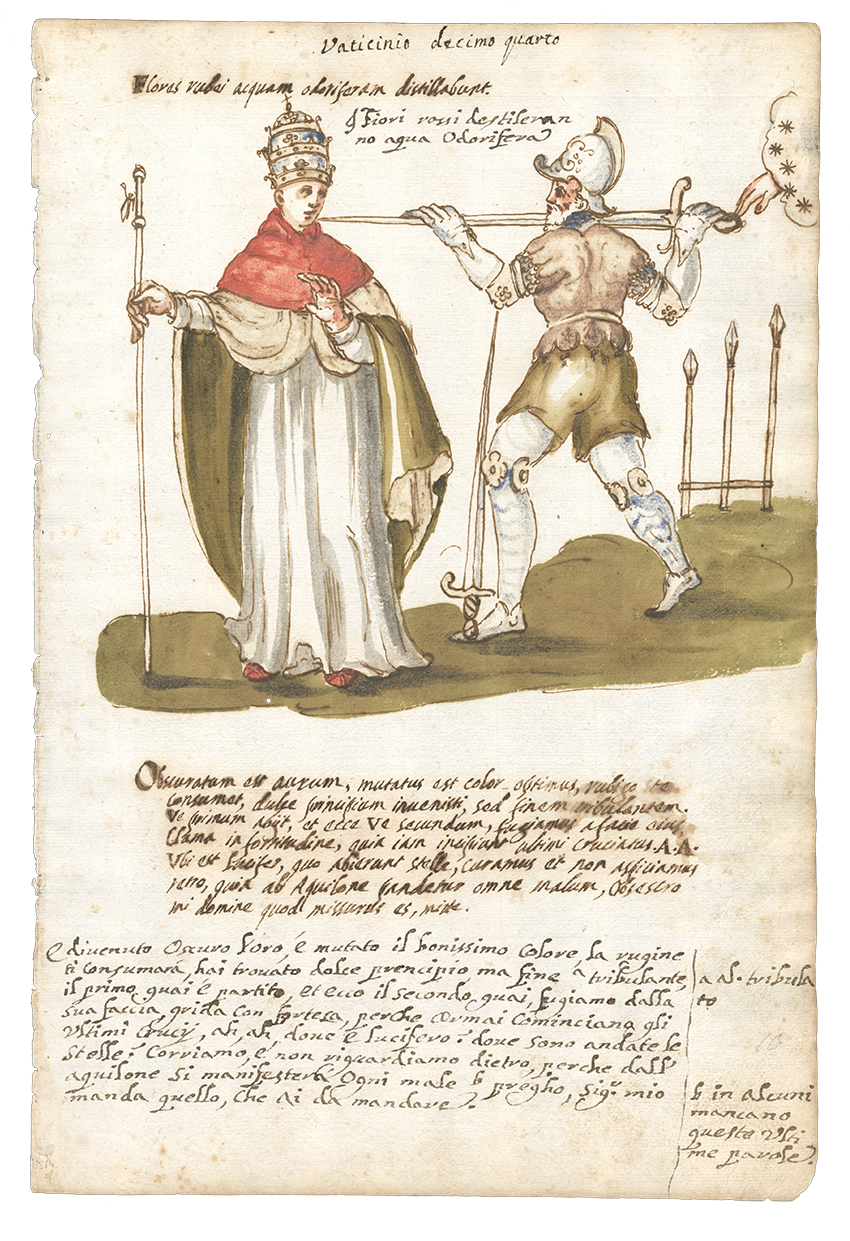
f. 6, Prophecy XIV, “Flores rubei aquam oderiferam distillabunt,” incipit, “Obscuratum est aurum mutatus est color optimus…,” verso blank;
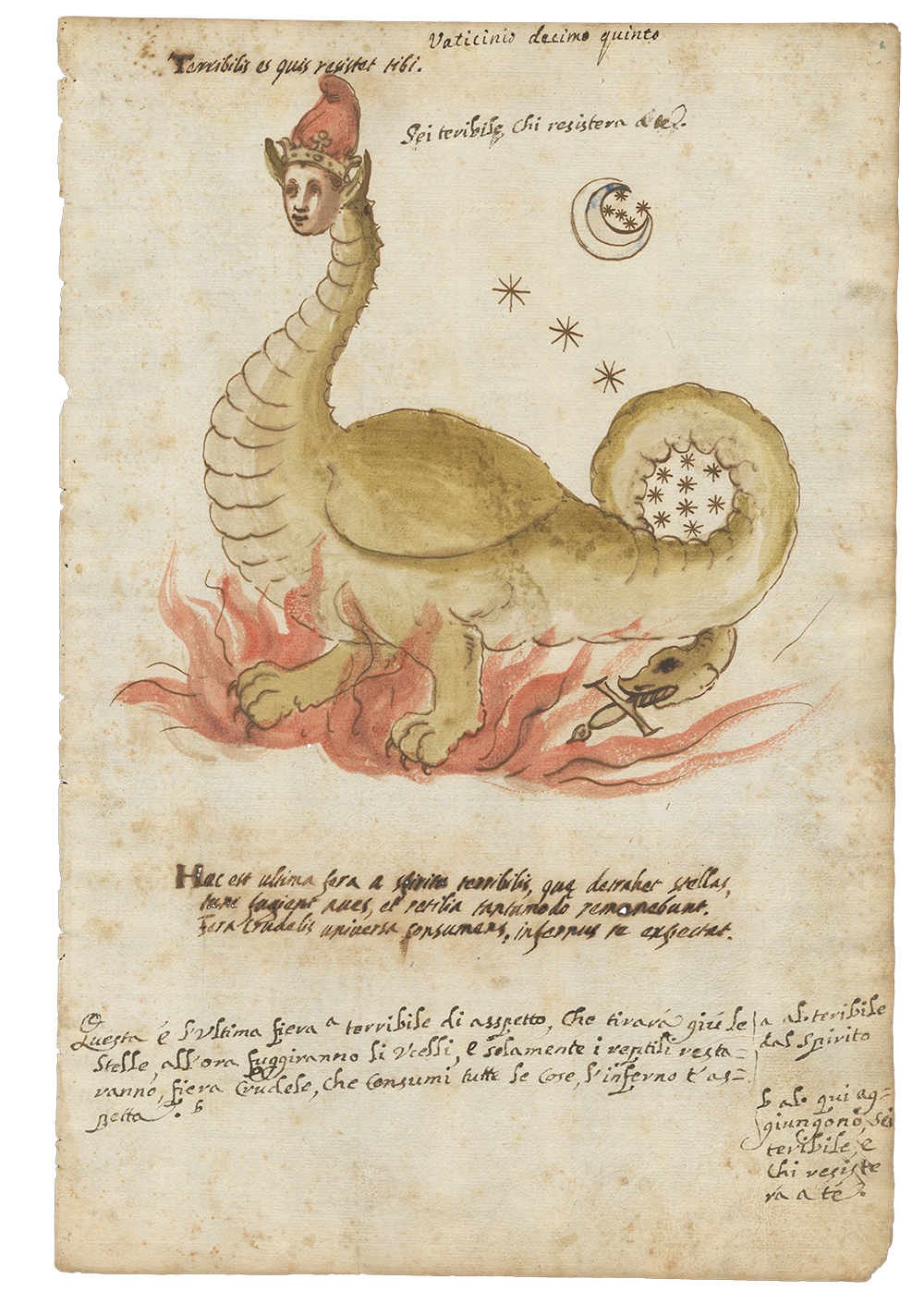
f. 7, Prophecy XV, “Terribilis es quis resistet tibi,” incipit, “Haec est ultima fera a spiritu terribilis…,” verso, “Qui feniscono le revelationi beato Gioacchino Abate del Monasterio Florense in Calabria, e seguono quelle di Anselmo Vescuo di Marsico” (“Here are set forth the revelations of Giovacchino, the blessed Abbot of Florence Monastery in Calabria and those follow [the revelations] of Anselmo, Bishop of Marisco.”)
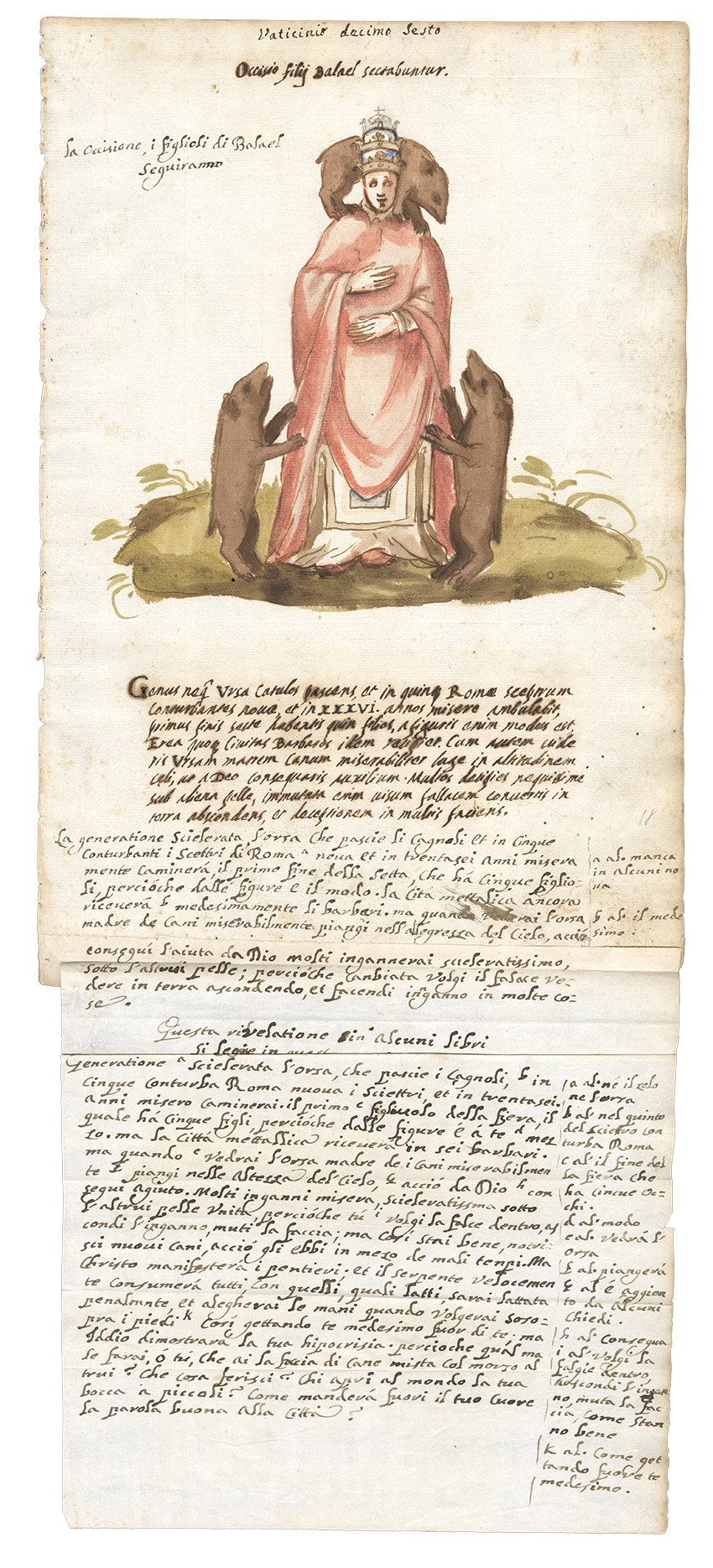
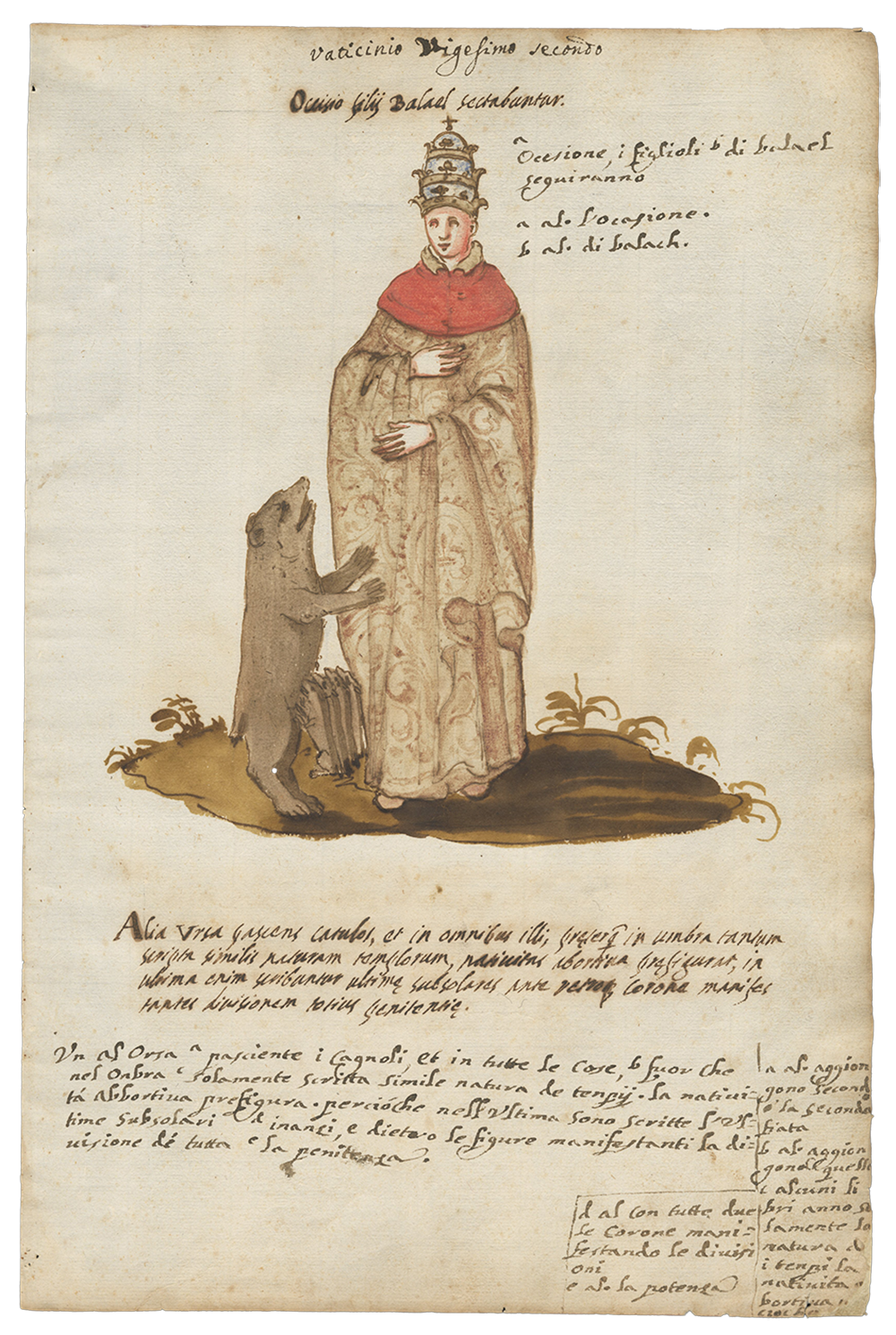
f. 8, Prophesy XVI, “Occasio filii Balael sectabuntur,” incipit, “Genus nequam ursa catulos pascens…,” verso blank;
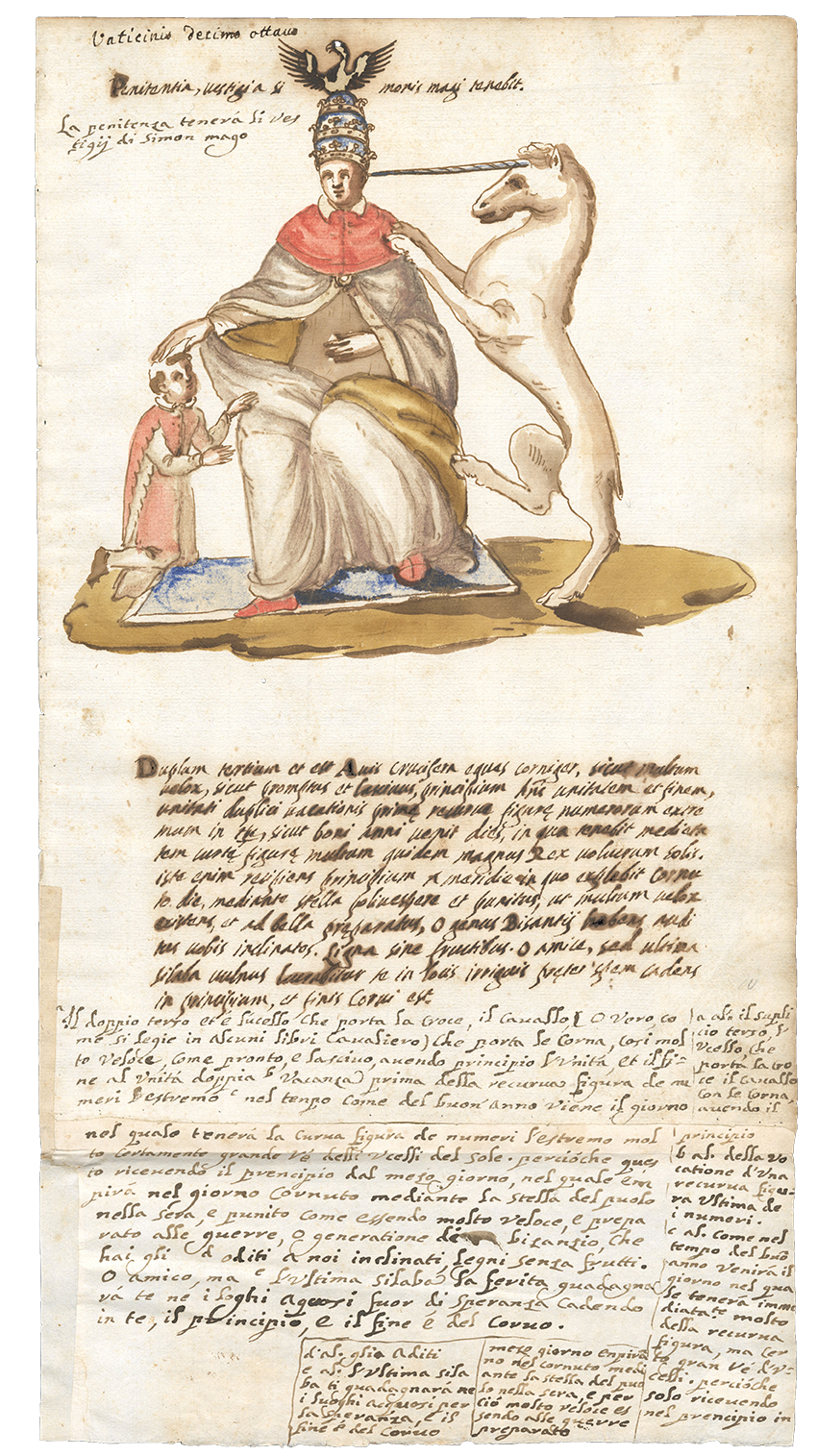
f. 9, Prophecy XVIII, “Penitentia vestigia Simonis magis tenebit,” incipit, “Duplum tertium et est Avis crucifera eques corniger...,” verso blank;
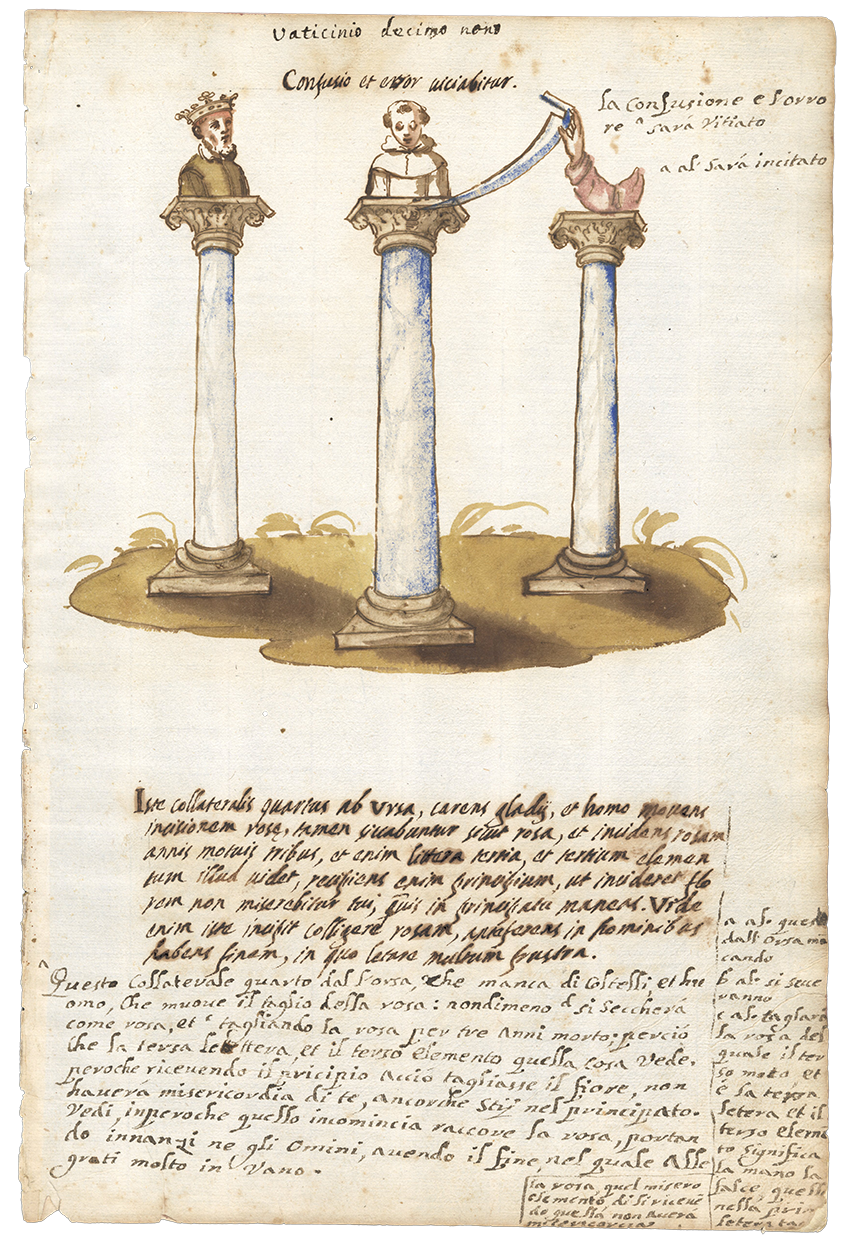
f. 10, Prophecy XIX, “Confusio et errore viciabitur,” incipit, “Iste collateralis quartus ab ursa, carens gladii, et homo movens…,” verso blank;
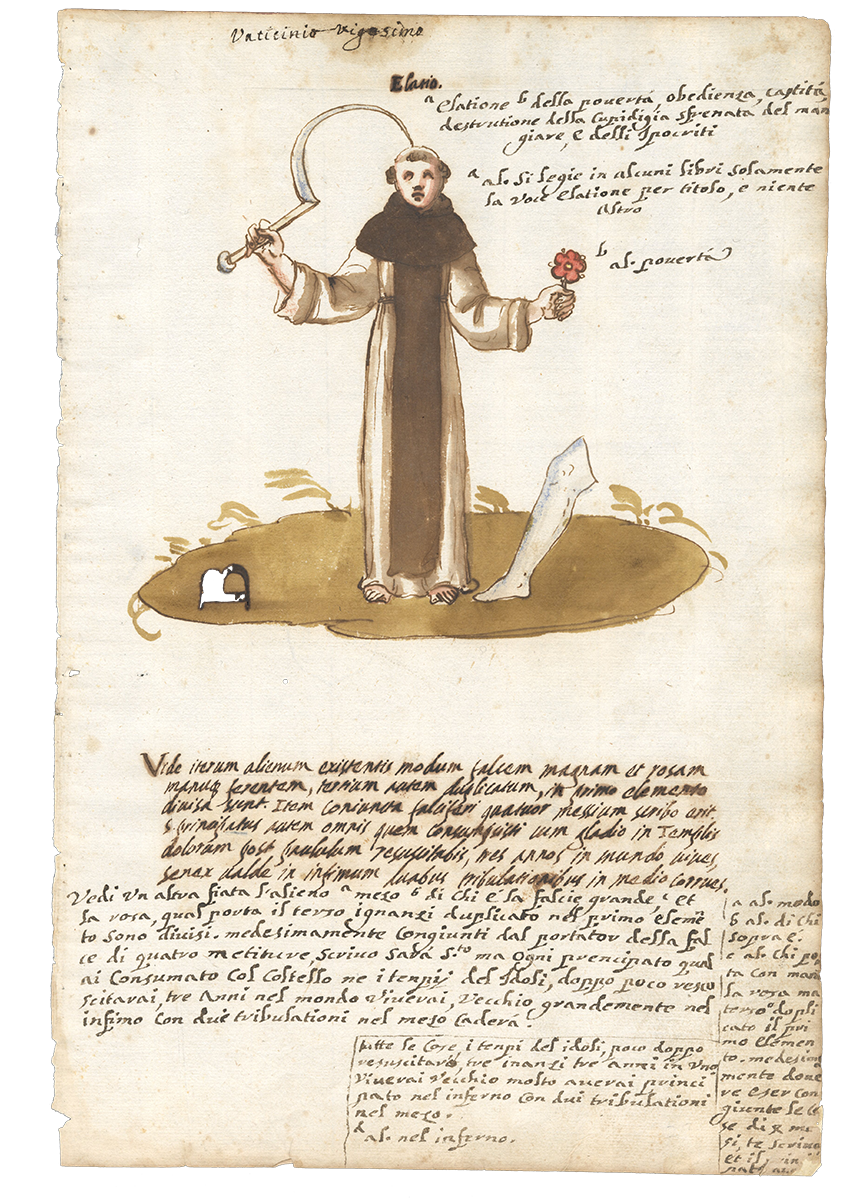
f. 11, Prophecy XX, “Elatio,” incipit, “Vide iterum alienum, existentis modum…,” verso blank;
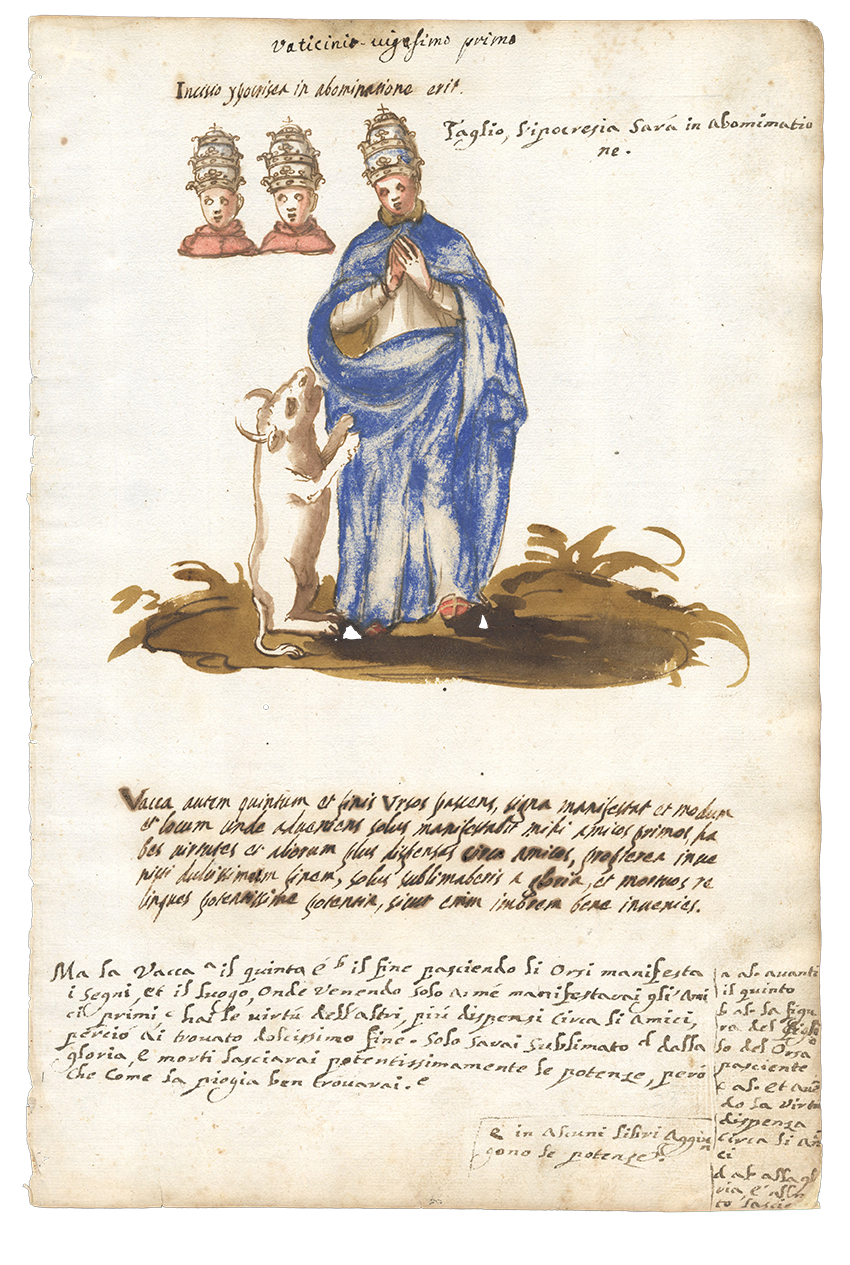
f. 12, Prophecy XXI, “Incisio, ypocrisea in abominatione erit,” incipit, “Vacca autem quintum et finis ursos pascens…,” verso blank;
f. 13, Prophecy XXII, “Occisio filii Balael sectabuntur,” incipit, “Alia ursa pascens catulos...,” verso blank;
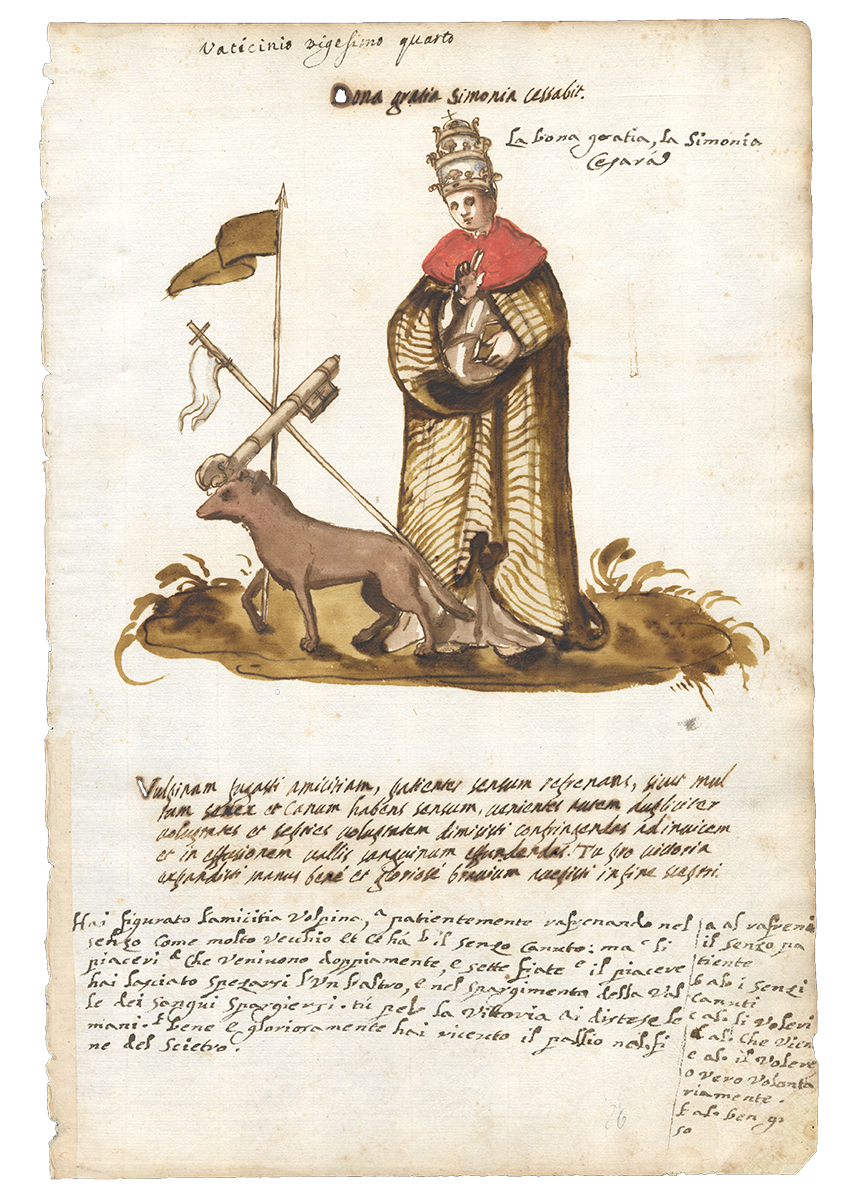
f. 14, Prophecy XXIV, “Bona gratia symonia cessabit,” incipit, “Vulpinam fugasti amicitiam...,” verso blank;
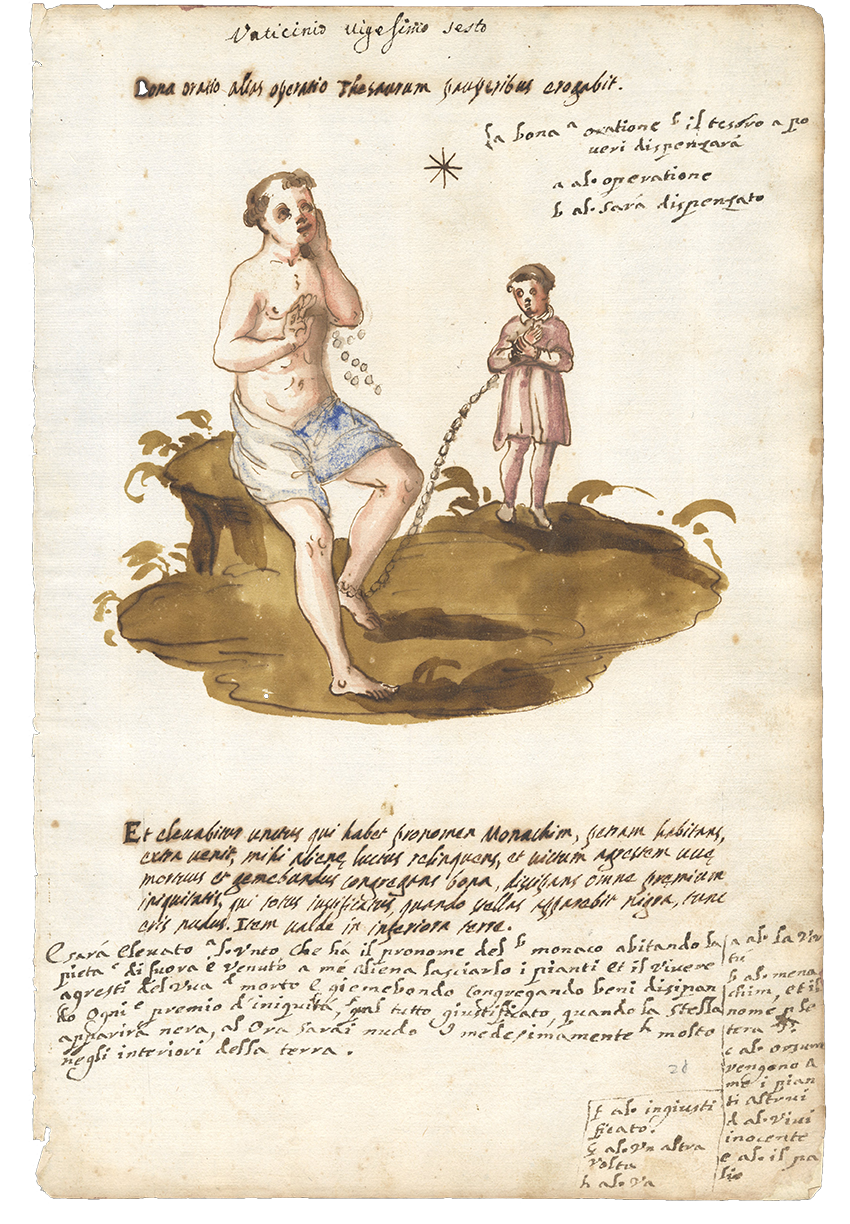
f. 15, Prophecy XXVI, “Bona oratio alias operatio thesaurum pauperibus erogabit,” incipit, “[…] Et elevabitur unctus qui habet pronomen monachim...,” verso blank;
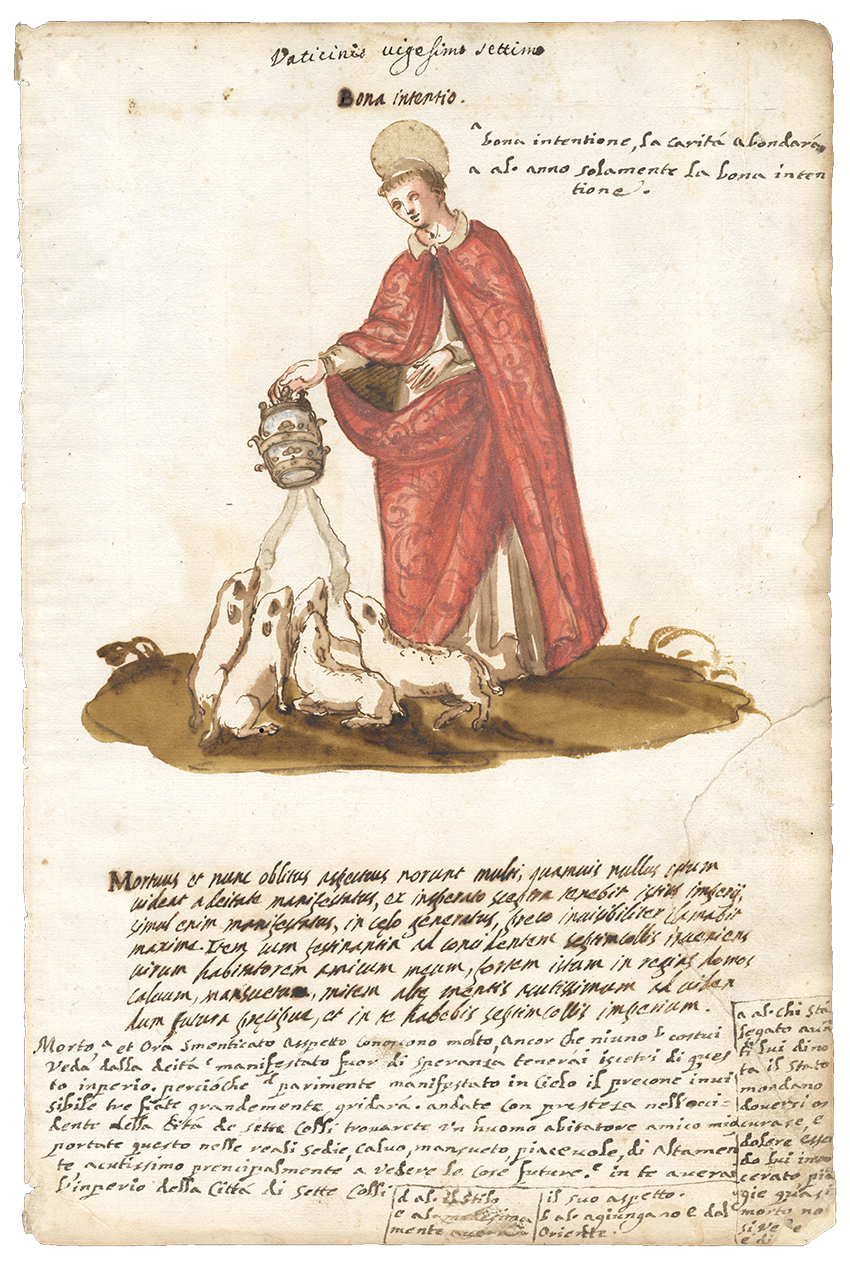
f. 16, Prophecy XXVII, “Bona intentio,” incipit, “Mortuus et nunc oblitus...,” verso blank;
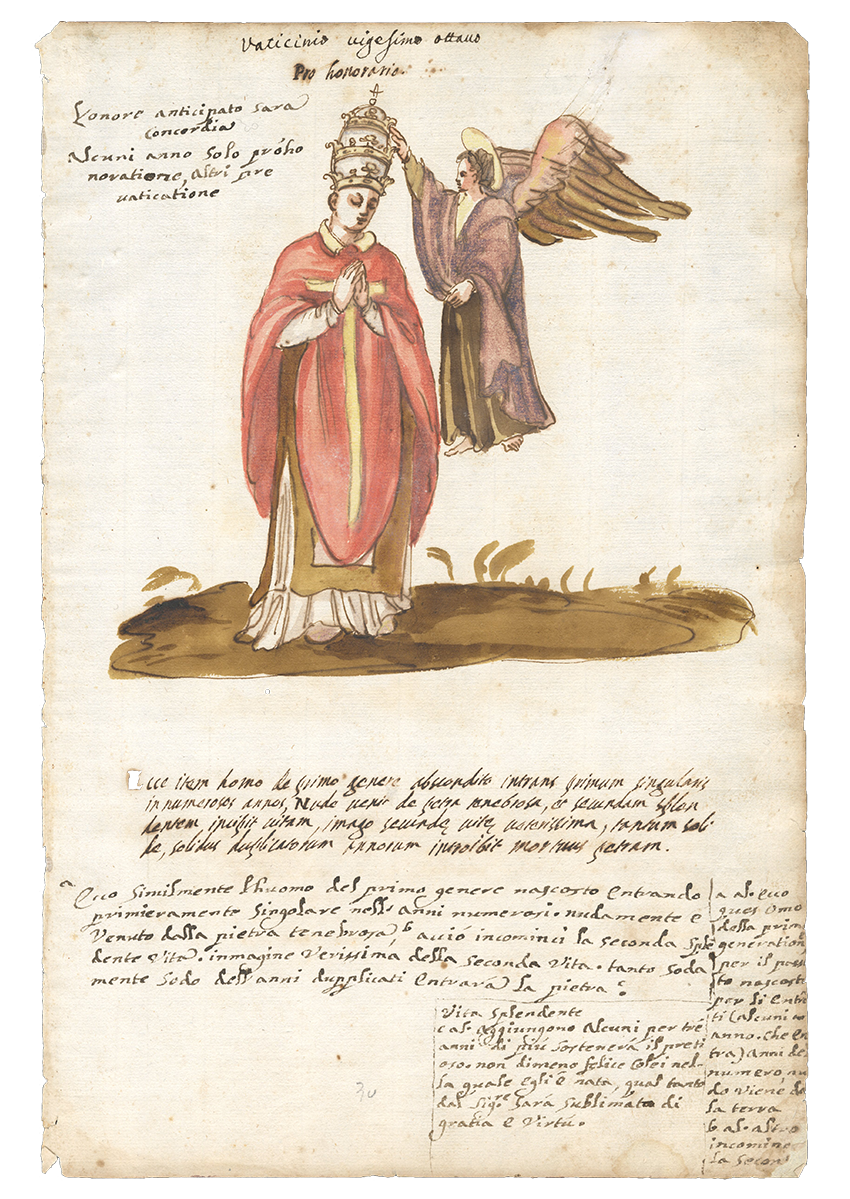
f. 17, Prophecy XXVIII, “Pro honorario,” incipit, “Ecce item homo de primo genere abscondito...,” verso blank;
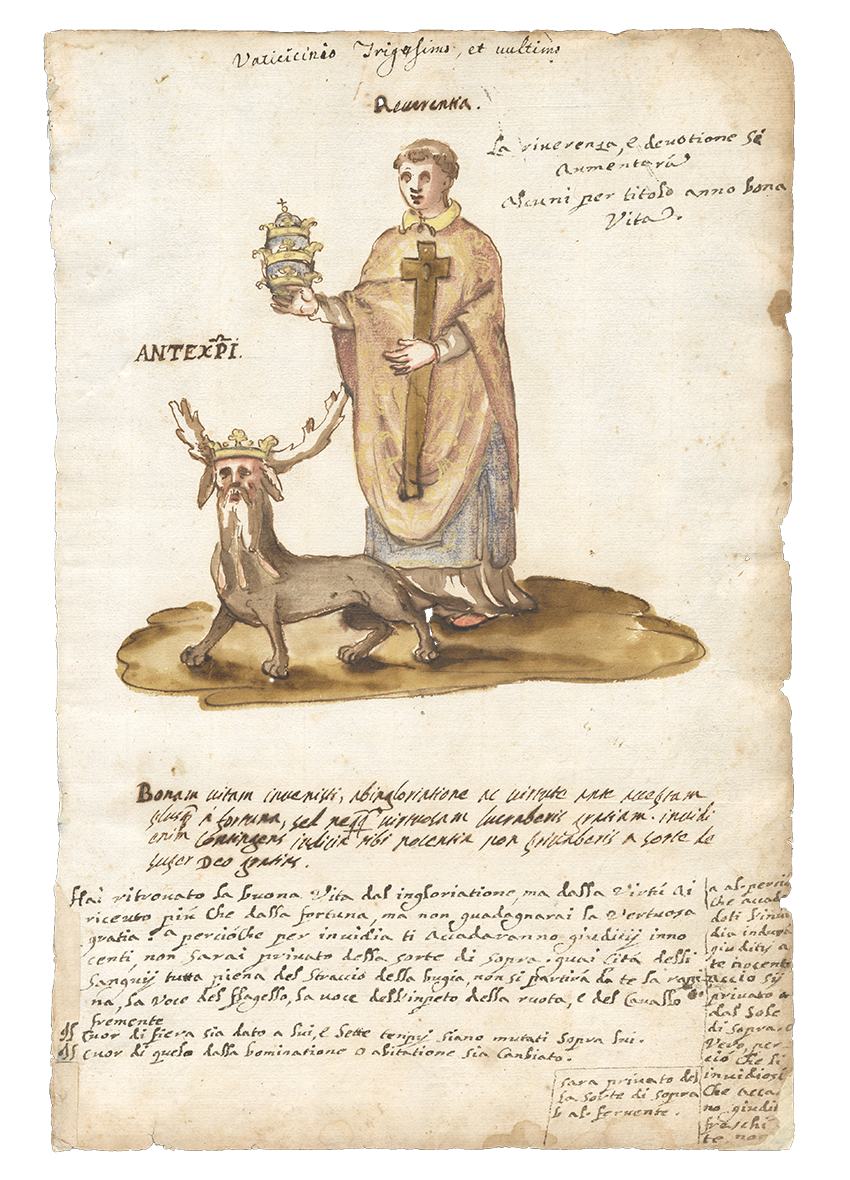
f. 18, Prophecy XXX. “Reverentia,” incipit, “Bonam vitam invenisti ab ingloratione...,” verso blank.
Illustration
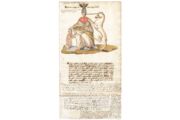
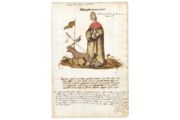
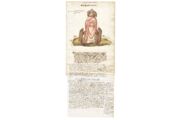
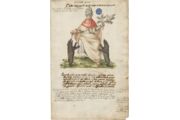
f. 1, Prophecy I. A pope seated with a green snake around his neck and two small bears climbing on his knees, to whom he is tossing grain from his right hand and in his left he holds a sheaf of wheat on which a bird alights. Above them the orb of the heavens floats. Following Regiselmo, this copy leaves out the label giving the pope’s name, Nicholas III (1277-1280) (Schwartz and Lerner 1994, p. 187). Like Prophecy XVI below, the play is on bear (ursus) and Orsini (Nicholas)
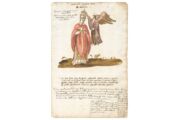
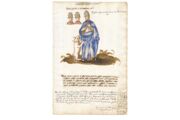
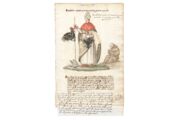
f. 2, Prophecy III. A pope stands holding the keys to Rome with a face at his feet, he is threatened by a man brandishing a rough branch. Following Regiselmo, this copy leaves out the label giving the pope’s name, Honorius IV (1285-87) (Schwartz and Lerner 1994, p. 188);
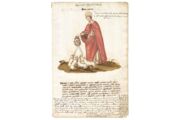
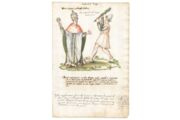
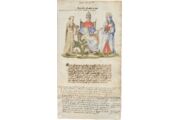
f. 3, Prophesy V, A pope with a dragon climbing into his lap, handing a chalice to a figure on his right and gesturing to a haloed woman on his left. Following Regiselmo, this copy leaves out the label giving the pope’s name, Celestine V (1294), a rare case among the prophecies of approbation of a pope (Schwartz and Lerner 1994, p. 188);
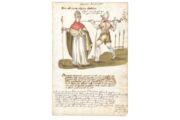
f. 4, Prophesy VI, A pope stands holding the keys of Rome in his left hand as a black eagle pecks at them, in his right a fork with which he is stabbing a bird on the ground, while a rooster alights on the shaft, and behind him a monk sits reading a book, while a flying eagle hovers between them. Following Regiselmo, this copy leaves out the label giving the pope’s name, Boniface VIII (1294-1303), who held Celestine V captive (Schwartz and Lerner 1994, p. 189);
f. 5, Prophecy VII. A pope gestures towards a dragon while a bird descends from the heavens behind him. Following Regiselmo, this copy leaves out the label giving the pope’s name, Benedict XI (1303-1304), though the attribution of his fall to gluttony is suggested by the iconography (Schwartz and Lerner 1994, p. 189);
f. 6, Prophecy XIV. A pope stands on the left holding a shepherd's crook, and on the right an armored figure threatens him with a drawn sword, with a sword and three spears in a stand behind him. A hand extends out of the heavens toward the soldier. The final popes are popes yet to come (Schwartz and Lerner 1994, p. 191);
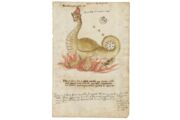
f. 7, Prophecy XV. A crowned human-headed dragon with a second head at the end of its tail swallowing a sword stands in a fire. The moon and stars hang above the dragon. This is the “last beast” (Schwartz and Lerner 1994, p. 191);
f. 8, Prophecy XVI. A pope stands as two bears stand against him, and a third climbs on his shoulders. This image and prophecy is associated with Nicholas III (1277-1280), an Orsini (ursus in Latin is bear) (Fleming, 1999, p. 95);
f. 9, Prophecy XVIII. A seated pope crowned with an eagle pats the head of, or blesses, a kneeling boy to his right, while a unicorn rampant stands to his left. This image and prophecy is associated with Honorius IV (1285-1287), but Fleming notes that its relation to the three figures of the illustration remains unclear, but that it may relate to “Jacopo Savelli, a member of the Orsini party that elected Nicholas III, but who as Honorius IV worked to retrieve Sicily for the French.” (Fleming, 1999, pp. 99-100);
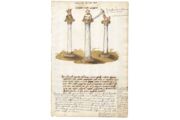
f. 10, Prophecy XIX. Three stone columns, each bearing a bust: on the left a king’s crowned head, in the center a monk, on the right a disembodied arm grasps a hand-scythe upside down which extends to the middle column. Fleming identifies this iconography as cloudy also, and suggests that it may refer to “Latino Malabranca, particularly in his role as pope-maker and manipulator of papal elections” and, column by column, to “the Colonna family; the crowned head, Philip the Fair; the cleric, Nicholas IV” (1288-1292) (Fleming, 1999, p. 100-102);
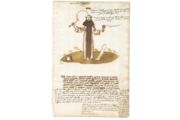
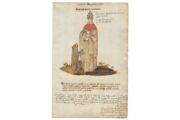
f. 11, Prophecy XX. A monk, perhaps Cistercian, stands holding a large hand-scythe in one hand and a red flower in the other, on the ground is the letter B or fetterlock and on the right a disembodied leg. This is a variation on Regiselmo, who depicts the figure as a pope. Fleming notes the possibility that Regiselmo references Celestine V(1294)’s imprisonment by Boniface VIII (1294-1303), but admits that variations showing a monk make that less clear (Fleming, 1999, pp. 103-4);
f. 12, Prophecy XXI. A cow against a pope’s leg. Two disembodied pope-heads float to the left of the pope. The mitred heads are a variation on Regiselmo, where they are crowned. The pope is usually identified as Boniface VIII (1294-1303) (Fleming, 1991, pp. 104-5);
f. 13, Prophecy XXII. A pope stands next to a bear who is suckling her cubs. The pope is usually identified with Benedict XI (1303-1304), but Fleming admits that it is not clear how that pope relates to this iconography (Fleming, 1999, p. 105);
f. 14, Prophecy XXIV. A pope stands next to a fox bearing a banner and carrying off the vexillum crossed with the key of Rome. Fleming notes that this prophecy came to be associated with Clement V (1305-1314) and clearly expresses threats to papal control (Fleming, 1999, p. 106);
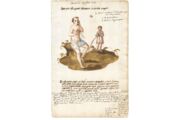
f. 15, Prophecy XXVI. A tonsured man sits on a stump, with his ankle chained to a boy’s wrist. Fleming admits this prophecy remains difficult (Fleming, 1999, pp. 107-8);
f. 16, Prophecy XXVII. A haloed figure holds a papal tiara over a herd of sheep. Fleming notes no direct correlation to a specific pope for this prophecy (Fleming, 1999, p. 109);
f. 17, Prophecy XXVIII. An angel crowns a pope with the mitre. Fleming notes no direct correlation to a specific pope for this prophecy (Fleming, 1999, p. 110);
f. 18, Prophecy XXX. A priest holds a papal tiara while a crowned, antlered, anthromorph stands at his feet. Fleming argues that this relates to the “coming of the Antichrist during the reign of the third successor to the angelic pope” (Fleming, 1999, pp. 110-114).
Extremely visual, nearly an emblem book, the Vaticinia is normally fully illustrated, whether in manuscript or print. As one editor put it, “the pictures are not decorative additions to the text; rather, picture, caption, and text constitute the ‘text.’” (Fleming, 1999, p. 27). Most sixteenth- and seventeenth-century manuscript copies feature line-drawings washed with color, and the present copy is no exception. That said, the illustrations in the present manuscript are unusually large, taking up nearly the entirety of each page. Importantly, this copy’s iconography seems modeled directly on that employed by Regiselmo’s edition. Whilst every copy bears some resemblance, as the text itself remained fixed, the range of specific decisions that this artist made makes their source clear. From the very bushy heads of wheat in the miniature of Prophecy I to the scalloped sleeves of a figure in Prophecy XVIII, almost every miniature in this copy holds small details found also in Regiselmo. By the same token, however, there are differences also that may sometimes speak to methods of reproduction—some figures are reversed in this manuscript copy—and other times demonstrate familiarity with other iconographic traditions of the Vaticinia. Thus, for example, the two figures in Prophecy XXVI are in mirror image when manuscript and print are compared, and this artist swaps a monk for a pope in Prophecy XX. Further research may determine more precisely the relationship between these two sets of illustrations.
As the inscription on f. 7v attests, the original volume compiled two prophetic works. The earlier of the two, known as the Genus nequam prophecies, begins here with Prophecy 16 and extends to the end, and is spuriously attributed to Joachim di Fiore (d. 1202). The origin of this work lies in the Leo Oracles, a series of Byzantine prophecies from the twelfth century that portray a savior-emperor destined to restore unity to the empire. The later work present here, known as the Ascende calve prophecies, originated in the middle of the fourteenth century, and earned its own spurious attribution, to a fictional bishop of Marisco. While both works circulated individually for some time, according to Lerner, the two sets were joined probably during the pontificate of John XXIII (1410-1415), and this combined set circulated in many fifteenth-century manuscript copies and in sixteenth-century printed editions (Lerner, 1988).
The first study of the complete textual tradition of the combined work was only completed this spring in a PhD thesis that is yet to be fully published (Pellino, 2026). The Genus nequam prophecies remained unedited until the late 1990s, while the Ascende calve were edited in the 1990s (Fleming, 1999; Swartz and Lerner, 1994, Appendix). Only nine manuscripts of Genus nequam exist from the fourteenth century, and even fewer of the Ascende calve are that early, that is, manuscripts that include versions of the two texts before they were combined into the Vaticinia (Fleming, 1999, p. 18; Swartz and Lerner, 1994, pp. 159-160). Most of the extant manuscripts, as well as the numerous printed editions, are, like the present manuscript, of the combined set. Their popularity is attested to by the fact that they exist in copies from various countries, although the majority are Italian in origin.
Lerner traced only five manuscript copies of the Vaticinia in North American institutions: Chicago, The Art Institute; Boston, Public Library, MSS 1534 and 1535 (Mss.q.Med.106 and 107); New York, The Pierpont Morgan Library, MS M.227; and the University of Iowa (see DeRicci, pp. 718-19, then in Davenport, Public Library, MS 8). There are also copies at University of Rochester (uncatalogued) and University of Chicago MS 1288. There still is no published study that traces all the extant Latin manuscript copies. The text was first printed in Venice in c.1501-10, and ten further editions ran during the sixteenth century. Further, the Schoenberg Manuscript Database lists just four copies with both the Latin and an Italian translation and commentary, and the present manuscript brings this to five. The other four remain untraced.
Seven other prophecies (2, 4, 10, 11, 12, 13, 17) from the present manuscript sold at Christie’s in 2023 and are now in a private European collection. Since a complete set of prophecies totals 30, this leaves 5 unaccounted for (see Online Resources).
Literature
Barale, Elisabetta. “Édition Critique du ‘Papaliste’ de Jean Miélot,” Romania 137 (2019), pp. 130-192.
Blumenfeld-Kozinski, Renate. Poets, Saints, and Visionaries of the Great Schism, 1378-1417, University Park, PA, 2010.
Braca, Lorenzo, “Dissenso profetico: escatologia, ecclesiologia e invettiva politica nei testi pseudogioachimiti,” in Manifestare e contrastare il dissenso: (secoli XI-XIV), ed. Maria Pia Alberzoni and Roberto Lambertini, Milan, 2023, pp. 151-177.
Lerner, Robert, “On the Origins of the Earliest Latin Pope Prophecies: A Reconsideration,” in
Falschungen im Mittlealter, MGH, Schriften 33, Hanover, 1988, pp. 611-635.
Millet, H. and D. Rigaux, “Ascende Calve: Quand l’historien joue au prophète,” Studi Medievali, 33 (1992), pp. 707-8.
Schwartz, Orit, and Lerner, Robert E. “Illuminated Propaganda: The Origins of the Ascende
calve Pope Prophecies,” Journal of Medieval History 20 (1994), pp. 157-91.
Online Resources
Christie’s, more leaves from this manuscript, Valuable Books and Manuscripts, 12 July, 2023, Lot 36 https://www.christies.com/en/lot/lot-6437913
Fleming, Martha H., ed. The Late Medieval Pope Prophecies. The Genus nequam Group. Tempe, Arizona, 1999. https://archive.org/details/latemedievalpope00flemuoft
Online color facsimile of Kremsmünster, Benediktinerstift, CC Cim. 6, Vaticinia Ponificum of the early fifteenth century from northern Italy
https://web.archive.org/web/20150501013924/http://schulen.eduhi.at:80/stift_kremsmuenster/vat/index.htm
Pellino, Orsola. “Les Vaticinia Pontificum: édition, commentaire et catalogue d’un livre prophétique à succès,” Bulletin du centre d’études médiévales d’Auxerre 30 (2026) https://journals.openedition.org/cem/25243
Reeves, Marjorie. Joachim of Fiore and the Prophetic Future, London, 1976. https://archive.org/details/joachimoffiorepr0000reev_g0a0/page/n3/mode/2up
Regiselmo, Pasqualino. Vaticinia sive Prophetiae Abbatis Joachimi et Anselmi Episcopi
Marsicani, Venice, 1589. https://archive.org/details/vaticiniasiuepro00joac/page/n37/mode/2up
TM 1512