Despite living within deeply patriarchal cultures, medieval women at all levels of society took an active part in public life, in family trades and crafts, and often held positions of great respect and importance in their local communities, and sometimes even nationally. There are currently three different manuscripts on www.textmanuscripts.com that address very special women. They are books made for queens and queen-regents at important, transitional moments of their lives and while each book reflects the constraints that they faced as women, each also offers evidence of their power.
Readying for a royal marriage.
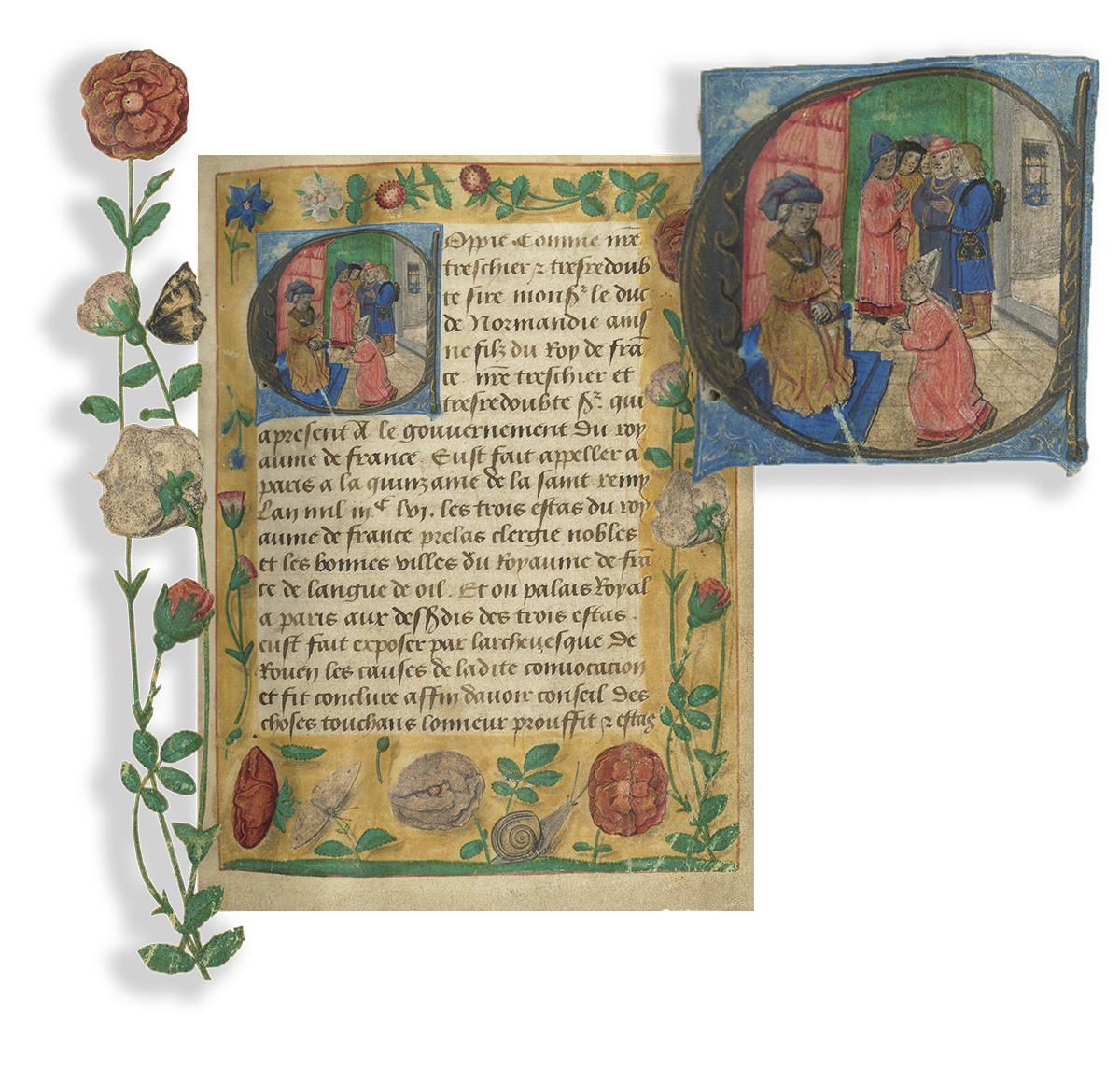
The first book offers a gift from a father to his daughter in preparation for a marriage that would take her to a foreign court for the rest of her life. TM-1388 was made for Margaret Tudor (1489-1541), daughter of Henry VII (1547-1509). In the 1490s Henry managed first to broker a truce with the warring Scots, and then a peace treaty with them, which was sealed with Margaret’s marriage to James IV of Scotland (1473-1513) in 1502. A number of books were made for the couple, both ordered in Scotland (if made in Flanders) and ordered in England, but this book seems to have been intended for Margaret alone—it shows none of James’ heraldic thistles, nor his coat of arms. The volume contains two unusual texts. One is the speech given at the entry of Margaret of Anjou to Rouen on her progress through France in order to marry Henry VI of England in 1445. This text speaks of Margaret of Anjou as a peace-weaver, a bride who ends a war by marrying the head of the opposing nation. Margaret Tudor was another such peace-weaver. The other text is also quite rare, and it contains the statement of demands that the Estates General had made during a much earlier war, when King John the Good of France (1319-1364) was imprisoned in England, and the French dauphin was tempted to give more rights to the people in exchange for higher taxes to win the war (and pay his father’s ransom). From Henry VII’s perspective, the dauphin Charles met the challenge: he refused. Do not give away your power, Henry told his daughter through this text (and also possibly: don’t support the Franco-Scottish alliance against England).
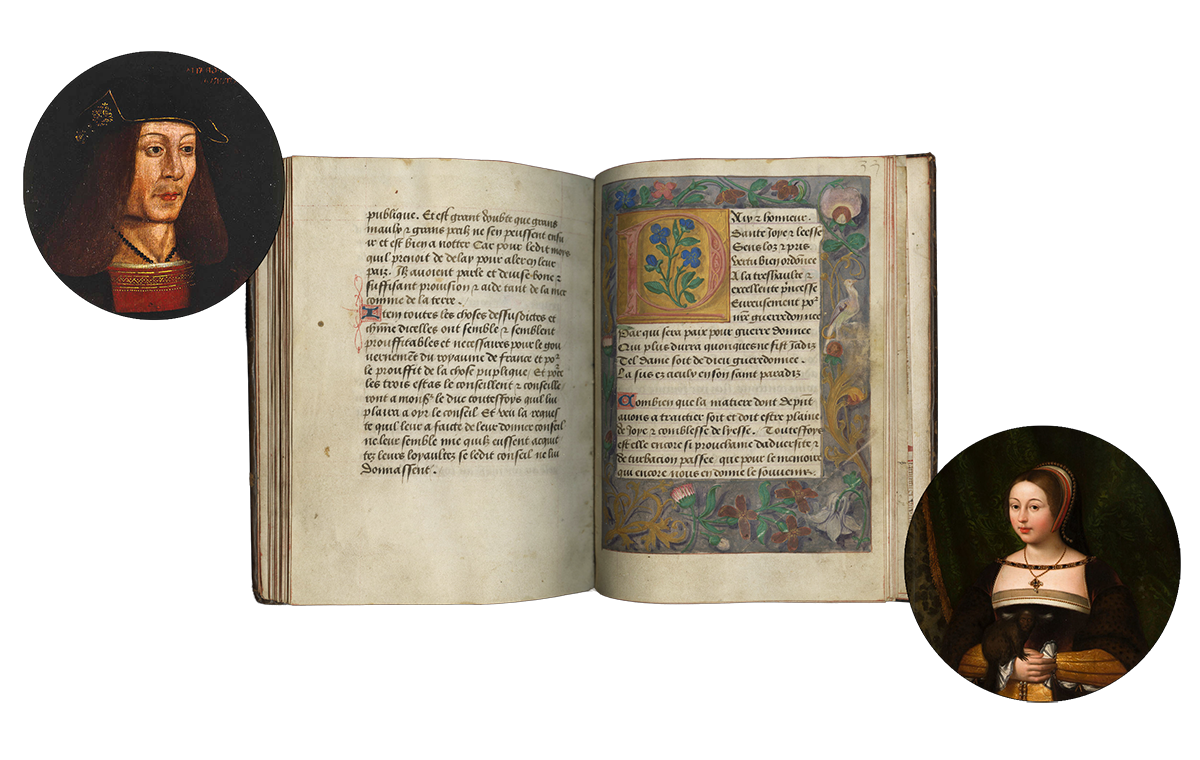
a. Unknown artist, Portrait of James IV of Scotland, oil on panel, 17th century.
b. Anonymous, Journal of the Estates General of Northern France in 1356 and the Address Given to Margaret of Anjou on Her Entry to Rouen in 1445. In French, illuminated manuscript on parchment. England and Southern Netherlands, c. 1497–1500. TM-1388.
c. Daniel Mytens, Margaret Tudor, Queen of Scotland (1489–1541), oil on canvas, c. 1620–1638.
Henry’s librarian, Quentin Poulet copied the pair of texts himself and had them illuminated with borders bearing the white and red Tudor roses, together with daisies, known in French as marguerites, Margaret’s own emblem. Margaret and Henry continued to exchange letters after her marriage, and she clearly valued her father's care for her and advice on life as a ruler.
Saying “yes” to marriage (and royal offspring).
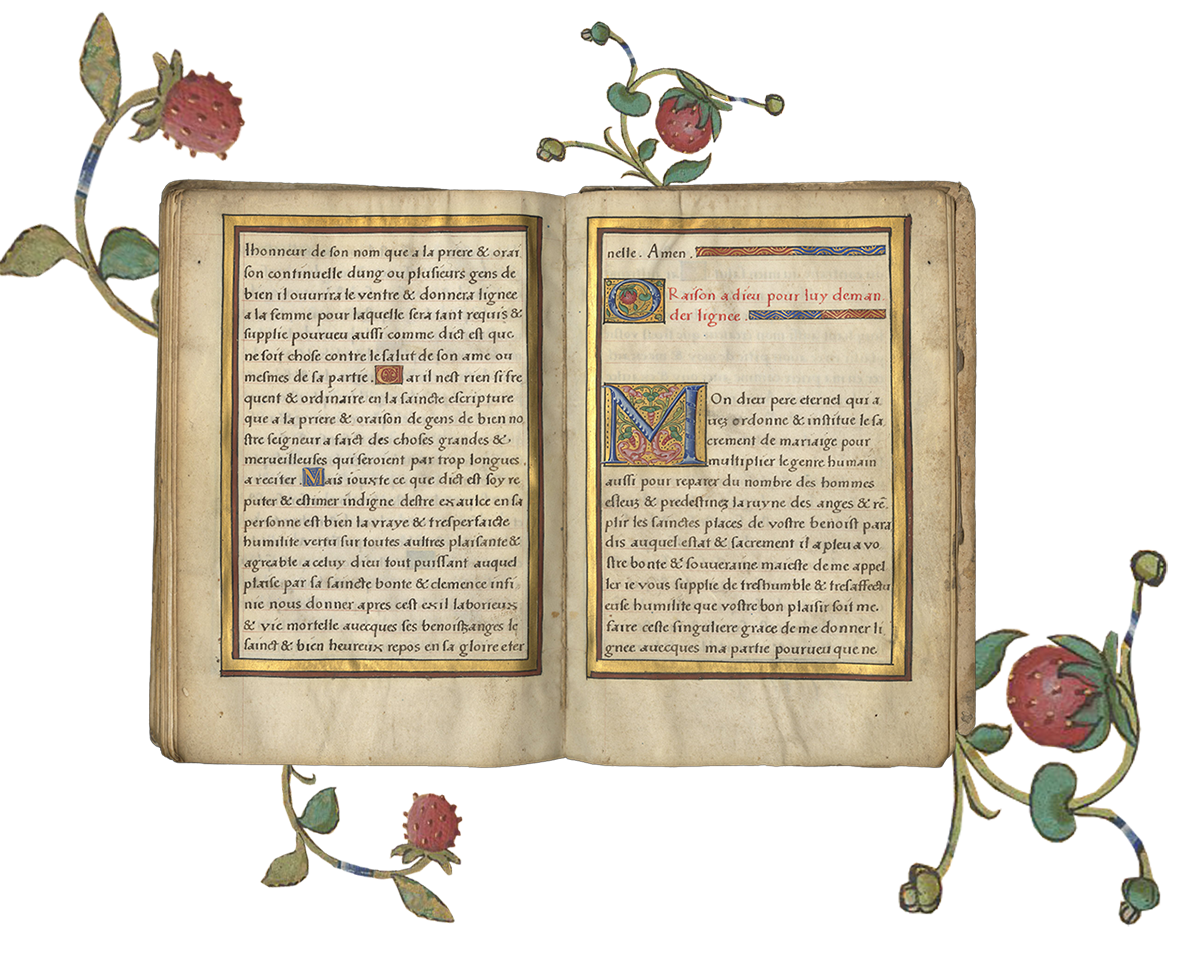
The second manuscript, this Treatise on the Sacrament of Marriage and the Education of Children, TM-1443, offers a unique French work about marriage that extols the importance of both having children and raising them carefully to foster familial harmony. The volume ends with prayers to biblical figures who bore children after long periods of childlessness. Neither TM-935 nor TM-1443 have remaining coats of arms to help us, but the artists of TM-1443 worked for the highest levels of the French court, even for Louise of Savoy’s son Francis I himself, and it must have been commissioned in this courtly milieu. As it happens, the stress of a marriage long childless became acute in the French court in 1536, with the sudden death of the dauphin. The “spare” Prince Henry (1519-1559)’s marriage with Catherine de’ Medici (1519-1589) had remained childless for several years, and suddenly in 1536 that became a European-wide problem. Catherine did eventually deliver a child, a son, in 1544, but the intervening near-decade must have been agonizing. Catherine was yet young, and not the experienced politician she would grow to become. Such a careful missive as this book, suddenly necessary but simultaneously mortifying, might have come from someone in Henry’s family. Catherine’s mother-in-law, Claude of France, her sister Renée, and their mother Anne of Brittany, are famous for their family tradition of carefully nurturing children, especially daughters, sisters, and nieces, and for commissioning books for those children in their care. Perhaps, on this occasion, someone in the family extended this tradition for a daughter-in-law in need of support.
a. François Clouet (c. 1520–1572), Catherine de Médicis, drawing, 1540.
b. ANONYMOUS, Traicte du sacrement de mariaige … (Treatise on the Sacrament of Marriage and the Education of Children), illuminated manuscript on parchment, France, Paris, after 1533 (dated) and before 1547 (probably c. 1539–1540), TM-1443
c. François Clouet (c. 1520–1572), attributed, Henri II, King of France, drawing, 1553.
Saying “no” to remarriage.
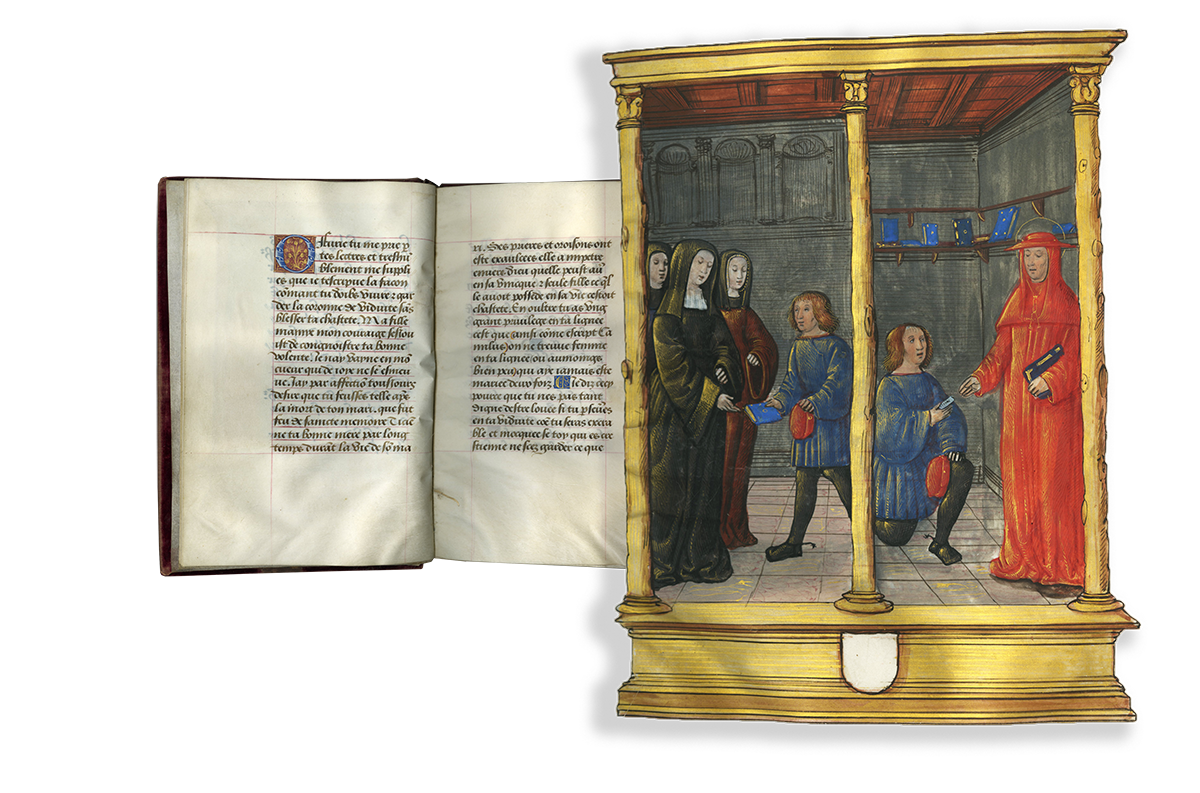
The third manuscript TM-935 deals with the issue of widowhood. How did a noblewoman tell the world she wouldn’t remarry? This volume contains a unique French translation of Saint ir Letter to Furia. Today we might cringe at this letter: it shows Jerome at his most acerbically misogynistic. Yet he essentially railed against remarriage—for a noble widow seeking an authority to back up her own preference, Jerome was difficult to beat.
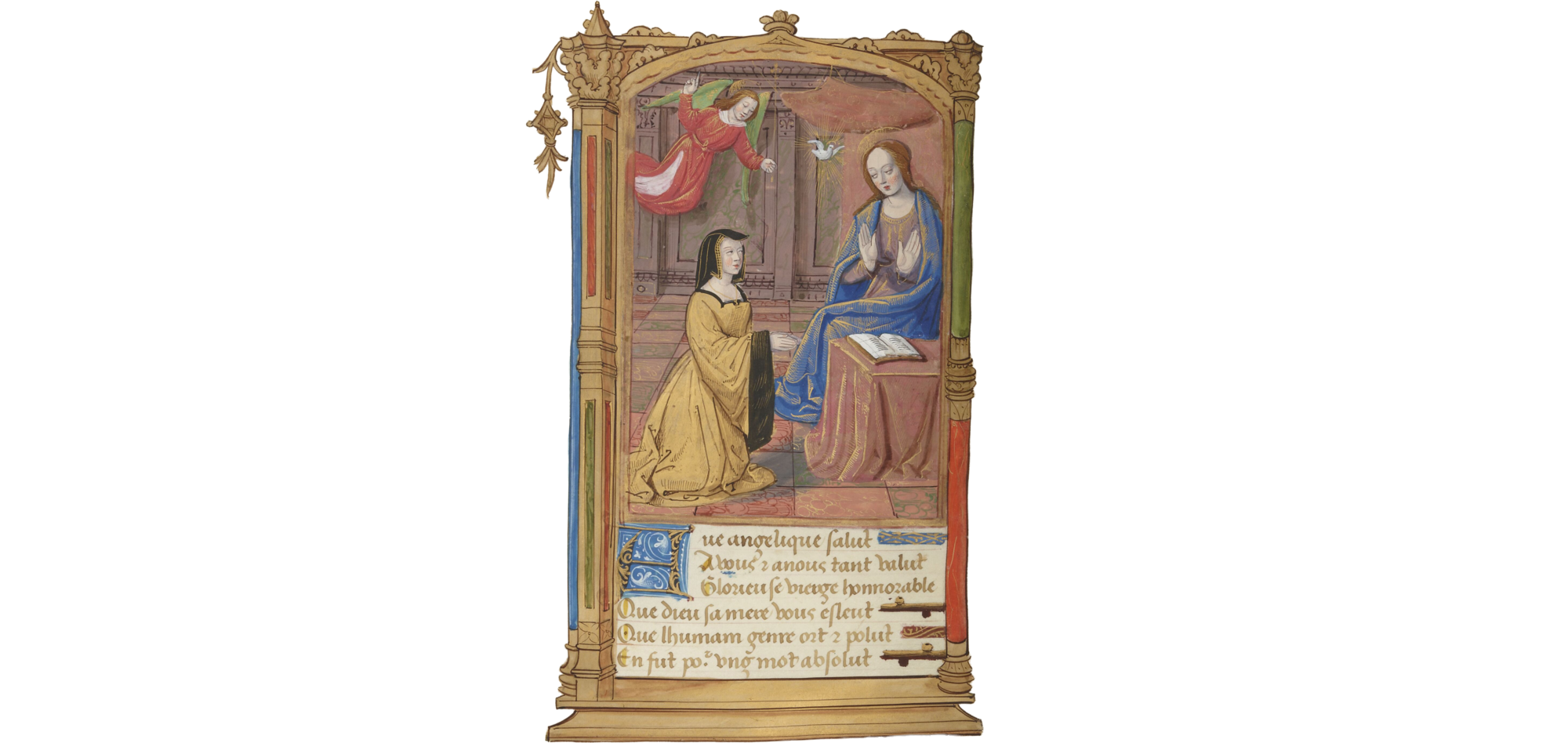
Antoine Vérard, “Louenges à Nostre Dame,” BnF (France). (detail)
Scholars have proposed that Louise of Savoy (1476-1531) owned this manuscript. While Louise was not a queen herself, her son, Francis (1494-1547), became Louis XII’s heir, and Louise herself served as regent. Married very young, she was also widowed very young, when she was not yet 20 years old. While their match had been a political one, as noble marriages inevitably were, she cared for Charles d’Orléans, count of Angoulême (1459-1496) deeply. Although she occasionally dangled a potential marriage as a political gambit, she never remarried and remained a widow for the next thirty years of her life. Remarriage was expected of noblewomen, but it also meant splitting their attention—Louise's widowhood allowed her to remain focused on raising her children and positioning them for courtly life. With Francis ascending to the throne of France and her daughter Margaret (1492-1549) eventually Queen of Navarre, Louise can certainly have considered this great project of her widowhood a success. In owning such a book, Louise had a ready defense for her choice at hand. She clearly played the part to perfection, as she wears pious widows’ weeds in multiple portraits, very like those that Furia wears in the miniature beginning this book. This is thus how Louise told powerful men “no.”
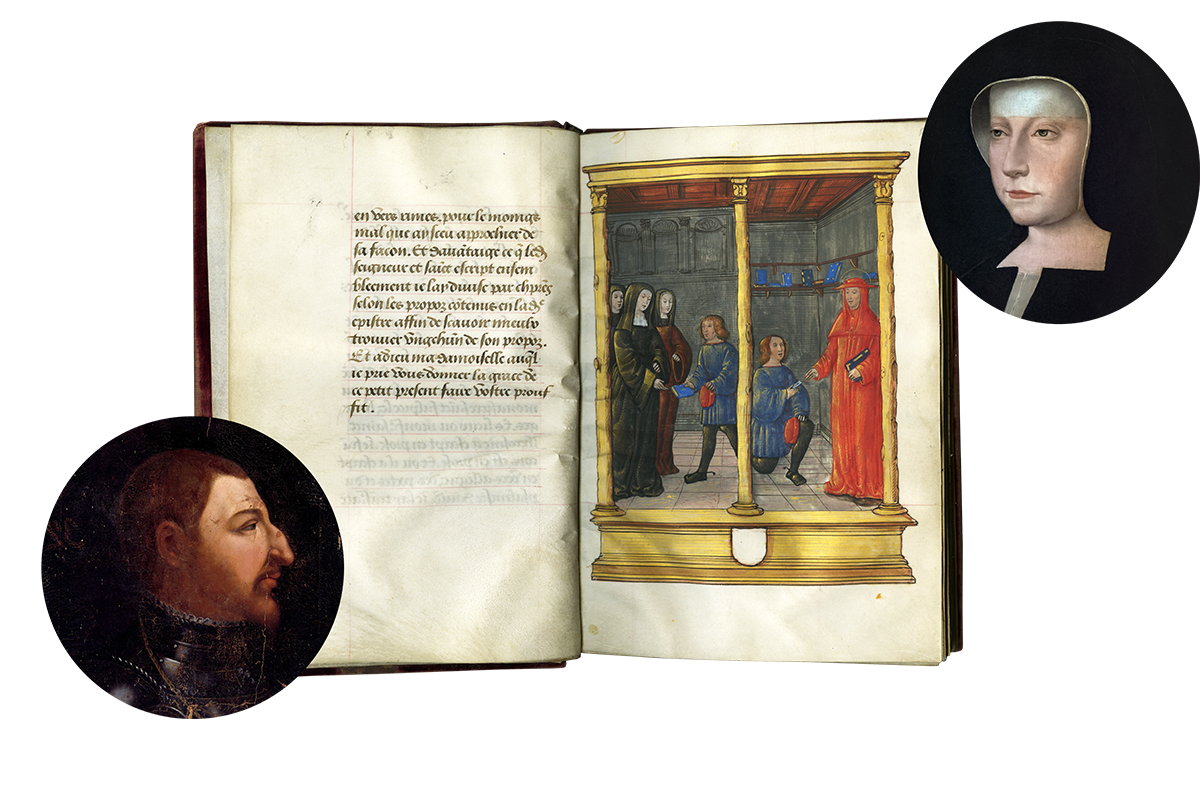
a. Cristofano dell’Altissimo Portrait of Carolus Aurelianus, from the Serie Gioviana, oil on panel, 1552-1568
b. Jerome, Letter LIV To Furia (To Furia, On the Duty of Remaining a Widow), in the translation by Charles Bonin, illuminated manuscript on parchment, France (likely Bourges), c. 1500-1510. TM-935
c. School of Jean Clouet, Portrait of Louise de Savoie, oil on panel, 16th century.
Toward the end of her life, Louise’s lady-in-waiting, Antoinette de Polignac (c.1449-1535), may have seen that her own niece could use this support too. While scholars suspect that Louise de Savoy commissioned TM-935, we know for certain that Anne de Polignac (1495-1554) owned the book, as it remained in her important library into the modern period. Anne was also widowed early, but unlike Louise, she remarried. Yet after this second marriage also resulted in early widowhood, Anne remained a widow for over twenty years. Like Louise before her, Anne would have faced pressure to remarry. Though Louise had passed recently, Anne’s aunt Antoinette was elderly, but living, when Anne’s second husband died in 1533, and there was certainly opportunity to hand this book, and its authoritative defense of widowhood, to a new generation.
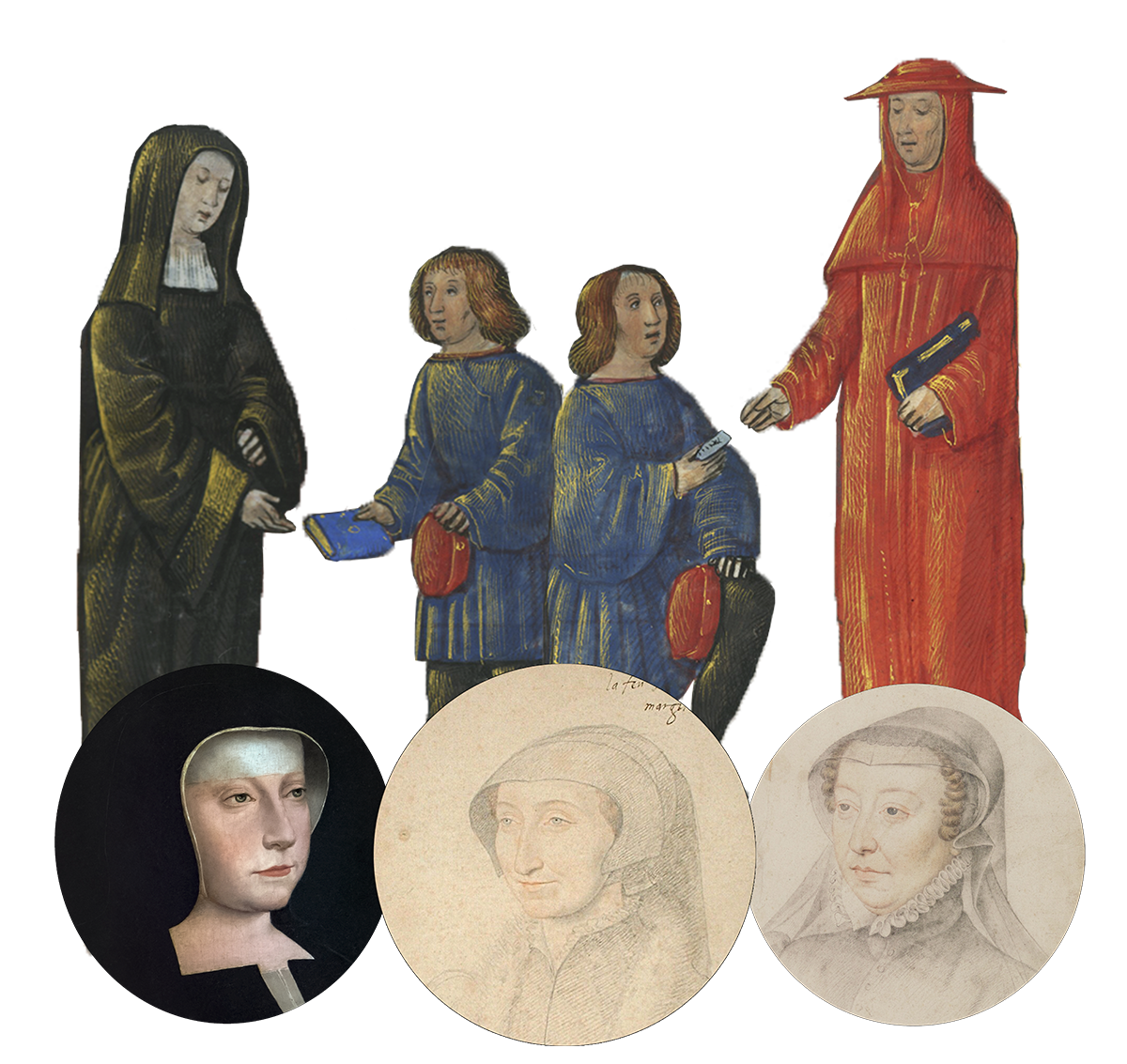
a. School of Jean Clouet, Portrait of Louise de Savoie, oil on panel, 16th century.
b. François Clouet, Marguerite de Navarre, drawing, c. 1540–1545,
c. François Clouet, La reine mère du roi (Catherine de Médicis), drawing, 1560.
d. TM 935, detail
All three women, Margaret, Catherine, and Louise, served as regents for their sons and fought the political battles necessary to do so. In different ways these books assisted them in marriage and widowhood. Perhaps most of all these books reveal how much these women meant to other people in their lives. The gift-givers loved these women, and worried about them, and they gave these books to them as physical tokens of this care.